





Galapagos Tortoise
Chelonoidis nigra
The Galapagos Tortoise is a giant tortoise with a unique shell shape. They live on the Galapagos Islands and enjoy eating leaves and fruits!
Habitat: Galapagos Islands
The Galapagos Tortoise is a massive reptile, characterized by its dark, often grey or brownish, heavily domed or saddle-backed shell. It has thick, pillar-like legs resembling an elephant's and a long, wrinkled neck, making it distinctly imposing among land tortoises.
Category
ReptilesRarity
Rare
Danger
2/5 · Low
Snaps
Be the first to snap!
By eating plants and spreading seeds, these tortoises act like tiny gardeners for their islands!
Early sailors used them for fresh food and even as living compasses on their ships!
They can store water in their bladders, letting them go a year without a drink!
Tortoises bask in the sun to warm their cold blood, which helps them digest their leafy meals!
Galapagos Tortoises can live over a century because of their slow metabolism, helping them survive long periods without food.
Galapagos Tortoises have a huge, bony shell that helps protect their soft body from predators and impacts.
Certain tortoise types can stretch their long necks high to reach leaves, adapting their shell shape for foraging.
These giant reptiles are herbivores, munching on a variety of plants found in their island homes.
Buteo galapagoensis
eats tortoise hatchlings and eggs.

Rattus rattus
preys on tortoise eggs and young hatchlings.
Sus scrofa
digs up and eats tortoise eggs and young.
Geospiza fortis
sometimes removes ticks from the tortoise's skin.
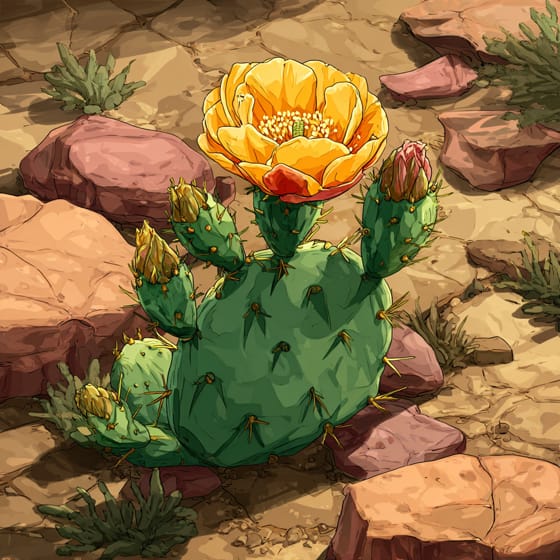
Opuntia echios
Its seeds are dispersed after being eaten by tortoises.
Wildlife encompasses all undomesticated animal and plant life existing in their natural habitats.
Solitary animals live alone for most of their lives, only interacting with others for mating or parental care.
This trait characterizes organisms whose diet consists entirely or primarily of plant material.
This habitat trait describes species found in volcanic regions, including areas with recent lava flows, volcanic ash, or on volcanic islands, often characterized by unique soil compositions.

This trait characterizes organisms with an exceptionally long lifespan compared to others of their kind.

Armored describes animals protected by a hard, external covering or shell for defense.

Describes a species whose presence and role have a disproportionately large effect on its environment.

Giant describes organisms or objects of significantly larger size than average for their species or type.
Danger
2/5 · Low
Look but don’t touch. Keep a safe distance and wash hands after exploring.
The easiest way to identify Galapagos Tortoise is to use the Snappit nature identifier app.
90-187 cm
100-417 kg
100-177 years
0.5 km/h
These giant reptiles are herbivores, munching on a variety of plants found in their island homes.
Galapagos Islands
Grazing
Zoom in to split clusters and explore where this object has been snapped.
Recent snaps will appear here as new observations are added.

Texas, US
You might spot African Elephant, Reticulated Giraffe, and African Lion.
View guide →
Texas, US
You might spot African Lion, Giraffes, and Meerkat.
View guide →
Texas, US
You might spot Giraffes, Tiger, and Hippopotamus.
View guide →
Mississippi, US
You might spot Giraffes, Two-Toed Sloths, and Emu.
View guide →
Pennsylvania, US
You might spot African Lion, Tiger, and Gorilla.
View guide →

California, US
You might spot Giant Panda, African Penguin, and Koala.
View guide →
Take the discovery with you
Snap it with Snappit to identify it, learn what makes it special, and add the discovery to your collection.

















