




Crocodile
Crocodylus niloticus
Crocodiles are large reptiles with tough, scaly skin and powerful jaws. They live in rivers, lakes, and swamps and are excellent swimmers. Crocodiles have been around for millions of years!
Habitat: Freshwater, Coastal areas
The Crocodile has a long, powerful body covered in tough, bony scales, typically olive-green to dark brown with a paler, yellowish underside. Its elongated snout is V-shaped, with upper jaw teeth visible when its mouth is closed, distinguishing it from alligators.
Category
ReptilesRarity
Common
Danger
5/5 · Extreme
Snaps
Be the first to snap!
Crocodiles can go for months without eating, thanks to their slow metabolism!
Crocodiles swallow stones to help them dive deeper and digest their food!
The temperature of their nest determines if baby crocodiles hatch as boys or girls!
They shed and regrow their teeth throughout their entire lives, sometimes thousands!
Crocodiles have an incredibly strong bite force that helps them crush bones and tear apart large prey.
Crocodiles can lie nearly invisible underwater for long periods, allowing them to ambush unsuspecting animals near the water's edge.
Crocodiles have a clear inner eyelid that helps them see clearly underwater while protecting their eyes from debris.
Crocodiles can bask in the sun or hide in water to control their body temperature, as they are cold-blooded.
Crocodiles are mighty hunters eating fish, birds, and mammals that come close to the water.
Age differences: Young crocodiles eat insects and small fish; adults eat increasingly larger prey like mammals.
Oreochromis niloticus
A common fish prey item in their aquatic habitats.
Connochaetes taurinus
Large mammals caught when they cross rivers during migration.
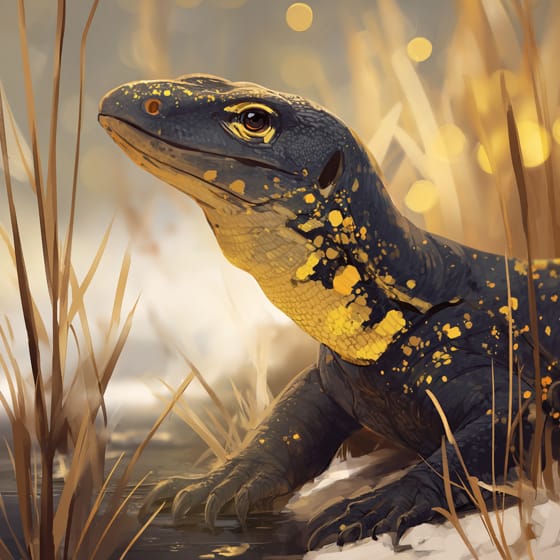
Varanus niloticus
These lizards often raid nests for crocodile eggs and hatchlings.
Thermoregulating organisms maintain a stable internal body temperature despite fluctuations in the external environment.
An ambush predator hunts by patiently waiting and concealing itself, then launching a sudden attack when unsuspecting prey comes within range.
This trait signifies organisms belonging to a very old evolutionary group with ancestors dating back millions of years.
Coastal habitats are dynamic environments located along the interface between land and sea, influenced by tides, waves, and saltwater.

This trait identifies organisms whose diet consists entirely or primarily of animal tissue.

Freshwater habitats include non-saline aquatic environments such as rivers, lakes, ponds, and wetlands, vital for numerous species.

Regenerative organisms possess the ability to regrow lost or damaged body parts, tissues, or organs.

Giant describes organisms or objects of significantly larger size than average for their species or type.

Nocturnal animals are primarily active during the nighttime hours, typically resting or sleeping during the day.
Danger
5/5 · Extreme
Never approach or feed wild crocodiles. Always stay a safe distance away.
The easiest way to identify Crocodile is to use the Snappit nature identifier app.
300-600 cm
225-1000 kg
45-70 years
14 km/h
Crocodiles are mighty hunters eating fish, birds, and mammals that come close to the water.
35 km/h
Freshwater, Coastal areas
Zoom in to split clusters and explore where this object has been snapped.
Recent snaps will appear here as new observations are added.
New York, US
You might spot Gorilla, Tiger, and Snow Leopard.
View guide →
Tennessee, US
You might spot Grizzly Bear, Polar Bear, and African Elephant.
View guide →

Izmir, TR
You might spot Asian Elephant, Giraffes, and Zebra.
View guide →

Valencian Community, ES
You might spot African Lion, Giraffes, and African Elephant.
View guide →

Florida, US
You might spot Giraffes, European Rhinoceros Beetle, and Zebra.
View guide →
Andalusia, ES
You might spot Tiger, African Lion, and Delonix.
View guide →
Take the discovery with you
Snap it with Snappit to identify it, learn what makes it special, and add the discovery to your collection.
















