




Giant Anteaters
Myrmecophaga
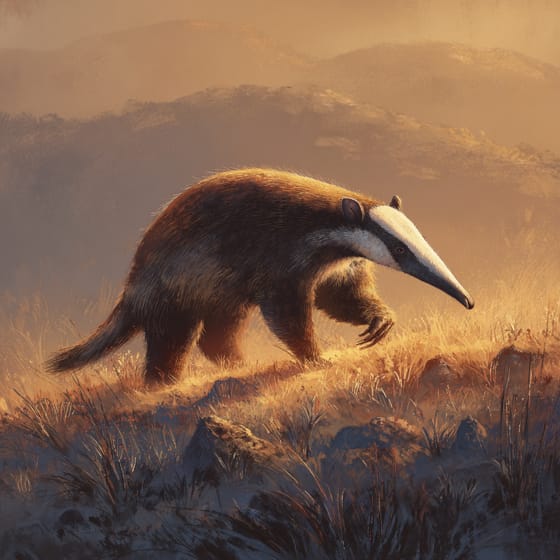
Giant anteaters are big, furry animals with long snouts and sharp claws. They love to eat ants and termites, using their long tongues to catch them. They are very gentle and spend a lot of time sleeping.
Habitat: Grasslands
The Giant Anteater has a distinctive long, tubular snout and a bushy tail that can be as long as its body. Its coarse fur is mostly greyish-brown, with a striking black stripe bordered by white, running from its chest to its back. Its large claws are highly noticeable, often tucked under its body.
Category
MammalsRarity
Common
Danger
2/5 · Low
Snaps
Be the first to snap!
Anteaters can snap up 160 ants per minute with their lightning-fast tongue!
Giant anteaters walk on their knuckles to protect their super-sharp claws from wearing down!
Their bushy tail acts like a warm blanket or umbrella when they rest!
They have one of the lowest body temperatures of all mammals, saving energy!
Giant Anteaters can shred tough termite mounds because of their powerful, 10cm long claws that help them dig for food.
Giant Anteaters has an incredible sense of smell that helps them locate insect nests deep underground, even without seeing them.
Giant Anteaters can rapidly flick their super-long, sticky tongue to slurp up thousands of ants and termites in minutes.
They use their long snouts and sticky tongues to slurp up thousands of ants and termites daily.
Panthera onca
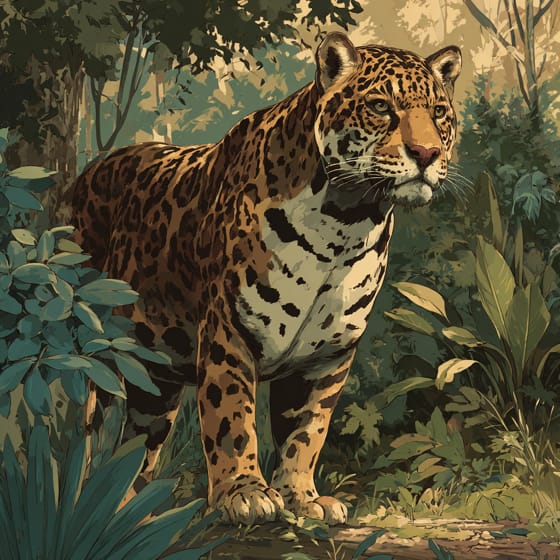
A primary predator of adult and young anteaters.
Puma concolor
Hunts anteaters, especially the young or vulnerable adults.
Cornitermes cumulans
A common termite species often consumed by anteaters.
Furry describes animals possessing a dense covering of soft hair or fur.
Solitary animals live alone for most of their lives, only interacting with others for mating or parental care.
Grassland habitats are terrestrial biomes dominated by grasses and herbaceous plants, supporting a variety of grazing animals.
This trait identifies organisms whose diet primarily consists of insects and other small invertebrates.

Diurnal animals are primarily active during daylight hours, typically resting or sleeping at night.

Endangered status indicates a species is at a very high risk of extinction in the wild in the near future.
Danger
2/5 · Low
Always watch from a distance and never try to touch wild animals like anteaters.
The easiest way to identify Giant Anteaters is to use the Snappit nature identifier app.
182-220 cm
33-50 kg
10-16 years
48 km/h
They use their long snouts and sticky tongues to slurp up thousands of ants and termites daily.
Grasslands
Foraging
Zoom in to split clusters and explore where this object has been snapped.
Recent snaps will appear here as new observations are added.
New York, US
You might spot Polar Bear, Snow Leopard, and African Lion.
View guide →
Tennessee, US
You might spot Red Panda, Snow Leopard, and Chimpanzee.
View guide →

England, UK
You might spot White Rhinoceros, Giraffes, and Ring-Tailed Lemur.
View guide →
Indiana, US
You might spot Giraffes, African Lion, and Southern White Rhinoceros.
View guide →

North Rhine-Westphalia, DE
You might spot Giant Anteaters, Angolan Giraffe, and Giant Otter.
View guide →
Delaware, US
You might spot Red Panda, Andean Condor, and Crowned Sifaka.
View guide →
Take the discovery with you
Snap it with Snappit to identify it, learn what makes it special, and add the discovery to your collection.





.jpg&width=800)


.JPG&width=800)


.jpg&width=800)
