





House Mouse
Mus musculus
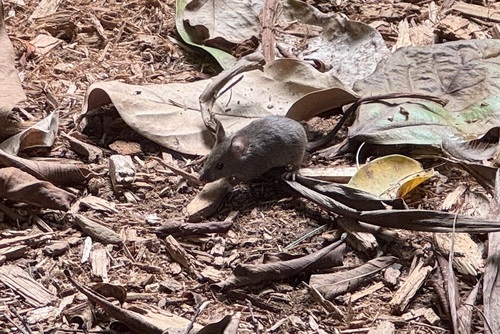
House mice are small, furry animals that love to explore. They have big ears and long tails, and they often live in homes and gardens, making them fun to watch!
Habitat: Urban areas
The House Mouse has soft, brownish-grey fur with a lighter belly, distinguishing it from shrews with their pointed snouts. It features relatively large ears and a thin, scaly tail that is almost as long as its body.
Category
MammalsRarity
Common
Danger
1/5 · Very low
Snaps
7
A single female House Mouse can have over 50 babies in just one year!
House Mice are surprisingly good swimmers, even holding their breath for a short time!
House Mice can jump over 30 cm high, which is truly amazing!
House Mice's teeth never stop growing; they must gnaw constantly to keep them short!
House Mice can squeeze through incredibly tiny gaps, as small as a pencil width, because of their flexible skeletons.
House Mice communicate using high-frequency ultrasonic squeaks that humans cannot hear, helping them stay hidden.
House Mice have a very fast breeding cycle, producing many litters yearly that helps their populations grow quickly.
House Mice have an incredible sense of smell and hearing that helps them find food and avoid danger in darkness.
Tiny munchers that eat almost anything, from seeds to crumbs and even insects!
Furry describes animals possessing a dense covering of soft hair or fur.
Social animals live in organized groups, cooperating for survival benefits such as foraging, defense, and raising offspring.
This trait identifies organisms whose diet includes both plant and animal matter.
Scavengers consume dead organic matter, helping to decompose carcasses and other waste in the ecosystem.

Burrowing animals dig tunnels and chambers in the ground, using these subterranean structures for shelter, hunting, or breeding.

Domesticated refers to species that have been selectively bred and tamed by humans for specific purposes.

This trait identifies organisms that exhibit exceptional swiftness in movement for hunting, escape, or travel.

This habitat trait indicates species that can coexist with humans in urban and suburban environments, utilizing man-made structures and green spaces.

Nocturnal animals are primarily active during the nighttime hours, typically resting or sleeping during the day.
Danger
1/5 · Very low
If you see a mouse, it's best to leave it alone and tell an adult.
The easiest way to identify House Mouse is to use the Snappit nature identifier app.
7-10 cm
0.012-0.03 kg
1-2 years
13 km/h
Tiny munchers that eat almost anything, from seeds to crumbs and even insects!
Urban areas
Foraging
Zoom in to split clusters and explore where this object has been snapped.
May 30, 2026
National AviaryPhoto attribution
no rights reserved
License: CC0 1.0 ↗
Image may be shown cropped inside the card frame.

Illinois, US
You might spot Carolina Mantis and Goldenrod Soldier Beetle.
View guide →

Illinois, US
You might spot White-Tailed Deer, Lesser Celandine, and American Robin.
View guide →

Nebraska, US
You might spot Great White Shark, Penguin, and Sea Lion.
View guide →

New York, US
You might spot Asian Elephant, Humboldt Penguin, and Tiger.
View guide →

Maryland, US
You might spot Eastern Box Turtle, Eastern Tiger Swallowtail, and Monarch.
View guide →

Indiana, US
You might spot American Pokeweed, Monarch, and Chinese Mantis.
View guide →
Take the discovery with you
Snap it with Snappit to identify it, learn what makes it special, and add the discovery to your collection.








.jpg&width=800)



.JPG&width=800)


.jpg&width=800)
