





Morelet's Crocodile
Crocodylus moreletii
Morelet's Crocodile is a strong swimmer that lives in freshwater. They are very protective of their homes.
Habitat: Freshwater habitats
The Morelet's Crocodile is a moderately sized reptile, typically grayish-brown with dark bands and spots, especially on its tail. It has a relatively broad snout and rough, scaly skin. Its dark iris makes its eyes less noticeable against its dark head.
Category
ReptilesRarity
Common
Danger
5/5 · Extreme
Snaps
Be the first to snap!
Morelet's Crocodiles can live for over 70 years!
These crocodiles have been around since the time of dinosaurs!
They can run surprisingly fast on land for short distances!
They construct large mound nests from plants and mud for their eggs!
Morelet's Crocodile can hold its breath for long periods, blending perfectly with murky water to ambush prey.
Morelet's Crocodile has a clear third eyelid (nictitating membrane) that protects its eyes while swimming underwater.
Morelet's Crocodile eggs determine if they'll be male or female based on the nest's surrounding temperature.
Morelet's Crocodile can deliver an incredibly powerful bite, allowing it to easily crush the bones of its prey.
A top predator, Morelet's Crocodiles eat fish, birds, and small mammals they ambush in the water.
Age differences: Young crocodiles eat insects and small fish, while adults hunt bigger prey.
Poecilia mexicana
a common fish prey
Kinosternon scorpioides
a reptile prey in its habitat
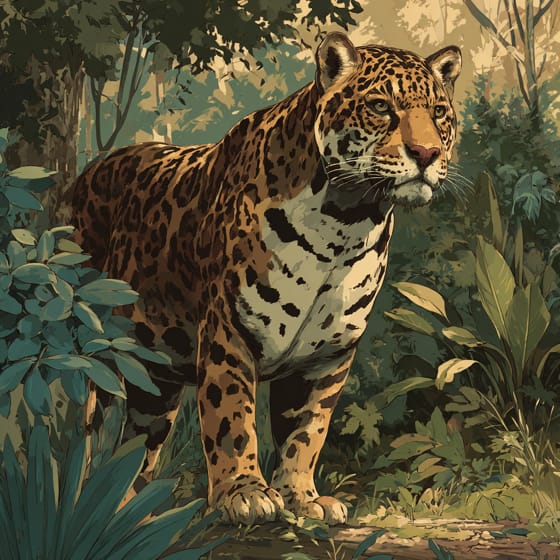
Panthera onca
occasionally preys on larger adults
Procyon lotor
predator of crocodile eggs and hatchlings
Wildlife encompasses all undomesticated animal and plant life existing in their natural habitats.
An ambush predator hunts by patiently waiting and concealing itself, then launching a sudden attack when unsuspecting prey comes within range.
This trait identifies organisms whose diet consists entirely or primarily of animal tissue.
Freshwater habitats include non-saline aquatic environments such as rivers, lakes, ponds, and wetlands, vital for numerous species.

Giant describes organisms or objects of significantly larger size than average for their species or type.

Nocturnal animals are primarily active during the nighttime hours, typically resting or sleeping during the day.
Danger
5/5 · Extreme
Look but don’t touch. Keep a safe distance and wash hands after exploring.
The easiest way to identify Morelet's Crocodile is to use the Snappit nature identifier app.
250-450 cm
40-120 kg
50-70 years
15 km/h
A top predator, Morelet's Crocodiles eat fish, birds, and small mammals they ambush in the water.
20 km/h
Freshwater habitats
Zoom in to split clusters and explore where this object has been snapped.
Recent snaps will appear here as new observations are added.
Take the discovery with you
Snap it with Snappit to identify it, learn what makes it special, and add the discovery to your collection.
















