

Morrison'S Bumble Bee
bombus morrisoni
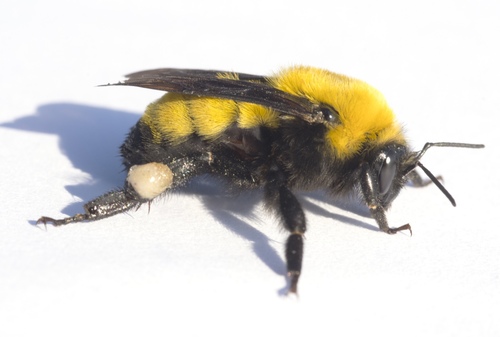
Morrison's bumble bee (Bombus morrisoni) is a striking and vital pollinator native to the western United States, southwestern Canada, and northern Mexico. Known for its notably bright, golden-yellow coloration covering most of its body, this robust insect is a majestic sight as it buzzes through arid and semi-arid landscapes. It plays an indispensable role in maintaining the health of western dryland ecosystems by pollinating a vast array of native wildflowers and agricultural crops. Unlike some of its more generalist relatives, Morrison's bumble bee is uniquely adapted to thrive in harsh, dry environments like sagebrush scrub, desert borders, and dry open woodlands. Over recent decades, conservationists have noted worrying declines in its overall population, turning this beautiful bee into an important focal point for western pollinator conservation efforts. Learn to recognize Morrison'S Bumble Bee in the wild using the Snappit field guide app.
Habitat: Found in dry, open habitats including sagebrush scrub, arid grasslands, desert borders, and montane meadows across western North America.
This species is easily recognized by its exceptionally vibrant, velvety golden-yellow coloration. The thorax is almost entirely yellow, sometimes featuring a small black spot or bare patch in the center, while the first three segments of the abdomen are also covered in dense yellow hairs, ending in a black tail. The head is primarily black, and the wings are slightly smoky but transparent. Queens are the largest, measuring up to 2.2 centimeters in length, while workers and males share the same distinctive yellow-and-black pattern but are noticeably smaller and more compact.
Category
InsectsRarity
Common
Danger
1/5 · Very low
Snaps
Be the first to snap!
Only the newly mated queens of Morrison's bumble bee survive the winter by hibernating underground, starting an entirely new colony from scratch each spring.
Their bright golden coat acts as an aposematic warning signal to potential predators, advertising their ability to deliver a painful sting.
They are excellent flyers in windy conditions, using their robust, heavy bodies to maintain stability while foraging in open, exposed desert environments.
Vibrates its flight muscles at a specific frequency to dislodge tightly held pollen from tubular flowers like those of the nightshade family.
Generates internal heat by shivering its flight muscles, allowing it to forage during chilly desert mornings before other insects can fly.
Bypasses complex flower structures by biting a hole at the base of long-tubed flowers to directly access nectar when normal entry is restricted.
Adults feed primarily on sugary nectar for immediate energy, while collecting pollen to feed and develop the growing larvae in the nest.

Ericameria nauseosa
Provides essential pollination services while collecting nectar and pollen from this primary floral resource.
Bombus insularis
A cleptoparasite that invades the nests of Morrison's bumble bee, kills the queen, and forces workers to raise its own offspring.
_Misumena_vatia_male.jpg&width=800)
Misumena vatia
Lies in wait on flowers to ambush and consume foraging Morrison's bumble bees.
No trait badges are assigned for this object yet.
No aliases listed yet.
Collections for this object will appear here as more themes are added.
Danger
1/5 · Very low
No special safety notes yet.
The easiest way to identify Morrison'S Bumble Bee is to use the Snappit nature identifier app.
1+ cm
2+ cm
0+ kg
0+ years
15 km/h
Adults feed primarily on sugary nectar for immediate energy, while collecting pollen to feed and develop the growing larvae in the nest.
Found in dry, open habitats including sagebrush scrub, arid grasslands, desert borders, and montane meadows across western North America.
Zoom in to split clusters and explore where this object has been snapped.
Recent snaps will appear here as new observations are added.















