_Misumena_vatia_male.jpg&width=800)





Goldenrod Crab Spider
misumena vatia
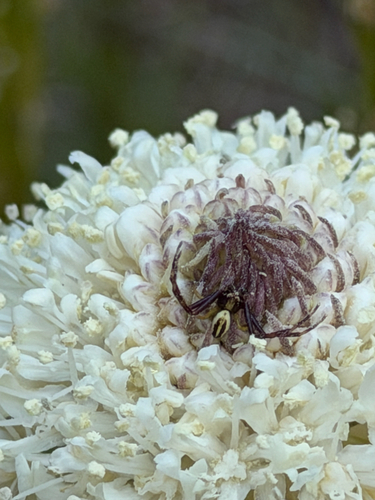
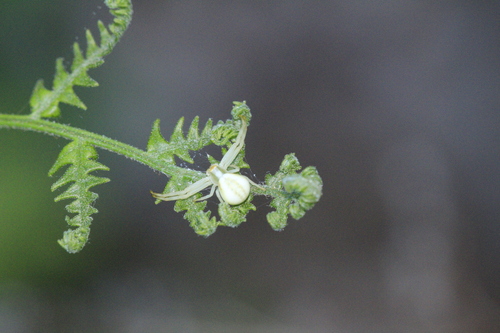
The Goldenrod Crab Spider is a special little creature that can change its color to blend in with flowers! It waits patiently for insects to come close so it can catch them with its quick movements.
Habitat: Gardens, fields, and meadows where flowers grow.
The Goldenrod Crab Spider is a small, fascinating arachnid, often brilliant white or yellow, sometimes with reddish streaks on its abdomen. Its front two pairs of legs are noticeably longer and thicker, resembling a crab, which makes it visually distinct from typical web-spinning spiders.
Category
InsectsRarity
Common
Danger
1/5 · Very low
Snaps
17
A Goldenrod Crab Spider can take several days to change its color!
Female Goldenrod Crab Spiders can be five times bigger than the males!
Their crab-like legs allow them to scuttle sideways and backwards quickly!
They don't spin webs to catch food, but use silk for safety lines!
Goldenrod Crab Spider can change its body color from white to yellow because of special pigments, that helps them perfectly match the flowers they ambush prey in.
Goldenrod Crab Spider has powerful front legs that helps them grab unsuspecting insects quickly as they visit flowers.
These clever spiders are skilled hunters, feasting on insects that visit flowers for nectar and pollen.
Apis mellifera
for food
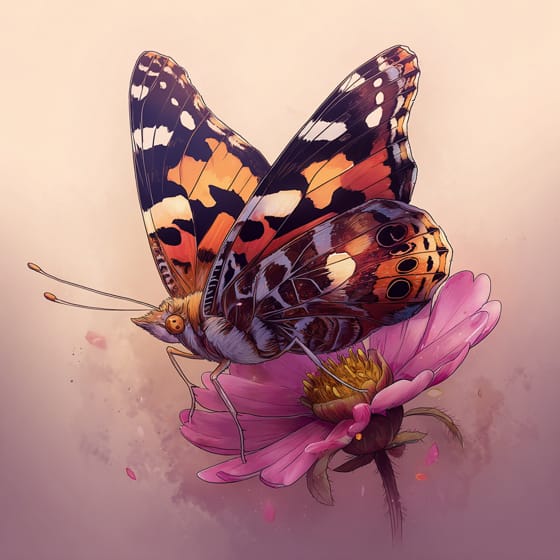
Vanessa cardui
for food
Musca domestica
for food
%2C_Parc_de_Woluw%C3%A9%2C_Brussels_(13042792905).jpg&width=800)
Parus major
as a meal
Solitary animals live alone for most of their lives, only interacting with others for mating or parental care.
Camouflaged describes organisms that possess coloring or patterns that allow them to blend into their environment.
Colorful describes organisms or objects displaying a wide range of bright and distinct colors.
This trait identifies organisms whose diet consists entirely or primarily of animal tissue.

Diurnal animals are primarily active during daylight hours, typically resting or sleeping at night.
No aliases listed yet.
Danger
1/5 · Very low
No special safety notes yet.
The easiest way to identify Goldenrod Crab Spider is to use the Snappit nature identifier app.
2-10 mm
365-730 days
These clever spiders are skilled hunters, feasting on insects that visit flowers for nectar and pollen.
Gardens, fields, and meadows where flowers grow.
Ambush
8
Zoom in to split clusters and explore where this object has been snapped.
Jun 2, 2026
Lower Cushman DamPhoto attribution
no rights reserved
License: CC0 1.0 ↗
Image may be shown cropped inside the card frame.
May 30, 2026
Rockport Historic DistrictPhoto attribution
no rights reserved
License: CC0 1.0 ↗
Image may be shown cropped inside the card frame.

Oregon, US
You might spot Duck, Pacific Trillium, and Wood Duck.
View guide →

Alaska, US
You might spot Sandhill Crane, Fireweed, and Prickly Wild Rose.
View guide →

Washington, US
You might spot Barrow's Goldeneye and Pacific Banana Slug.
View guide →

Washington, US
You might spot Rock Pigeon, Great Blue Heron, and Duck.
View guide →

Vermont, US
You might spot Northern Cardinal, Wood Frog, and White-Breasted Nuthatch.
View guide →

Nebraska, US
You might spot Lark Sparrow, Rock Wren, and Scarlet Globemallow.
View guide →
Take the discovery with you
Snap it with Snappit to identify it, learn what makes it special, and add the discovery to your collection.








.jpg&width=800)



