





Mule Deer
Odocoileus hemionus
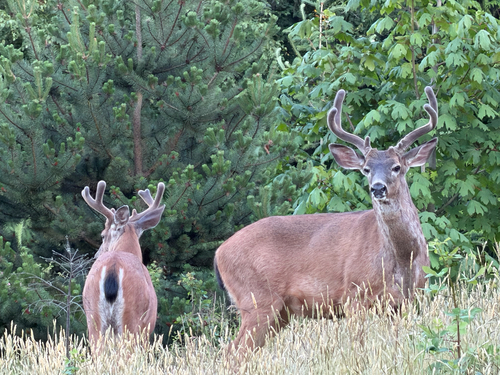
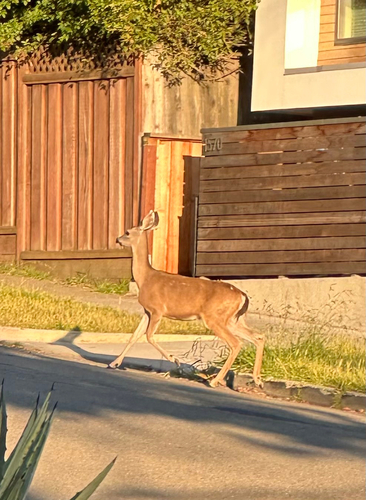
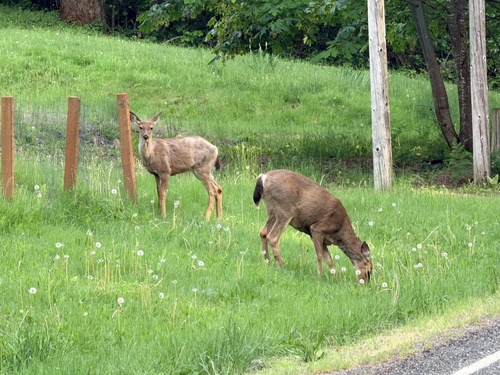
Mule deer are graceful animals with big ears that help them hear well. They have brown fur and white tails that they raise when they sense danger.
Habitat: Forests, Grasslands, Mountain regions
The Mule Deer has very large, mule-like ears and a coat that ranges from reddish-brown in summer to grey-brown in winter. Its rump is white with a distinctive black-tipped tail, which helps distinguish it from white-tailed deer.
Category
MammalsRarity
Common
Danger
2/5 · Low
Snaps
272
A mule deer's black-tipped tail helps them signal danger to other deer.
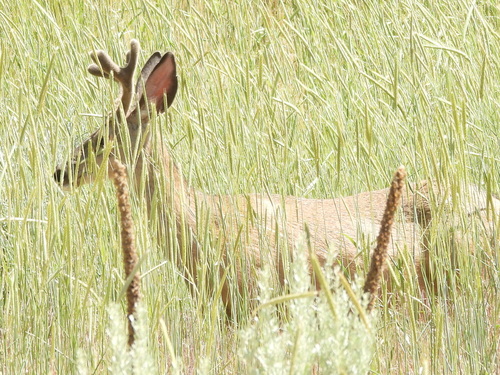
Male mule deer grow new antlers yearly, covered in soft "velvet" before they harden.
Mule deer have excellent eyesight and a superb sense of smell to detect distant threats.
They often rest in "beds" they scrape out of the ground, hidden from view.
Mule Deer can leap incredibly high fences and obstacles because their powerful leg muscles allow for amazing vertical jumps.
Mule Deer has giant, swiveling ears that help them pinpoint sounds from all directions, even faint predator noises.
Mule Deer can perform a unique "stotting" jump, bouncing on all four feet, which helps them escape predators quickly.
They are plant-eaters, munching on leaves, twigs, and grasses found in their varied habitats.
Age differences: Fawns drink milk, then transition to browsing similar foods as adults.
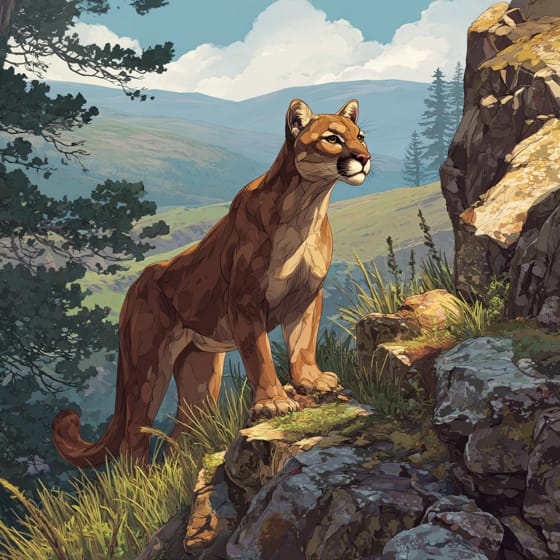
Puma concolor
A primary predator of mule deer adults and fawns.
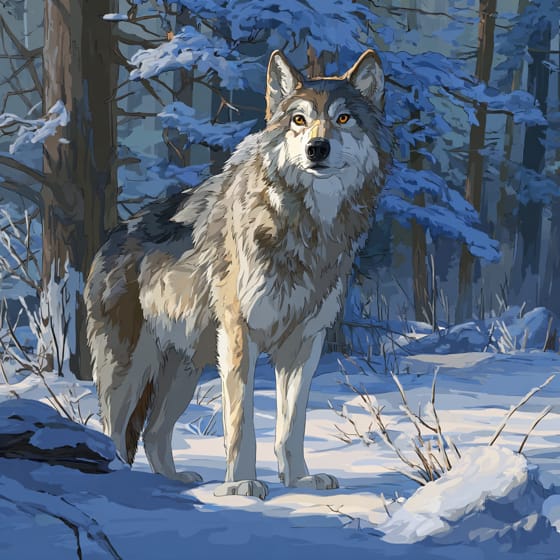
Canis lupus
Wolves hunt deer, especially during winter months.

Artemisia tridentata
A common and important food source for mule deer.

Quercus gambelii
Mule deer eat its leaves and nutritious acorns.
Social animals live in organized groups, cooperating for survival benefits such as foraging, defense, and raising offspring.
Antlered describes animals possessing antlers, which are bony, branching growths found predominantly on male deer and related species.
Grassland habitats are terrestrial biomes dominated by grasses and herbaceous plants, supporting a variety of grazing animals.
This trait characterizes organisms whose diet consists entirely or primarily of plant material.

Forest habitats are terrestrial environments dominated by dense tree cover, supporting a high diversity of plant and animal life.

This trait characterizes organisms with an exceptionally long lifespan compared to others of their kind.

Diurnal animals are primarily active during daylight hours, typically resting or sleeping at night.

Regenerative organisms possess the ability to regrow lost or damaged body parts, tissues, or organs.
Danger
2/5 · Low
Admire mule deer from a distance and never try to touch or feed them.
The easiest way to identify Mule Deer is to use the Snappit nature identifier app.
100-210 cm
50-150 kg
10-15 years
70 km/h
They are plant-eaters, munching on leaves, twigs, and grasses found in their varied habitats.
Forests, Grasslands, Mountain regions
Foraging
Zoom in to split clusters and explore where this object has been snapped.
Jun 17, 2026
Discovery ParkPhoto attribution
(c) John Leszczynski, some rights reserved (CC BY)
License: CC BY 4.0 ↗
Image may be shown cropped inside the card frame.
Jun 7, 2026
Painted HillsPhoto attribution
(c) John Clonce, some rights reserved (CC BY)
License: CC BY 4.0 ↗
Image may be shown cropped inside the card frame.
Jun 7, 2026
Berkeley Rose GardenPhoto attribution
no rights reserved
License: CC0 1.0 ↗
Image may be shown cropped inside the card frame.
May 31, 2026
Julia Davis ParkPhoto attribution
(c) Sam Kieschnick, some rights reserved (CC BY)
License: CC BY 4.0 ↗
Image may be shown cropped inside the card frame.
May 20, 2026
Wind River ArboretumPhoto attribution
no rights reserved
License: CC0 1.0 ↗
Image may be shown cropped inside the card frame.

California, US
You might spot Sequoia, California Newt, and Pacific Dogwood.
View guide →

California, US
You might spot Acorn Woodpecker and Western Fence Lizard.
View guide →

California, US
You might spot Monarch, Canada Goose, and Western Gull.
View guide →

New Mexico, US
You might spot Tree Cholla, Colorado Pinyon, and House Finch.
View guide →

California, US
You might spot Redwood, Pacific Trillium, and Evergreen Huckleberry.
View guide →

California, US
You might spot Monarch, Bee, and Anise Swallowtail.
View guide →
Take the discovery with you
Snap it with Snappit to identify it, learn what makes it special, and add the discovery to your collection.




.jpg&width=800)


.JPG&width=800)

.jpg&width=800)
