




Wild Lupine
Lupinus perennis
Wild Lupine has tall spikes of colorful flowers that look like little towers! They help make the soil better for other plants.
Habitat: Sandy fields and roadsides
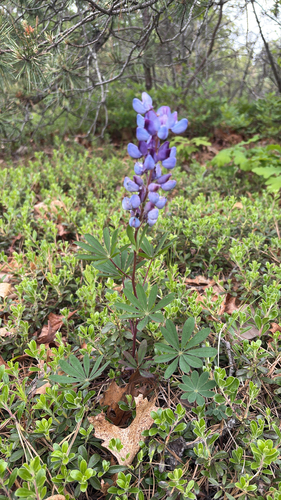
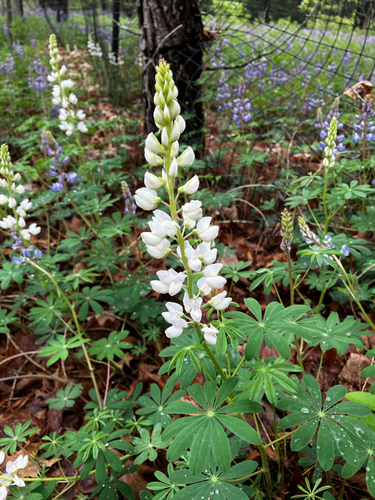
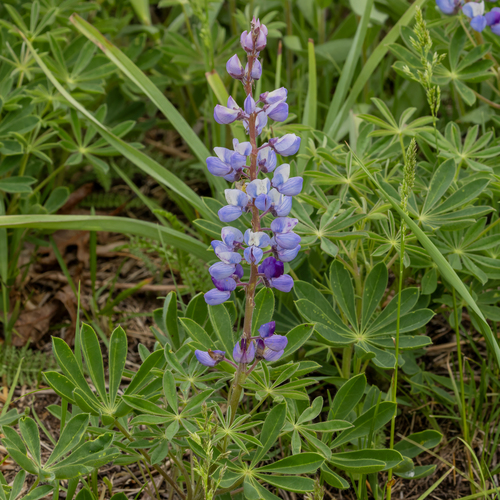
The Wild Lupine has striking spikes of pea-like flowers, typically in vibrant shades of blue or purple, though sometimes pink or white. Its unique leaves spread out like fingers on a hand, making it stand out from other wildflowers.
Category
PlantsRarity
Rare
Danger
1/5 · Very low
Snaps
27
Its seeds can stay dormant in the ground for decades, waiting for just the right time to sprout!
Many tiny flowers bloom together on tall spikes, making a vibrant 'flower tower' for hungry bees!
The name 'Lupine' comes from 'lupus,' meaning wolf, as people once thought it 'wolfed' nutrients from soil!
This plant is vital for the rare Karner Blue butterfly, which only lays its tiny eggs on Lupine leaves!
Wild Lupine can take nitrogen from the air and put it into the soil, acting like a natural fertilizer for other plants!
Wild Lupine has a super-long taproot that helps it reach water deep underground, even in dry, sandy soils.
Wild Lupine seed pods can pop open with force when dry, scattering seeds far away to grow new plants.
Bombus impatiens
collects nectar and pollen from flowers
Bradyrhizobium lupini
fixes nitrogen in root nodules for the plant

Odocoileus virginianus
browses on leaves and young stems
Describes organisms capable of converting atmospheric nitrogen into compounds usable by plants.
Spring blooming plants produce their flowers during the spring season, often signifying the end of winter and the start of new growth.
Grassland habitats are terrestrial biomes dominated by grasses and herbaceous plants, supporting a variety of grazing animals.
Danger
1/5 · Very low
Explore with care and ask an adult if you’re unsure what to do.
The easiest way to identify Wild Lupine is to use the Snappit nature identifier app.
30-60 cm
30-60 cm
1-2 cm
Spring_summer
No
Moderate
Perennial
Zoom in to split clusters and explore where this object has been snapped.
May 30, 2026
Long Island Game FarmPhoto attribution
(c) Frog The Kermit, some rights reserved (CC BY)
License: CC BY 4.0 ↗
Image may be shown cropped inside the card frame.
May 25, 2026
Mohegan State ForestPhoto attribution
(c) Bryan Connolly, some rights reserved (CC BY)
License: CC BY 4.0 ↗
Image may be shown cropped inside the card frame.
May 18, 2026
International Crane FoundationPhoto attribution
(c) Dan Vickers, some rights reserved (CC BY)
License: CC BY 4.0 ↗
Image may be shown cropped inside the card frame.

New York, US
You might spot Sundial Lupine, Spotted Horsemint, and New Jersey Tea.
View guide →

Illinois, US
You might spot Common Eastern Bumble Bee and Brown-Belted Bumble Bee.
View guide →

Rhode Island, US
You might spot Common Eastern Bumble Bee and Osprey.
View guide →

New York, US
You might spot Common Eastern Bumble Bee and Ground-Ivy.
View guide →

Connecticut, US
You might spot American Nursery Web Spider and Common Eastern Bumble Bee.
View guide →

Massachusetts, US
You might spot Red Trillium, Round-Leaved Sundew, and Pitch Pine.
View guide →
Take the discovery with you
Snap it with Snappit to identify it, learn what makes it special, and add the discovery to your collection.











.jpg&width=800)



_001.jpg&width=800)




