





Wood Frog
Lithobates sylvaticus
The Wood Frog is a special frog that can survive cold winters! They have a unique brown color that helps them blend in.
Habitat: Forests and wetlands
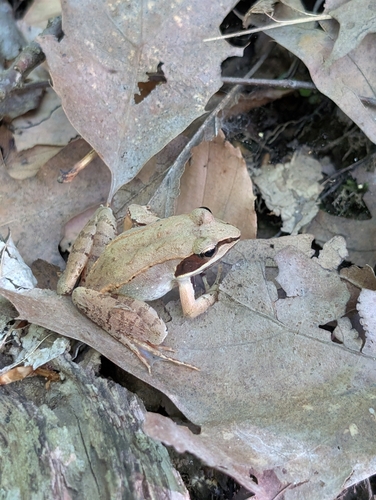
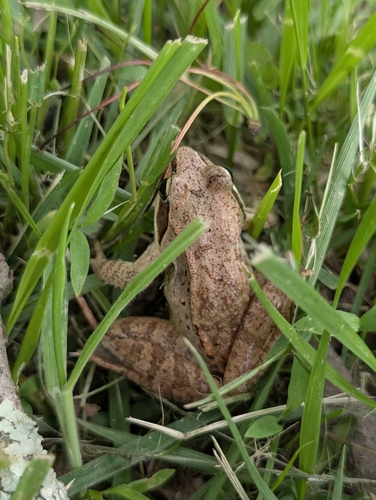
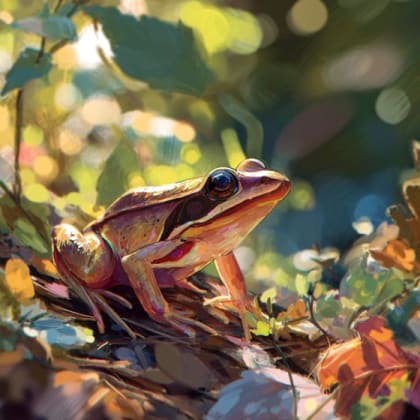
The Wood Frog has smooth skin, typically reddish-brown, tan, or gray, with a distinctive dark mask from its snout extending back over its eardrum. Its underside is whitish, and it often has light lines along its jaw.
Category
AmphibiansRarity
Common
Danger
2/5 · Low
Snaps
111
Male wood frogs sound like a flock of ducks quacking when they call for mates!
Their amazing spring breeding choruses are often one of the very first sounds of spring.
They are 'indicator species'; their health tells us if the forest environment is healthy.
Wood frog tadpoles are mostly vegetarians, munching on tiny algae and decaying plants.
Wood Frogs can freeze solid and thaw out later because their bodies produce a natural antifreeze, helping them survive winter.
Wood Frogs have mottled brown and tan skin that helps them blend perfectly with leaf litter and tree bark, hiding from predators.
Wood Frogs have powerful hind legs that help them make quick, long jumps to escape danger or catch fast-moving prey.
Wood Frogs are tiny hunters, using their sticky tongues to catch small insects and spiders.
Age differences: Tadpoles eat algae and detritus; adults are carnivores, eating small invertebrates.
Thamnophis sirtalis
Predates adult and juvenile frogs.
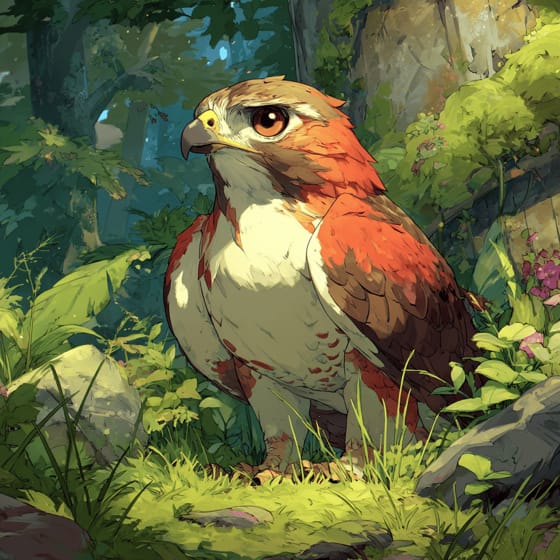
Buteo jamaicensis
Hunts frogs from above.

Procyon lotor
Forages for frogs near water.
Formica subsericea
A primary food source for adults.
Camouflaged describes organisms that possess coloring or patterns that allow them to blend into their environment.
This trait identifies organisms whose diet primarily consists of insects and other small invertebrates.
This trait signifies organisms belonging to a very old evolutionary group with ancestors dating back millions of years.
Forest habitats are terrestrial environments dominated by dense tree cover, supporting a high diversity of plant and animal life.

Hibernating animals enter a state of metabolic depression during cold periods or when food is scarce, characterized by reduced body temperature and activity.

This habitat trait identifies species found in wetlands, which are areas of land saturated with water, either permanently or seasonally, including marshes, swamps, and bogs.

Freshwater habitats include non-saline aquatic environments such as rivers, lakes, ponds, and wetlands, vital for numerous species.

Regenerative organisms possess the ability to regrow lost or damaged body parts, tissues, or organs.

Nocturnal animals are primarily active during the nighttime hours, typically resting or sleeping during the day.
Danger
2/5 · Low
Look but don’t touch. Keep a safe distance and wash hands after exploring.
The easiest way to identify Wood Frog is to use the Snappit nature identifier app.
3.5-7 cm
0.005-0.02 kg
3-5 years
8 km/h
Wood Frogs are tiny hunters, using their sticky tongues to catch small insects and spiders.
Forests and wetlands
Ambush
Zoom in to split clusters and explore where this object has been snapped.
May 30, 2026
Gardenview Horticultural ParkPhoto attribution
(c) Gustav JK Golden, some rights reserved (CC BY)
License: CC BY 4.0 ↗
Image may be shown cropped inside the card frame.
May 28, 2026
MillingtonPhoto attribution
(c) Joe Kalisz, some rights reserved (CC BY)
License: CC BY 4.0 ↗
Image may be shown cropped inside the card frame.

Massachusetts, US
You might spot Eastern Newt, Purple Pitcher Plant, and Hobblebush.
View guide →
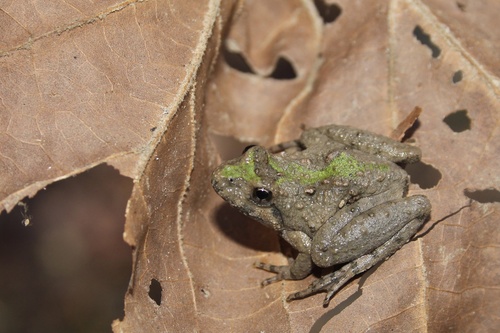
Delaware, US
You might spot Northern Cricket Frog, Fan Clubmoss, and Fowler's Toad.
View guide →

New York, US
You might spot Dame's Rocket, American Pokeweed, and American Toad.
View guide →

Connecticut, US
You might spot Green Frog and Mountain Laurel.
View guide →
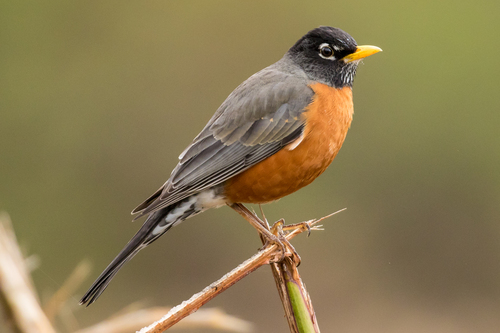
New Jersey, US
You might spot American Robin, Spotted Lanternfly, and Monarch.
View guide →

Vermont, US
You might spot Eastern White Pine, Staghorn Sumac, and Box Elder.
View guide →
Take the discovery with you
Snap it with Snappit to identify it, learn what makes it special, and add the discovery to your collection.







.JPG&width=800)



.jpg&width=800)

