

Common Dolphin
Delphinus delphis
Common dolphins are fast swimmers with a playful nature. They live in groups called pods.
Habitat: Warm and temperate seas.
The Common Dolphin has a sleek body with a striking hourglass pattern on its sides, typically dark grey or black on top and white underneath, with a yellowish patch at the front. It features a distinct, slender snout, making it easily identifiable.
Category
MammalsRarity
Common
Danger
2/5 · Low
Snaps
Be the first to snap!
A baby dolphin is born tail-first to help it reach the surface quickly for air!
Common Dolphins can hold their breath underwater for up to 8 minutes!
They often leap high out of the water, performing acrobatic twists!
They often swim in massive groups, sometimes numbering thousands!
Common Dolphins can 'see' with sound (echolocation) that helps them locate fish and navigate in dark or murky waters.
Common Dolphins have strong social bonds that help them cooperatively hunt large schools of fish and protect each other.
Common Dolphins have a streamlined body shape that helps them cut through water incredibly fast to catch prey.
These agile swimmers primarily feast on small, schooling fish and tasty squid found in the ocean.
Sardina pilchardus
A key schooling fish prey species.
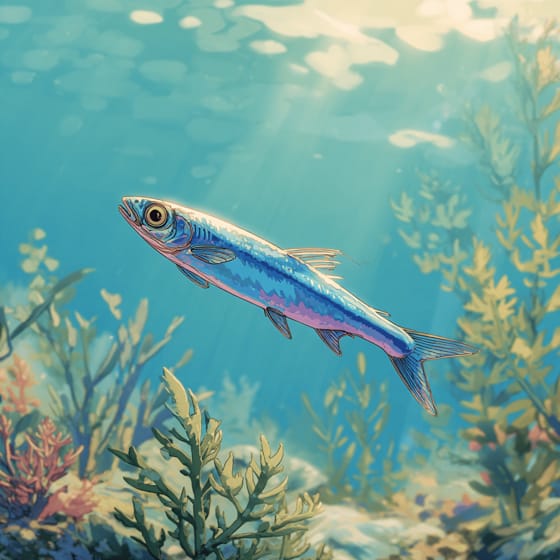
Engraulis encrasicolus
Commonly hunted small fish.
Loligo vulgaris
An important part of their varied diet.

Orcinus orca
Occasionally preyed upon by larger marine predators.

Carcharodon carcharias
Sometimes targeted by large sharks, especially young.
Furry describes animals possessing a dense covering of soft hair or fur.
Social animals live in organized groups, cooperating for survival benefits such as foraging, defense, and raising offspring.
Piscivorous organisms are animals that primarily subsist on a diet of fish.
This trait describes organisms that manipulate external objects to achieve a specific goal.

Echolocation is a biological sonar used by animals to navigate, hunt, and communicate by emitting sound waves and interpreting the echoes.

Describes a species whose presence and role have a disproportionately large effect on its environment.

This trait identifies organisms that exhibit exceptional swiftness in movement for hunting, escape, or travel.

Aquatic habitats encompass environments where organisms live predominantly in water, including oceans, rivers, lakes, and wetlands.

Marine habitats encompass all saltwater environments of the Earth's oceans, supporting an immense diversity of aquatic life.

Migratory animals undertake seasonal movements from one region to another, typically in response to changes in climate or food availability.
Danger
2/5 · Low
Do not try to touch wild dolphins.
170-240 cm
70-110 kg
20-40 years
60 km/h
These agile swimmers primarily feast on small, schooling fish and tasty squid found in the ocean.
Warm and temperate seas.
Pursuit
1
Zoom in to split clusters and explore where this object has been snapped.
Recent snaps will appear here as new observations are added.