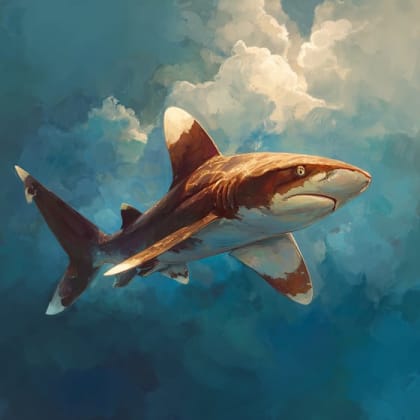
Leopard Shark
Triakis semifasciata
Leopard Sharks have beautiful spotted patterns that look like a leopard! They are often seen in sandy bays.
Habitat: Coastal waters
The Leopard Shark has a sleek, slender body typically gray or bronze with distinctive dark saddle-like blotches and spots that resemble a leopard's coat. Its underside is pale, and it has two dorsal fins, making it easily identifiable in coastal waters.
Category
FishRarity
Rare
Danger
2/5 · Low
Snaps
Be the first to snap!
Leopard Sharks give birth to live pups, not eggs, usually between 7 and 36 at a time!
These sharks often gather in large groups, sometimes hundreds, especially in warm bays.
They can be found swimming in water so shallow it barely covers their dorsal fin!
Unlike many sharks, Leopard Sharks are harmless to humans and often encountered by divers.
Leopard Shark can detect tiny electrical fields generated by hidden prey, allowing them to find crabs and fish buried in the sand.
Leopard Shark can actively pump water over its gills, allowing it to rest motionless on the seabed without needing to swim.
These sharks are bottom-feeders, eating small crabs, worms, and fish from the seafloor.
Cancer antennarius
a main food source found on the seafloor
Crangon franciscorum
a favorite invertebrate prey in soft sediments
Tresus nuttallii
nibbles on exposed siphons of buried clams
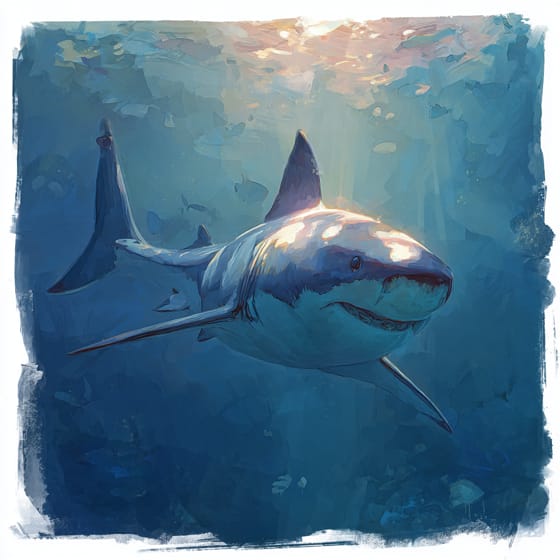
Carcharodon carcharias
a larger apex predator in their habitat
Wildlife encompasses all undomesticated animal and plant life existing in their natural habitats.
Marked with spots or patches of a different color.
Solitary animals live alone for most of their lives, only interacting with others for mating or parental care.
Camouflaged describes organisms that possess coloring or patterns that allow them to blend into their environment.

Piscivorous organisms are animals that primarily subsist on a diet of fish.

Coastal habitats are dynamic environments located along the interface between land and sea, influenced by tides, waves, and saltwater.

Aquatic habitats encompass environments where organisms live predominantly in water, including oceans, rivers, lakes, and wetlands.

Nocturnal animals are primarily active during the nighttime hours, typically resting or sleeping during the day.
Danger
2/5 · Low
Watch quietly from a distance and never try to feed or chase wild animals.
100-180 cm
10-18 kg
20-30 years
These sharks are bottom-feeders, eating small crabs, worms, and fish from the seafloor.
10 km/h
Coastal waters
Foraging
90 m
Zoom in to split clusters and explore where this object has been snapped.
Recent snaps will appear here as new observations are added.