




Oceanic Whitetip Shark
Carcharhinus longimanus
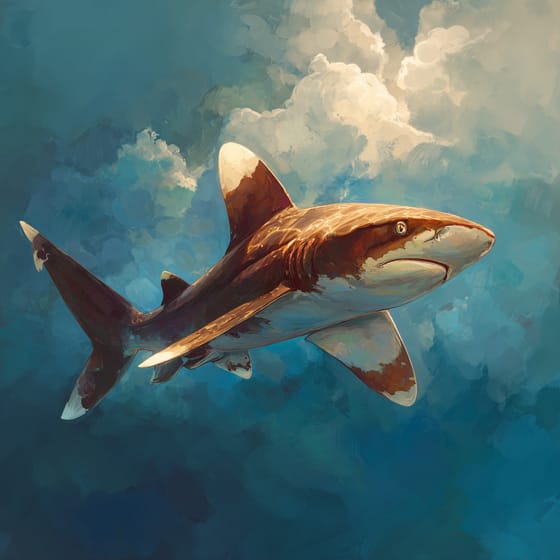
Oceanic Whitetip Sharks are known for their long, white-tipped fins! They are curious and often swim near boats.
Habitat: Open ocean
The Oceanic Whitetip Shark has a robust body with distinctively long, paddle-like pectoral fins and a rounded first dorsal fin. Its body is bronze to brownish-grey, contrasting with a white belly, and many fins display striking mottled white tips.
Category
FishRarity
Rare
Danger
2/5 · Low
Snaps
Be the first to snap!
Often the first shark to appear at shipwrecks, drawn by distress.
Their long, paddle-like fins help them glide through open waters.
They hunt day and night, always searching for their next meal.
They were once the most abundant large shark in tropical oceans!
Oceanic Whitetip Shark can sense struggling prey from vast distances because of its acute senses, helping them find food.
Oceanic Whitetip Shark has a large, oily liver that helps them maintain buoyancy effortlessly in the open ocean.
Oceanic Whitetip Shark can cover vast distances because of its efficient body shape, helping them migrate across entire ocean basins.
They mainly eat bony fish, squids, and sea birds, using their keen senses to find food.
Age differences: Young sharks eat smaller fish and invertebrates; adults take larger prey.
Naucrates ductor
These fish swim alongside, eating scraps and parasites.
Thunnus albacares
Hunts these fast-swimming fish in the open ocean.
Coryphaena hippurus
Preys on these colorful fish, especially juveniles.
Echeneis naucrates
Attaches to the shark, hitching rides and eating scraps.
Wildlife encompasses all undomesticated animal and plant life existing in their natural habitats.
Piscivorous organisms are animals that primarily subsist on a diet of fish.
Aquatic habitats encompass environments where organisms live predominantly in water, including oceans, rivers, lakes, and wetlands.
Marine habitats encompass all saltwater environments of the Earth's oceans, supporting an immense diversity of aquatic life.
Danger
2/5 · Low
Watch quietly from a distance and never try to feed or chase wild animals.
The easiest way to identify Oceanic Whitetip Shark is to use the Snappit nature identifier app.
180-250 cm
20-170 kg
10-15 years
They mainly eat bony fish, squids, and sea birds, using their keen senses to find food.
5 km/h
Open ocean
Pursuit
Zoom in to split clusters and explore where this object has been snapped.
Recent snaps will appear here as new observations are added.
Take the discovery with you
Snap it with Snappit to identify it, learn what makes it special, and add the discovery to your collection.