Nile Monitor
Varanus niloticus
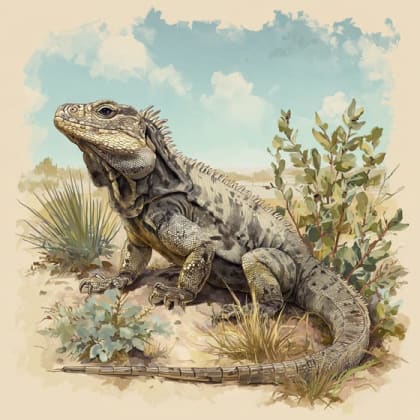
The Nile Monitor is a large lizard that loves water. It has a long tail and is a great swimmer.
Habitat: Rivers, lakes, and wetlands.
The Nile Monitor is a large lizard with an olive-green to grey-brown body covered in yellowish spots and bands. It has a long, powerful tail and a pointed snout, making it look sleek and agile.
Category
ReptilesRarity
Rare
Danger
2/5 · Low
Snaps
Be the first to snap!
Baby monitors often hatch inside warm termite mounds, safe from predators.
Some Nile monitors can grow as long as two adult humans lying head-to-toe!
These clever reptiles can eat crocodile eggs, turning a predator into a meal!
They are fantastic climbers, using strong claws to scale trees quickly!
Nile Monitor can hold its breath for over an hour to hunt fish and other prey underwater.
Nile Monitor has a powerful tail that helps them deliver a painful whip to scare off predators.
Nile Monitor uses its forked tongue to 'smell' the air and track down prey from far away.
Nile Monitor can dig into the ground to steal and eat eggs from nests, even crocodile nests.
These powerful lizards eat almost anything they can catch, from tasty insects to fish and even crocodile eggs!
Age differences: Young monitors eat more insects; adults prefer larger prey like fish, rodents, and birds.
Crocodylus niloticus
Nile Monitors feast on their eggs.
Clarias gariepinus
Frequently targeted prey in aquatic environments.
Tatera afra
Monitors prey on small rodents in their habitat.
Termes bellicosus
Lays eggs inside termite mounds for warmth.
Wildlife encompasses all undomesticated animal and plant life existing in their natural habitats.
Piscivorous organisms are animals that primarily subsist on a diet of fish.
Aquatic habitats encompass environments where organisms live predominantly in water, including oceans, rivers, lakes, and wetlands.
Nocturnal animals are primarily active during the nighttime hours, typically resting or sleeping during the day.
Danger
2/5 · Low
Look but don’t touch. Keep a safe distance and wash hands after exploring.
120-240 cm
5-20 kg
10-20 years
20 km/h
These powerful lizards eat almost anything they can catch, from tasty insects to fish and even crocodile eggs!
8 km/h
Rivers, lakes, and wetlands.
Ambush
Zoom in to split clusters and explore where this object has been snapped.
Recent snaps will appear here as new observations are added.