

Giant Bamboo
Dendrocalamus giganteus
Giant bamboo is one of the biggest types of bamboo. It can grow very tall and is used for many things!
Habitat: Tropical regions
The Giant Bamboo has immensely tall, thick, woody culms (stems) that are typically pale green to yellow-green, often with a powdery white bloom when young. Its lance-shaped leaves are relatively small compared to its massive size, forming a dense canopy at the top.
Category
PlantsRarity
Common
Danger
1/5 · Very low
Snaps
Be the first to snap!
Bamboo is technically a type of grass, not a tree.
It is the tallest bamboo species, soaring over 100 feet!
Its culms can grow almost 4 feet in a single day!
This giant plant can create its own mini-forests!
Giant Bamboo can grow incredibly fast, sometimes over a meter a day, helping it quickly reach sunlight and dominate its space.
Giant Bamboo has hollow yet incredibly strong and flexible culms, allowing it to bend in strong winds without breaking.
Giant Bamboo has a robust underground rhizome network that anchors it firmly and helps it absorb water and nutrients efficiently.
Homo sapiens
used for timber, food, and traditional crafts
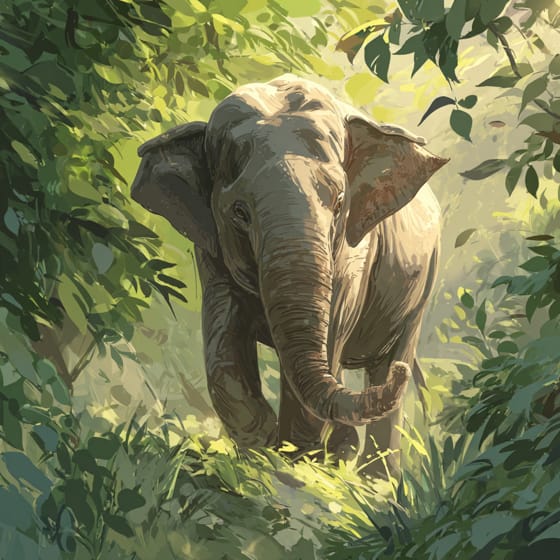
Elephas maximus
young shoots and leaves are a food source
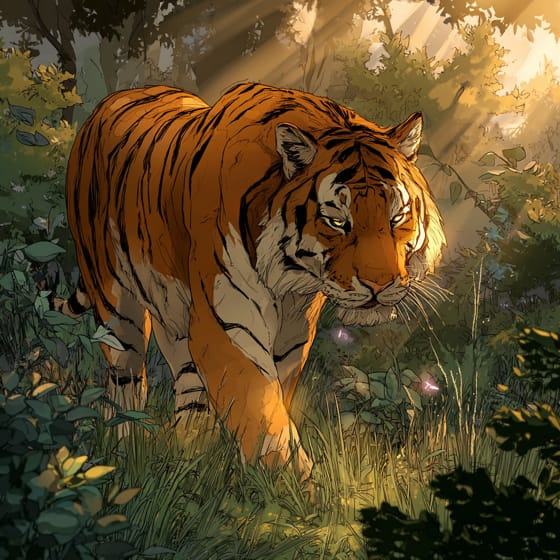
Panthera tigris
dense groves provide camouflage and resting spots
Rattus rattus
finds refuge within its dense culms and leaves
Grass-like plants are herbaceous plants that visually resemble true grasses, typically having long, narrow leaves.
Evergreen plants retain their foliage throughout the year, never shedding all their leaves at once.
This human use trait identifies species that yield natural fibers, used by humans for textiles, rope, paper, and other manufactured goods.
Rapid growing plants exhibit accelerated growth rates, quickly increasing in size and biomass within a short period.

Timber refers to wood that has been prepared for use in building and carpentry.

This habitat trait refers to species found in tropical rainforests, characterized by high annual rainfall, high biodiversity, and dense tree cover.

Giant describes organisms or objects of significantly larger size than average for their species or type.
Danger
1/5 · Very low
Explore with care and ask an adult if you’re unsure what to do.
1500-3000 cm
300-1000 cm
Rarely, variable
Yes
None
Perennial
Wind
Tropical regions
Zoom in to split clusters and explore where this object has been snapped.
Recent snaps will appear here as new observations are added.