





Asian Elephant
Elephas maximus
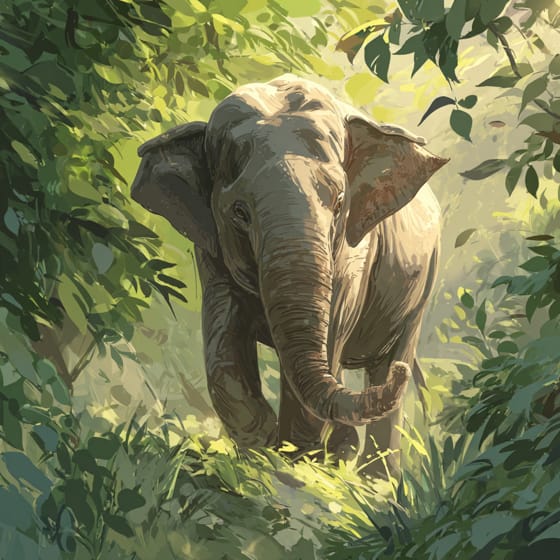
Asian elephants are large, gentle giants that love to roam in groups. They have big ears and a long trunk, which they use to eat and drink water.
Habitat: Forests and grasslands in Asia
The Asian Elephant has noticeably smaller, rounder ears compared to its African relatives, a more domed head, and a single 'finger' on its trunk tip. Its skin is typically grey to brownish-grey, sometimes with pinkish depigmentation patches on the forehead, ears, or trunk.
Category
MammalsRarity
Common
Danger
3/5 · Moderate
Snaps
Be the first to snap!
A baby elephant is called a calf and can stand up just hours after birth!
Elephants are the only mammals that cannot jump, no matter how much they try!
Their large ears are filled with blood vessels that help them cool down.
They communicate using very low rumbling sounds that humans cannot hear.
Asian Elephants can lift huge logs or pick tiny leaves using their incredible prehensile trunks.
Asian Elephants can suck up gallons of water with their trunks to drink or spray themselves clean.
Asian Elephants have an amazing long-term memory that helps them recall water sources and paths.
Giant plant-eaters that munch on leaves, grass, bark, and fruit throughout the day to survive!
Age differences: Calves drink milk for several years, gradually introducing solid plant matter as they grow.
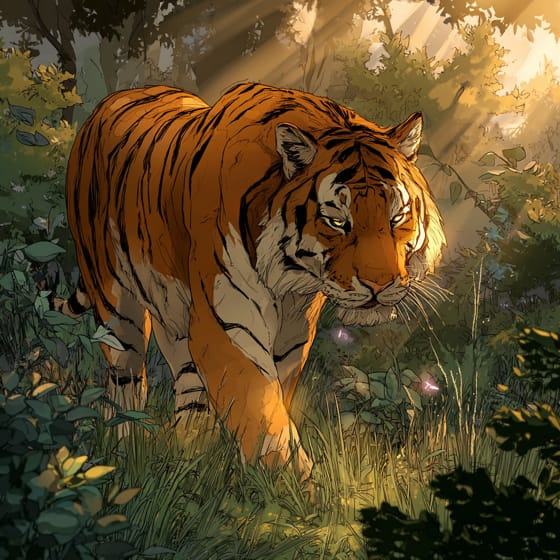
Panthera tigris
Rarely preys on young or vulnerable elephant calves.
Ficus religiosa
Consumes its fruits, dispersing seeds widely to new areas.
Shorea robusta
Elephants disperse its seeds, aiding forest regeneration.

Scarabaeus viettei
Feeds on elephant dung, helping to recycle nutrients in the soil.
Furry describes animals possessing a dense covering of soft hair or fur.
Social animals live in organized groups, cooperating for survival benefits such as foraging, defense, and raising offspring.
This trait characterizes organisms whose diet consists entirely or primarily of plant material.
Thermoregulating organisms maintain a stable internal body temperature despite fluctuations in the external environment.

Characterized by having long, pointed, projecting teeth, usually in pairs.

Forest habitats are terrestrial environments dominated by dense tree cover, supporting a high diversity of plant and animal life.

This trait characterizes organisms with an exceptionally long lifespan compared to others of their kind.

Describes a species whose presence and role have a disproportionately large effect on its environment.

Giant describes organisms or objects of significantly larger size than average for their species or type.
Danger
3/5 · Moderate
Always admire elephants from a distance and never approach them in the wild.
The easiest way to identify Asian Elephant is to use the Snappit nature identifier app.
550-650 cm
2000-5000 kg
48-60 years
40 km/h
Giant plant-eaters that munch on leaves, grass, bark, and fruit throughout the day to survive!
Forests and grasslands in Asia
Foraging
Zoom in to split clusters and explore where this object has been snapped.
Recent snaps will appear here as new observations are added.
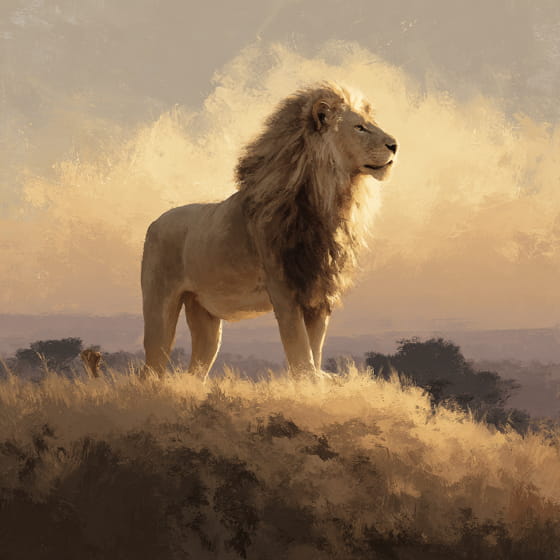
Texas, US
You might spot African Lion, Giraffes, and Meerkat.
View guide →

District of Columbia, US
You might spot Giant Panda, Red Panda, and Asian Elephant.
View guide →
Oregon, US
You might spot Asian Elephant, Polar Bear, and Sea Otter.
View guide →
Oklahoma, US
You might spot Tiger, Snow Leopard, and Komodo Dragon.
View guide →

England, UK
You might spot African Lion, Tiger, and Southern White Rhinoceros.
View guide →

North Rhine-Westphalia, DE
You might spot Giant Anteaters, Angolan Giraffe, and Giant Otter.
View guide →
Take the discovery with you
Snap it with Snappit to identify it, learn what makes it special, and add the discovery to your collection.




.jpg&width=800)


.JPG&width=800)


.jpg&width=800)
