

Larch
Larix
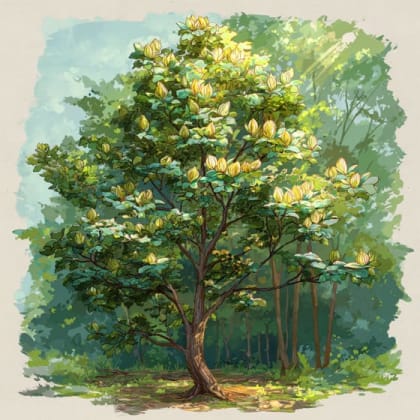
Larch trees are known for their soft, needle-like leaves that turn golden yellow in the fall. They grow tall and straight, providing homes for birds and insects in forests.
Habitat: Forests
The Larch is a unique conifer that boasts soft, bright green needles in spring and summer. Unlike most conifers, its needles turn a brilliant golden yellow in autumn before gracefully falling off, revealing its distinctive bare branches and small woody cones.
Category
TreesRarity
Common
Danger
1/5 · Very low
Snaps
Be the first to snap!
Larch resin is used as natural glue and was even traditional medicine!
Larch wood is so strong and rot-resistant, it helped build ancient Venice!
Some ancient Larch trees have lived for over 1,000 years!
The Larch is a conifer chameleon, turning brilliant gold before dropping its needles!
Larch sheds its needles each autumn, an adaptation that helps it survive harsh, freezing winter conditions by reducing water loss.
Larch has exceptionally strong and rot-resistant wood, making it incredibly durable for construction and outdoor uses.
Larch can thrive in poor, disturbed soils, helping it colonize new areas and prepare the ground for other trees.
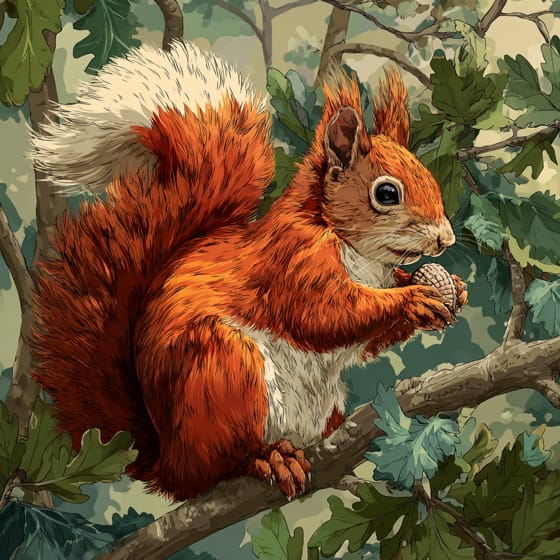
Sciurus vulgaris
forages on its seeds.
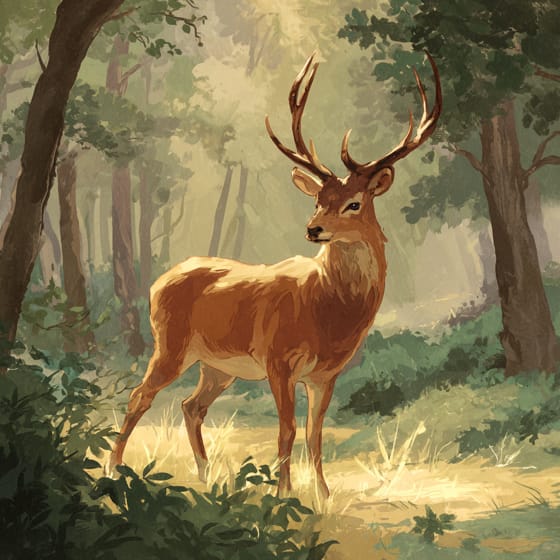
Cervus elaphus
browses on young shoots and bark.
Dendroctonus simplex
bores into its wood.
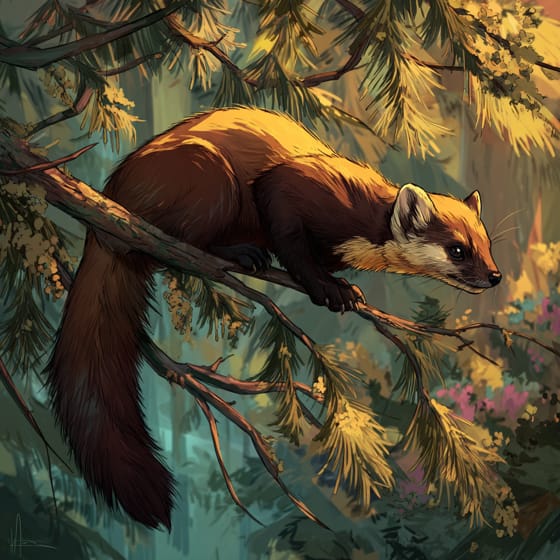
Martes martes
rests and dens in its canopy.
Deciduous plants periodically shed all their leaves, typically during autumn or dry seasons.
Cold hardy plants are able to withstand low temperatures and freezing conditions without significant damage.
Coniferous plants are typically evergreen, bearing needles or scales and reproductive cones.
Fall color refers to the seasonal change in foliage pigmentation, primarily in deciduous plants, displaying vibrant hues.

Rapid growing plants exhibit accelerated growth rates, quickly increasing in size and biomass within a short period.
Timber refers to wood that has been prepared for use in building and carpentry.

This trait signifies organisms belonging to a very old evolutionary group with ancestors dating back millions of years.

Forest habitats are terrestrial environments dominated by dense tree cover, supporting a high diversity of plant and animal life.

This trait characterizes organisms with an exceptionally long lifespan compared to others of their kind.
Danger
1/5 · Very low
Enjoy looking at larch trees from a safe distance and avoid climbing them.
20-45 m
8-15 m
No
60-150 cm
200-500 years
Forests
Cone
Medium
Zoom in to split clusters and explore where this object has been snapped.
Recent snaps will appear here as new observations are added.