




Bluefin Tuna
Thunnus thynnus
The Bluefin Tuna is a large, fast fish found in the deep, cool waters of the ocean. It has a sleek body built for speed and is known for its incredible swimming abilities.
Habitat: Deep Sea
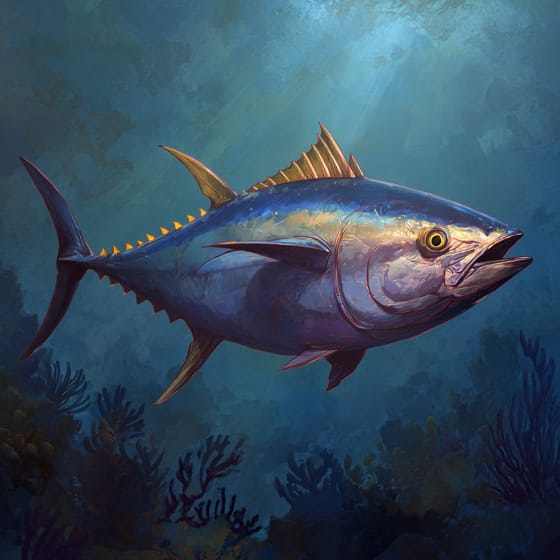
The Bluefin Tuna has a torpedo-shaped body with a metallic dark blue or black back and a silvery-white belly. Its distinctive yellow finlets run along its back and underside, leading to a powerful, crescent-shaped tail.
Category
FishRarity
Common
Danger
2/5 · Low
Snaps
Be the first to snap!
Bluefin tuna have special sensory pits to detect tiny water vibrations!
Some bluefin tuna cross entire oceans, traveling over 10,000 kilometers!
Their muscles can heat up to 20°C warmer than the surrounding ocean water!
They must swim constantly to breathe, or they will drown!
Bluefin Tuna has a super streamlined body and powerful tail that helps them swim incredibly fast, up to 70 km/h.
Bluefin Tuna can pull their pectoral fins into grooves on their body, making them extra aerodynamic for high-speed swimming.
Bluefin Tuna are swift ocean predators, eating many kinds of smaller fish, squid, and crustaceans.
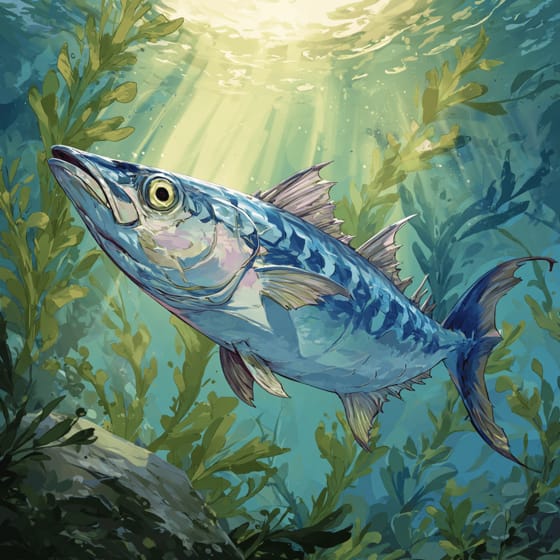
Scomber scombrus
A common fast-swimming prey fish.
Sardina pilchardus
Forms large schools which tuna hunt.
Illex illecebrosus
A significant part of their deep-water diet.
Piscivorous organisms are animals that primarily subsist on a diet of fish.
Thermoregulating organisms maintain a stable internal body temperature despite fluctuations in the external environment.
This trait identifies organisms whose diet consists entirely or primarily of animal tissue.
This trait identifies organisms that exhibit exceptional swiftness in movement for hunting, escape, or travel.

Aquatic habitats encompass environments where organisms live predominantly in water, including oceans, rivers, lakes, and wetlands.

Marine habitats encompass all saltwater environments of the Earth's oceans, supporting an immense diversity of aquatic life.

Migratory animals undertake seasonal movements from one region to another, typically in response to changes in climate or food availability.

Threatened status denotes a species likely to become endangered in the foreseeable future without effective conservation interventions.
Danger
2/5 · Low
Bluefin Tuna are wild animals and should be admired from a distance.
100-300 cm
100-600 kg
20-40 years
Bluefin Tuna are swift ocean predators, eating many kinds of smaller fish, squid, and crustaceans.
70 km/h
Deep Sea
Pursuit
1000 m
Zoom in to split clusters and explore where this object has been snapped.
Recent snaps will appear here as new observations are added.