



Blue Catfish
Ictalurus furcatus
The Blue Catfish is a big fish with a bluish color. It is known for being a strong swimmer and can grow very large!
Habitat: Rivers and lakes
The Blue Catfish is a large fish with a distinctive silvery-blue to slate gray body and a bright white belly. It has smooth, scaleless skin, a slightly humped back, and a deeply forked tail that makes it different from other catfish.
Category
FishRarity
Common
Danger
2/5 · Low
Snaps
Be the first to snap!
Blue Catfish have over 100,000 taste buds all over their body!
Some people catch them by "noodling," which means using only their bare hands!
These are the largest catfish in North America, growing to incredible sizes!
Unlike most fish, they don't have scales; their skin is super smooth!
Blue Catfish can swim swiftly through strong currents because of its strong, deeply forked tail.
Blue Catfish can make croaking sounds by rubbing bones together that helps them communicate with each other.
They are big eaters, munching on smaller fish, insects, crayfish, and even some plants.
Age differences: Younger catfish mainly eat insects and crustaceans, while adults become more fish-focused.
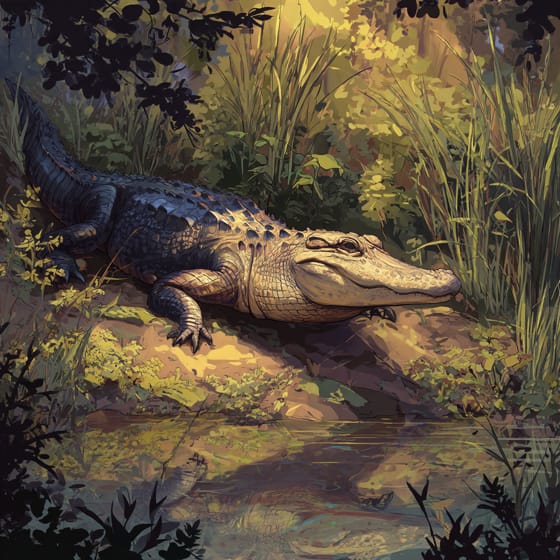
Alligator mississippiensis
Young catfish can be eaten by American alligators.
Dorosoma cepedianum
Blue Catfish hunt and eat Gizzard Shad, an abundant schooling fish.
Procambarus clarkii
Blue Catfish feed on red swamp crayfish found on the river bottom.
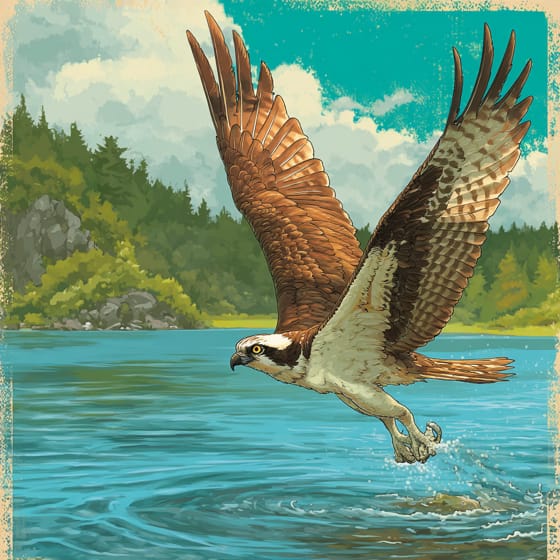
Pandion haliaetus
Ospreys sometimes prey on smaller, juvenile Blue Catfish near the surface.
Wildlife encompasses all undomesticated animal and plant life existing in their natural habitats.
Possessing prominent sensory hairs or vibrissae, often around the snout.
Colorful describes organisms or objects displaying a wide range of bright and distinct colors.
Piscivorous organisms are animals that primarily subsist on a diet of fish.

This trait signifies organisms belonging to a very old evolutionary group with ancestors dating back millions of years.

Freshwater habitats include non-saline aquatic environments such as rivers, lakes, ponds, and wetlands, vital for numerous species.

Aquatic habitats encompass environments where organisms live predominantly in water, including oceans, rivers, lakes, and wetlands.

Nocturnal animals are primarily active during the nighttime hours, typically resting or sleeping during the day.
Danger
2/5 · Low
Watch quietly from a distance and never try to feed or chase wild animals.
25-165 cm
0.5-68 kg
9-25 years
They are big eaters, munching on smaller fish, insects, crayfish, and even some plants.
12 km/h
Rivers and lakes
Foraging
20 m
Zoom in to split clusters and explore where this object has been snapped.
Recent snaps will appear here as new observations are added.