





Osprey
Pandion haliaetus
The Osprey is a large bird that loves to fish! It has beautiful brown and white feathers and can be seen near water. Ospreys build big nests high up in trees or on tall poles.
Habitat: Near lakes, rivers, and oceans
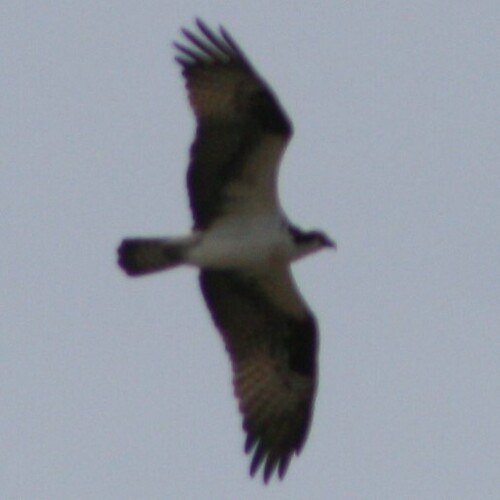
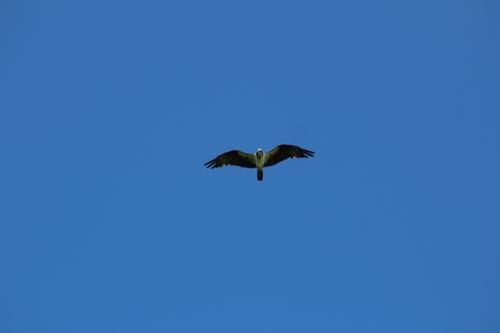
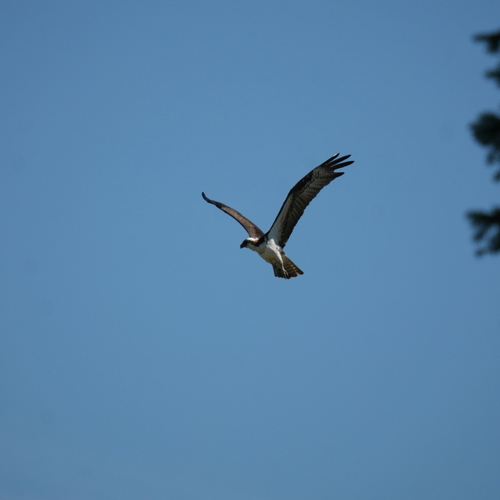
The Osprey is a large raptor with dark brown upperparts and crisp white underparts, featuring a distinctive dark eye-stripe across a white head. Its wings show a characteristic M-shape in flight.
Category
BirdsRarity
Common
Danger
1/5 · Very low
Snaps
333
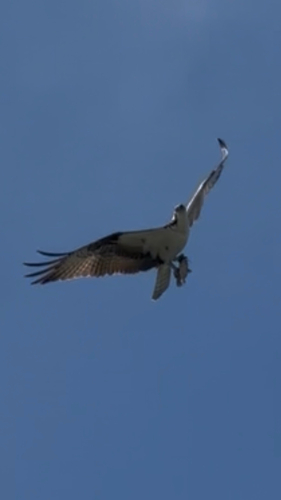
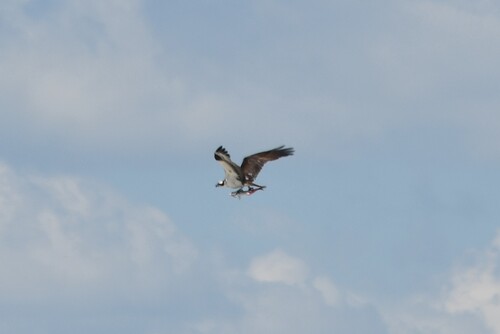
An Osprey can twist a captured fish mid-air to fly with it head-first!
Ospreys are found on every continent except icy Antarctica!
Some Ospreys migrate over 6,000 miles each year, crossing continents!
Their huge stick nests can sometimes grow taller than an adult person!
Osprey has spiky pads on its feet and reversible outer toes that help them grip slippery fish.
Osprey can plunge feet-first into water from great heights to snatch fish, often fully submerging.
Osprey has dense, oily feathers that help them shed water quickly after diving, allowing immediate flight.
Osprey carries caught fish head-first in flight, reducing wind resistance and making transport easier.
These magnificent raptors are almost entirely fish-eaters, masterfully catching their prey from water.
Wildlife encompasses all undomesticated animal and plant life existing in their natural habitats.
Feathered describes animals, primarily birds, possessing a covering of feathers.
Aerial creatures spend a significant portion of their lives airborne, utilizing flight for various activities such as hunting, migration, or nesting.
Piscivorous organisms are animals that primarily subsist on a diet of fish.

Coastal habitats are dynamic environments located along the interface between land and sea, influenced by tides, waves, and saltwater.

Diurnal animals are primarily active during daylight hours, typically resting or sleeping at night.

Migratory animals undertake seasonal movements from one region to another, typically in response to changes in climate or food availability.
Danger
1/5 · Very low
Ospreys are not dangerous to people. Just enjoy watching them from a distance!
The easiest way to identify Osprey is to use the Snappit nature identifier app.
50-66 cm
145-170 cm
0.9-2.1 kg
15-20 years
80 km/h
These magnificent raptors are almost entirely fish-eaters, masterfully catching their prey from water.
Near lakes, rivers, and oceans
Zoom in to split clusters and explore where this object has been snapped.
Jun 7, 2026
Painted HillsPhoto attribution
(c) John Clonce, some rights reserved (CC BY)
License: CC BY 4.0 ↗
Image may be shown cropped inside the card frame.
Jun 4, 2026
Cornell Botanic GardensPhoto attribution
(c) Cameron Christopher Dunn, some rights reserved (CC BY-SA)
License: CC BY-SA 4.0 ↗
Image may be shown cropped inside the card frame.
Jun 4, 2026
Concord Monument Square-Lexington Road Historic DistrictPhoto attribution
(c) Lythronax246, some rights reserved (CC BY)
License: CC BY 4.0 ↗
Image may be shown cropped inside the card frame.
Jun 2, 2026
Fort MilesPhoto attribution
(c) inbetweenbays, some rights reserved (CC BY)
License: CC BY 4.0 ↗
Image may be shown cropped inside the card frame.
May 31, 2026
Albemarle-Kenmore Terraces Historic DistrictPhoto attribution
(c) foxsu, some rights reserved (CC BY)
License: CC BY 4.0 ↗
Image may be shown cropped inside the card frame.

Alabama, US
You might spot Elf Orpine, Canada Goose, and Leatherleaf Mahonia.
View guide →

Virginia, US
You might spot Cope's Gray Tree Frog and Basilica Orbweaver.
View guide →

Ohio, US
You might spot Eastern Fox Squirrel and Spotted Lanternfly.
View guide →

California, US
You might spot Monarch, Canada Goose, and Western Gull.
View guide →

Rhode Island, US
You might spot Rugosa Rose and American Herring Gull.
View guide →

Oregon, US
You might spot Duck, Pacific Trillium, and Wood Duck.
View guide →
Take the discovery with you
Snap it with Snappit to identify it, learn what makes it special, and add the discovery to your collection.





.jpg&width=800)








