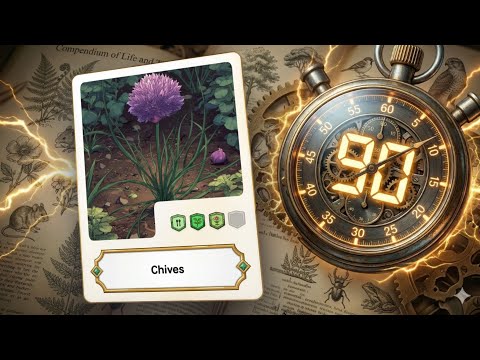
Chives
Allium schoenoprasum
Chives are green, grassy plants that taste like mild onions. They are often used in cooking to add flavor to dishes and can grow in gardens or pots.
Habitat: Gardens
The Chives has thin, hollow, grass-like leaves forming dense green clumps. Its distinctive globe-shaped flower heads are typically a beautiful lavender-purple or pink, standing proudly above the foliage.
Category
PlantsRarity
Common
Danger
1/5 · Very low
Snaps
20
Ancient Romans believed chives could soothe sore throats and act as a diuretic!
Cutting chives releases a special sulfur compound that gives them their unique flavor and smell!
Just a tablespoon of fresh chives adds Vitamin K, important for strong bones!
The word 'chive' comes from the Latin word 'cepa,' meaning onion.
Chives can quickly regrow their leaves after being cut, allowing multiple harvests through the growing season.
Chives release compounds that naturally deter common garden pests, protecting nearby plants without chemicals.
Chives possess strong cold hardiness, allowing them to survive frosty winters and regrow vigorously in spring.
Apis mellifera
collects nectar and pollen from flowers
Bombus impatiens
visits chive flowers for nectar
Thrips tabaci
feeds on chive leaves and flowers
Homo sapiens
cultivates and consumes chives
Aromatic plants produce and emit fragrant volatile organic compounds, often for defense or to attract pollinators.
Flowering plants are any plants that produce flowers as part of their reproductive cycle.
Biennial plants complete their life cycle over two growing seasons, typically forming foliage in the first year and flowering/seeding in the second.
Grass-like plants are herbaceous plants that visually resemble true grasses, typically having long, narrow leaves.

Edible plants are those parts of a plant that are considered safe for human consumption.

Describes plants that are particularly attractive and beneficial to a wide range of pollinating organisms.

Rapid growing plants exhibit accelerated growth rates, quickly increasing in size and biomass within a short period.

This human use trait indicates species from which spices are derived, used for flavoring, preserving food, or as aromatic agents.

This habitat trait indicates species that can coexist with humans in urban and suburban environments, utilizing man-made structures and green spaces.
Danger
1/5 · Very low
Chives are safe to touch and eat, but always wash them before eating!
20-50 cm
15-30 cm
2-4 cm
Late Spring - Early Summer
Yes
None
Perennial
Insect
Zoom in to split clusters and explore where this object has been snapped.