



Lebanon Cedar
Cedrus libani
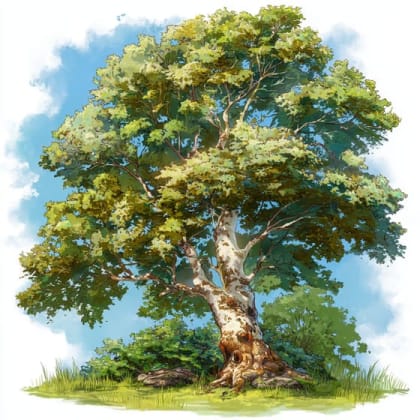
The Lebanon Cedar is a majestic tree with wide branches. It has a strong trunk and is famous for its beautiful wood.
Habitat: Mountain slopes
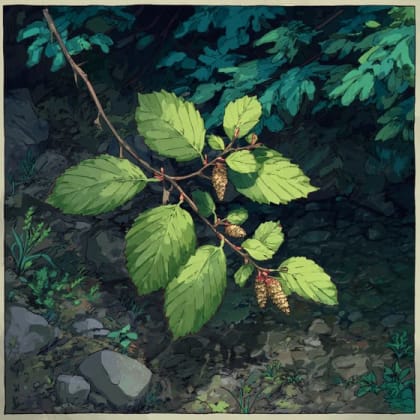
The Lebanon Cedar has striking dark green to blue-green needles and an iconic broad, flat-topped crown when mature. Its deeply fissured, dark brown bark adds to its majestic appearance, making it distinct from many conical conifers.
Category
TreesRarity
Rare
Danger
1/5 · Very low
Snaps
Be the first to snap!
A majestic cedar tree adorns the national flag of Lebanon!
Ancient Egyptians used cedar resin for mummifying pharaohs!
Its fragrant wood was once used to build entire ships!
King Solomon's Temple was famously built with cedar wood.
Lebanon Cedar has powerful roots that anchor it firmly on rocky, steep slopes, helping it survive strong winds and harsh mountain weather.
Lebanon Cedar's robust wood and slow growth allow it to live for thousands of years, enduring many changing climates.
The Lebanon Cedar produces a special aromatic oil in its wood that naturally repels insects, keeping pests away from its trunk.
Sciurus anomalus
Feeds on seeds from cedar cones.

Corvus corax
Builds nests in its strong branches.

Armillaria mellea
Causes root and butt rot in stressed trees.
Parasyntaractis irregularis
Larvae feed on cedar shoots.
Coniferous plants are typically evergreen, bearing needles or scales and reproductive cones.
Evergreen plants retain their foliage throughout the year, never shedding all their leaves at once.
Timber refers to wood that has been prepared for use in building and carpentry.
This habitat trait identifies species found in mountainous regions, characterized by high elevation, steep slopes, and varying climate zones.

This trait characterizes organisms with an exceptionally long lifespan compared to others of their kind.
Danger
1/5 · Very low
Do not pick or eat anything you find. Some plants and mushrooms can be harmful.
25-40 m
10-20 m
No
100-300 cm
500-2000 years
Mountain slopes
Barrel-shaped cones
Slow
Zoom in to split clusters and explore where this object has been snapped.
Recent snaps will appear here as new observations are added.