



Alder
Alnus
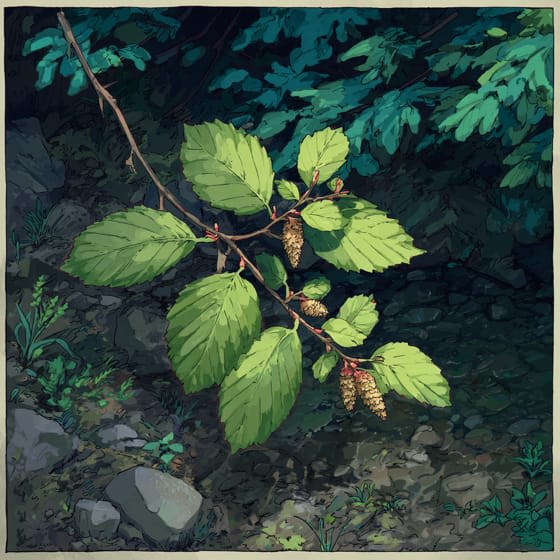
Alder trees have smooth bark and can grow near water! They have lovely green leaves that provide shade.
Habitat: Wetlands and riverbanks
The Alder has rounded, toothed, dark green leaves and small, distinctive woody 'cones' that remain on branches through winter. Its bark is smooth and grey, becoming fissured with age, and it often grows with multiple trunks.
Category
TreesRarity
Common
Danger
1/5 · Very low
Snaps
Be the first to snap!
Alder trees produce both male and female flowers on the same tree!
Alder wood turns orange when cut and is super water-resistant!
Its wood was used to build foundations for Venice, the city on water!
Native Americans used alder bark to make red and orange dyes!
Alder has roots that can thrive in wet, marshy ground, allowing it to colonize damp areas where other trees struggle to grow.
Alder can regrow vigorously from its stump if cut down, a powerful ability that allows it to quickly recover from damage or harvesting.
Frankia alni
helps fix nitrogen for the tree
.jpg&width=800)
Agelastica alni
feeds on alder leaves
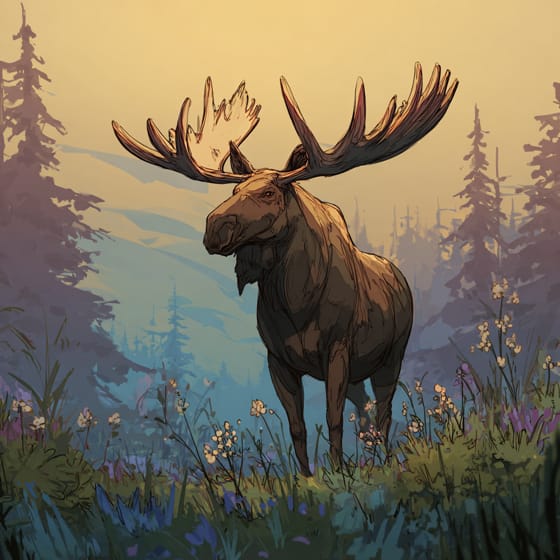
Alces alces
browses on young alder shoots and bark

Carduelis spinus
feeds on tiny alder seeds
Lactarius tabidus
forms mycorrhizal associations with roots
Deciduous plants periodically shed all their leaves, typically during autumn or dry seasons.
Describes organisms capable of converting atmospheric nitrogen into compounds usable by plants.
Shade tolerant plants are adapted to grow and thrive in areas with low light levels, requiring less direct sunlight.
Broadleaf trees are angiosperms characterized by flat, wide leaves that are typically shed annually in temperate climates.

Rapid growing plants exhibit accelerated growth rates, quickly increasing in size and biomass within a short period.

This habitat trait identifies species found in wetlands, which are areas of land saturated with water, either permanently or seasonally, including marshes, swamps, and bogs.
Danger
1/5 · Very low
Do not pick or eat anything you find. Some plants and mushrooms can be harmful.
The easiest way to identify Alder is to use the Snappit nature identifier app.
15-30 m
8-15 m
No
30-100 cm
50-120 years
Wetlands and riverbanks
Small woody cones
Zoom in to split clusters and explore where this object has been snapped.
Recent snaps will appear here as new observations are added.
Take the discovery with you
Snap it with Snappit to identify it, learn what makes it special, and add the discovery to your collection.










