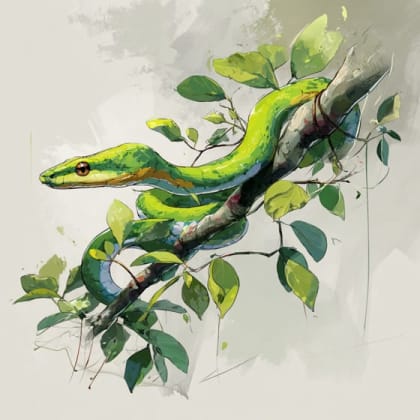
Egyptian Cobra
Naja haje
The Egyptian Cobra is a famous snake that was worshipped in ancient Egypt! It has a beautiful, shiny skin.
Habitat: Deserts and scrublands
The Egyptian Cobra is a large, powerful snake typically yellow-brown, grey, or black, often with a darker band under its throat. Its most distinctive feature is a broad hood it can flatten when threatened, making it look much wider than other snakes.
Category
ReptilesRarity
Rare
Danger
5/5 · Extreme
Snaps
Be the first to snap!
Ancient Egyptians considered them symbols of royalty and protection for pharaohs!
Despite their danger, these cobras usually try to escape humans first.
It can climb trees to raid bird nests for eggs and chicks. Wow!
These powerful snakes can live over 20 years in zoos, much longer than wild ones!
Egyptian Cobra can flatten its neck into a broad hood to look bigger and scare off threats, helping them appear more formidable.
Egyptian Cobra has highly potent neurotoxic venom injected through fixed fangs, which helps them quickly immobilize and digest prey.
Egyptian Cobra can hunt effectively at night using excellent vision and detecting ground vibrations, allowing them to find prey in the dark.
This cobra dines on small animals like rodents, birds, lizards, and even other snakes.
Rattus rattus
A common rodent prey species.
Agama agama
Frequently preys on these lizards.
Mellivora capensis
A fearless predator of snakes.
Circaetus pectoralis
Hunts snakes from above.
Wildlife encompasses all undomesticated animal and plant life existing in their natural habitats.
Desert habitats are arid regions characterized by extremely low precipitation and often extreme temperatures, supporting specialized flora and fauna.
This trait identifies organisms whose diet consists entirely or primarily of animal tissue.
Nocturnal animals are primarily active during the nighttime hours, typically resting or sleeping during the day.
Venomous organisms produce toxins that are injected into another animal, typically through a bite or sting.
Danger
5/5 · Extreme
Look but don’t touch. Keep a safe distance and wash hands after exploring.
120-200 cm
1.5-3.5 kg
10-20 years
8 km/h
This cobra dines on small animals like rodents, birds, lizards, and even other snakes.
4 km/h
Deserts and scrublands
Ambush
Zoom in to split clusters and explore where this object has been snapped.
Recent snaps will appear here as new observations are added.