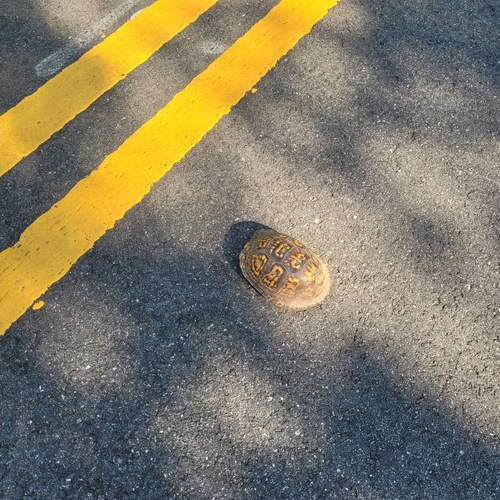
Eastern Box Turtle
Terrapene carolina
The Eastern Box Turtle is a small turtle with a domed shell that can close tightly when it feels scared. They love to roam the forest floor looking for yummy snacks!
Habitat: Woodlands, meadows, and wetlands
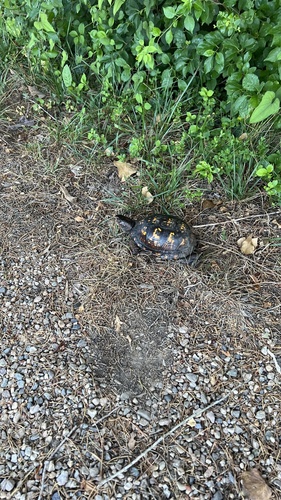
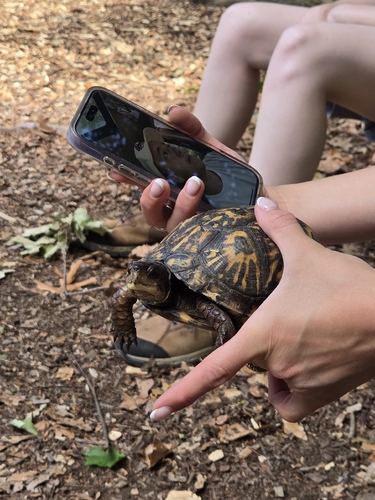
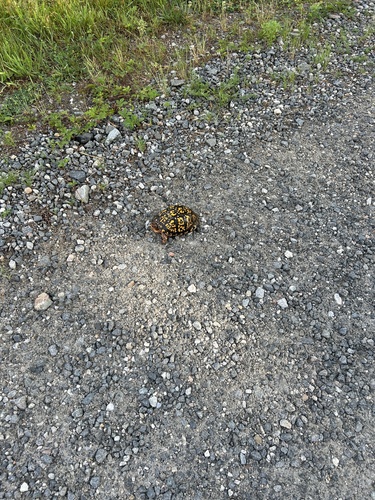
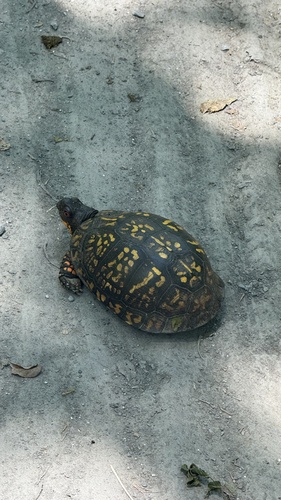
The Eastern Box Turtle has a high, dome-shaped upper shell, often patterned with bright yellow or orange blotches on a dark brown or black background. Its unique hinged plastron (bottom shell) allows it to fully enclose itself, a feature that visually distinguishes it from most other turtles.
Category
ReptilesRarity
Common
Danger
2/5 · Low
Snaps
150
A box turtle's shell grows rings like a tree, which can sometimes help estimate its age!
If flipped onto its back, an Eastern Box Turtle can often use its strong legs to right itself again!
Male box turtles often have red eyes, while females usually have brown or yellowish eyes!
They can sometimes spend winter months buried deep in the soil, entering a sleep called brumation.
Eastern Box Turtle has a hinged bottom shell that helps them pull completely inside for total protection from predators.
Eastern Box Turtle can eat many different foods because of their omnivorous diet that helps them find meals easily.
Eastern Box Turtle has excellent eyesight and smell that helps them locate food and find mates in dense undergrowth.
Eastern Box Turtle has a uniquely patterned shell that helps them blend perfectly into leafy forest floors.
This omnivore enjoys a varied diet of insects, berries, mushrooms, and even small carrion.
Age differences: Young turtles eat more protein-rich insects, while adults consume a larger proportion of plants and fungi.
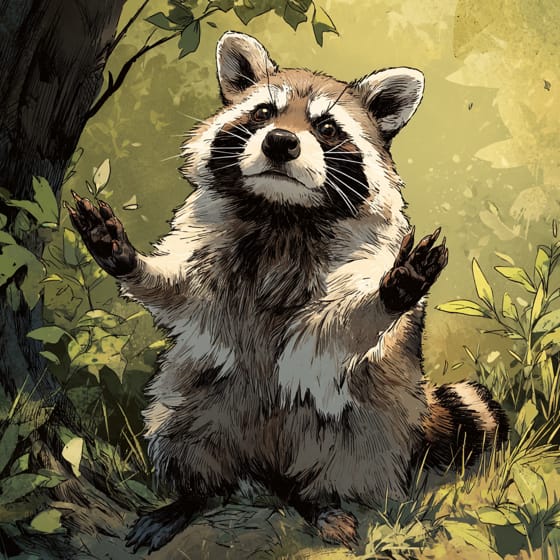
Procyon lotor
preys on eggs and young turtles
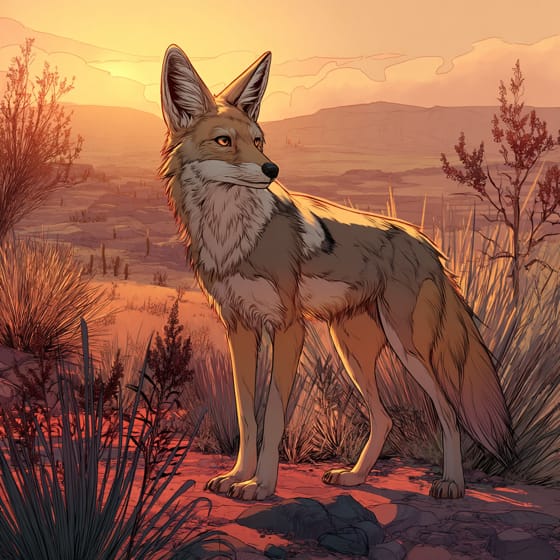
Canis latrans
may prey on adults and juveniles
Agaricus bisporus
forages for various fungi and mushrooms
Fragaria virginiana
consumes wild berries and fruits
Limax maximus
feeds on slugs and other invertebrates
Wildlife encompasses all undomesticated animal and plant life existing in their natural habitats.
This trait identifies organisms whose diet includes both plant and animal matter.
Forest habitats are terrestrial environments dominated by dense tree cover, supporting a high diversity of plant and animal life.
This trait characterizes organisms with an exceptionally long lifespan compared to others of their kind.

Armored describes animals protected by a hard, external covering or shell for defense.

Nocturnal animals are primarily active during the nighttime hours, typically resting or sleeping during the day.
Danger
2/5 · Low
Look but don’t touch. Keep a safe distance and wash hands after exploring.
The easiest way to identify Eastern Box Turtle is to use the Snappit nature identifier app.
10-20 cm
0.5-1.5 kg
30-60 years
0.5 km/h
This omnivore enjoys a varied diet of insects, berries, mushrooms, and even small carrion.
Woodlands, meadows, and wetlands
Foraging
Zoom in to split clusters and explore where this object has been snapped.
Jun 13, 2026
Advance MillsPhoto attribution
no rights reserved
License: CC0 1.0 ↗
Image may be shown cropped inside the card frame.
Jun 12, 2026
Brett Woods Open SpacePhoto attribution
(c) Alexander Diaz, some rights reserved (CC BY)
License: CC BY 4.0 ↗
Image may be shown cropped inside the card frame.
Jun 12, 2026
Willowwood ArboretumPhoto attribution
(c) Bonnie Semmling, some rights reserved (CC BY)
License: CC BY 4.0 ↗
Image may be shown cropped inside the card frame.
Jun 6, 2026
Harpers Ferry Historic DistrictPhoto attribution
(c) Jacob Malcom, some rights reserved (CC BY-SA)
License: CC BY-SA 4.0 ↗
Image may be shown cropped inside the card frame.
Jun 6, 2026
Jamestown ExpositionPhoto attribution
no rights reserved
License: CC0 1.0 ↗
Image may be shown cropped inside the card frame.

Virginia, US
You might spot Eastern Box Turtle and White-Tailed Deer.
View guide →

Florida, US
You might spot Anole, Eastern Box Turtle, and Golden Silk Spider.
View guide →

Tennessee, US
You might spot House Sparrow, Northern Mockingbird, and Gulf Fritillary.
View guide →

Rhode Island, US
You might spot Common Mugwort, Duck, and Azure Bluet.
View guide →

Maryland, US
You might spot Crane-Fly Orchid, Fragile Forktail, and Ebony Jewelwing.
View guide →

District of Columbia, US
You might spot Eastern Gray Squirrel, Duck, and House Sparrow.
View guide →
Take the discovery with you
Snap it with Snappit to identify it, learn what makes it special, and add the discovery to your collection.