




Rudd
Heteromirafra ruddi
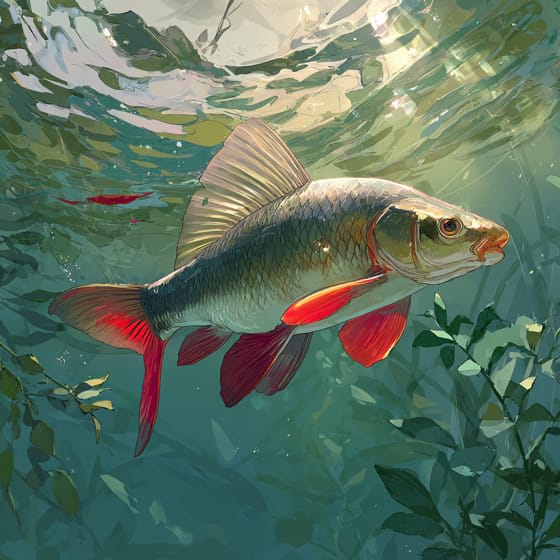
Rudd are beautiful fish with bright orange fins and a golden body. They like to swim in shallow waters where they can find tasty plants to eat.
Habitat: Ponds and slow-moving rivers
The Rudd has a silvery-gold body with distinctive bright red-orange fins. Its mouth is noticeably upturned, making it look like it's always looking upwards for surface food. This shape makes it different from similar-looking fish.
Category
FishRarity
Common
Danger
2/5 · Low
Snaps
Be the first to snap!
Baby Rudd often hide among plants to avoid bigger fish predators.
Rudd can sometimes create hybrid fish with Roach, leading to unique offspring!
The name "Rudd" might come from their bright red fins, a real standout feature!
They are often introduced to new places and can sometimes become invasive species.
Rudd can leap out of the water because they have powerful tails that help them snatch flying insects.
Rudd has specialized gills that help them survive in water with low oxygen, unlike many other fish.
Rudd can eat plants and small animals because their flexible diet helps them find food anywhere.
Rudd are omnivores, meaning they eat both tiny plants and small aquatic animals they find swimming or growing.
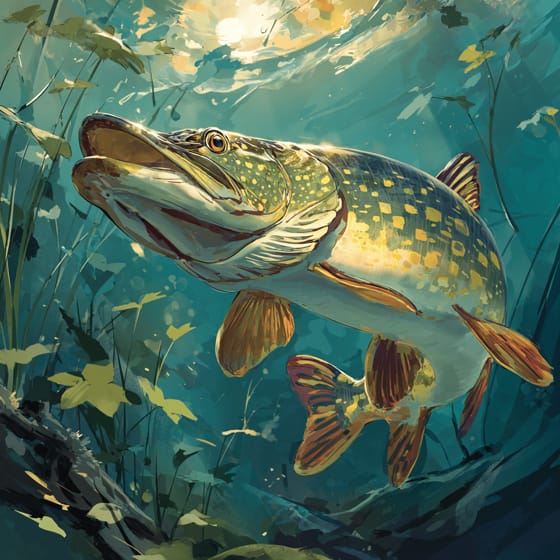
Esox lucius
Pike are top predators in many Rudd habitats.
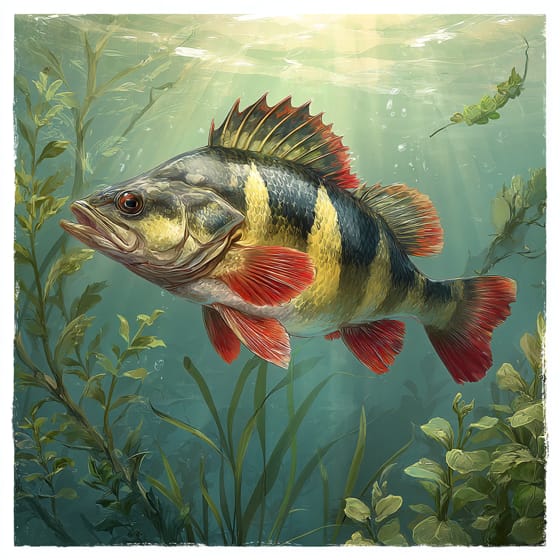
Perca fluviatilis
Perch are common predators of smaller Rudd.
Ardea cinerea
Herons hunt Rudd from above the water surface.
Daphnia pulex
Rudd feed on these tiny crustaceans.
This trait identifies organisms whose diet includes both plant and animal matter.
Colorful describes organisms or objects displaying a wide range of bright and distinct colors.
Filter feeders obtain nutrients by straining suspended food particles and small organisms from water.
This trait characterizes organisms whose diet consists entirely or primarily of plant material.

This trait characterizes organisms with an exceptionally long lifespan compared to others of their kind.

Diurnal animals are primarily active during daylight hours, typically resting or sleeping at night.

Freshwater habitats include non-saline aquatic environments such as rivers, lakes, ponds, and wetlands, vital for numerous species.

Describes a species whose presence and role have a disproportionately large effect on its environment.

Aquatic habitats encompass environments where organisms live predominantly in water, including oceans, rivers, lakes, and wetlands.
Danger
2/5 · Low
Watch quietly from a distance and never try to feed or chase wild animals.
15-45 cm
0.1-2.5 kg
10-15 years
Rudd are omnivores, meaning they eat both tiny plants and small aquatic animals they find swimming or growing.
10 km/h
Ponds and slow-moving rivers
Foraging
8 m
Zoom in to split clusters and explore where this object has been snapped.
Recent snaps will appear here as new observations are added.