






Hedgehog Mushroom
Hydnum
Hedgehog Mushrooms have a spiky underside and a sweet flavor. They are often found in the woods and are loved by many chefs!
Habitat: Wooded areas
The Hedgehog Mushroom has an irregularly shaped, often wavy cap that is typically off-white to orange-tan. Its most distinctive feature is the underside, which is covered in soft, brittle, tooth-like spines instead of gills, resembling a hedgehog's prickles.
Category
FungiRarity
Common
Danger
1/5 · Very low
Snaps
Be the first to snap!
Its scientific name, Hydnum repandum, means 'bent back' because its cap often curls!
This mushroom is a cousin to the famous Chanterelle mushroom, sharing a firm texture.
Unlike most mushrooms, it has no gills or pores, making it very unique!
You can find it growing alone or in small groups on the forest floor!
Hedgehog Mushroom has tooth-like spines on its underside that help them drop spores efficiently, even when growing at an angle.
Hedgehog Mushroom can share nutrients with trees through its roots because of a special symbiotic relationship, helping both thrive.
Hedgehog Mushroom has a slightly peppery taste, which can deter some pests from eating it completely.
Quercus robur
Forms a mutually beneficial mycorrhizal relationship.
Fagus sylvatica
Exchanges nutrients with its root system.
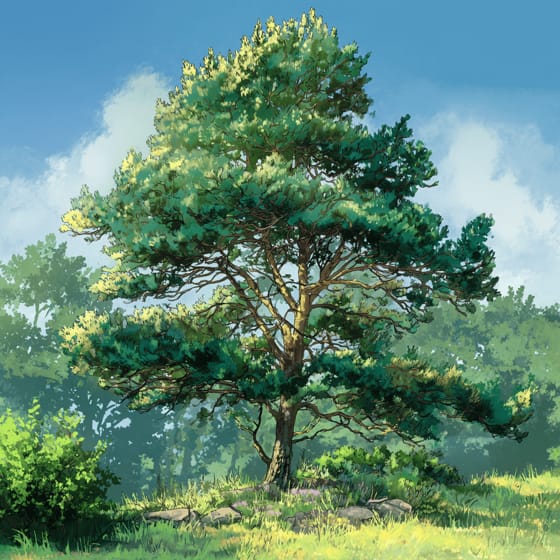
Pinus sylvestris
Benefits from a nutrient exchange partnership.
Limax maximus
Slugs often graze on these mushrooms.
Spore-producing organisms reproduce by releasing small, often single-celled, reproductive units called spores.
Edible plants are those parts of a plant that are considered safe for human consumption.
Fall color refers to the seasonal change in foliage pigmentation, primarily in deciduous plants, displaying vibrant hues.
Forest habitats are terrestrial environments dominated by dense tree cover, supporting a high diversity of plant and animal life.
Danger
1/5 · Very low
Do not pick or eat anything you find. Some plants and mushrooms can be harmful.
4-10 cm
edible
5-15 cm
Wooded areas
soil
Late summer to late autumn
White
Zoom in to split clusters and explore where this object has been snapped.
Recent snaps will appear here as new observations are added.












