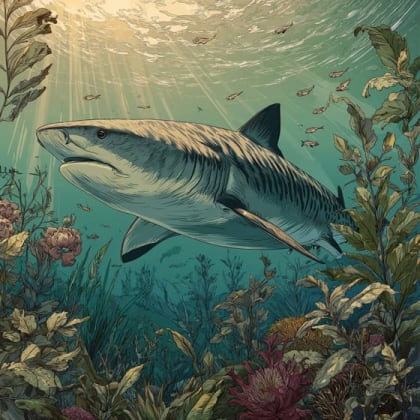





Pike
Esox lucius
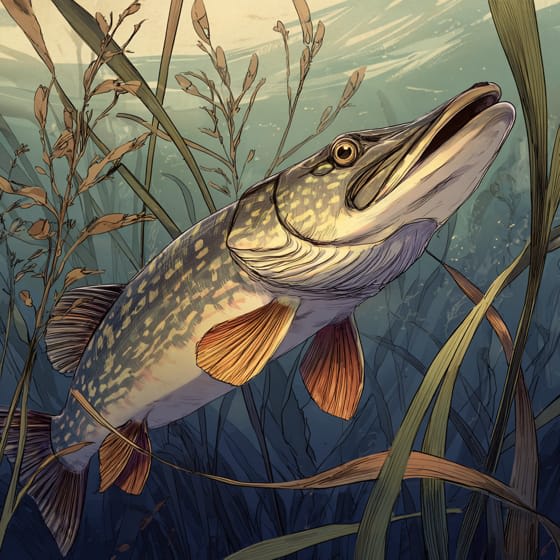
Pikes are long, slender fish with sharp teeth that live in lakes and rivers. They are excellent hunters and can blend into their surroundings to catch their prey.
Habitat: Lakes and rivers
The Pike is a long, torpedo-shaped fish with an olive-green body adorned with light, bean-shaped spots. It has a distinctive flattened, duck-bill shaped snout and large mouth, making it easily recognizable among freshwater predators.
Category
FishRarity
Common
Danger
3/5 · Moderate
Snaps
Be the first to snap!
A Pike's eyes are positioned on top of its head, giving it a wide view upwards to spot prey.
Pike are so fierce, they sometimes eat other Pikes, even those nearly their own size!
Pike have teeth not only on their jaws but also on their tongue and roof of mouth!
Some massive Pikes have been known to live for over 25 years in the wild!
Pike can blend into its watery background because of its spotted green pattern that helps them surprise prey.
Pike can explode from stillness with incredible speed because of its powerful tail fin that helps them catch fast-moving prey.
Pike has hundreds of needle-sharp, backward-pointing teeth that help them securely grip slippery fish.
Pike has a special lateral line system that helps them detect tiny movements of hidden prey in murky water.
Pike are top predators, mainly eating other fish and sometimes small animals.
Age differences: Young pike start by eating invertebrates and small fish, transitioning to larger fish as they grow.
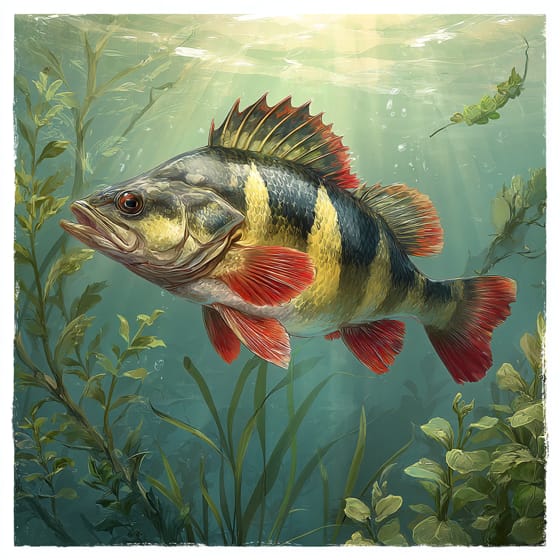
Perca fluviatilis
A common prey fish for adult pike.
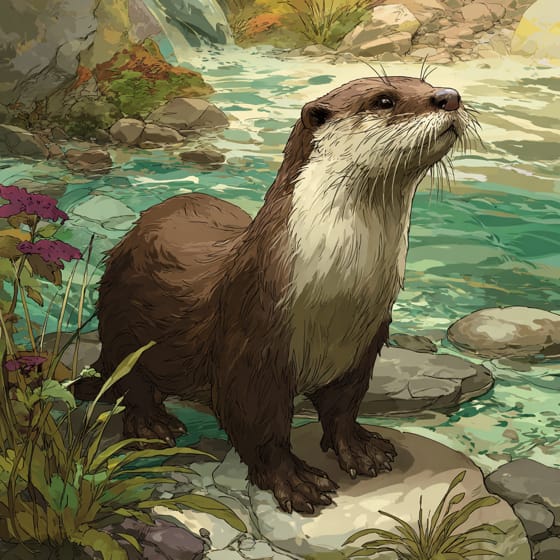
Lutra lutra
Otters prey on smaller pike in their habitat.

Arvicola amphibius
Pike ambush voles that swim across waterways.
Potamogeton natans
Pike hide among these plants to ambush prey.
Camouflaged describes organisms that possess coloring or patterns that allow them to blend into their environment.
Colorful describes organisms or objects displaying a wide range of bright and distinct colors.
Piscivorous organisms are animals that primarily subsist on a diet of fish.
An ambush predator hunts by patiently waiting and concealing itself, then launching a sudden attack when unsuspecting prey comes within range.

Freshwater habitats include non-saline aquatic environments such as rivers, lakes, ponds, and wetlands, vital for numerous species.

Regenerative organisms possess the ability to regrow lost or damaged body parts, tissues, or organs.

This trait identifies organisms that exhibit exceptional swiftness in movement for hunting, escape, or travel.

Aquatic habitats encompass environments where organisms live predominantly in water, including oceans, rivers, lakes, and wetlands.
Danger
3/5 · Moderate
If you see a pike in the water, admire it from a safe distance and don't disturb its habitat.
45-130 cm
1-20 kg
10-15 years
Pike are top predators, mainly eating other fish and sometimes small animals.
35 km/h
Lakes and rivers
Ambush
20 m
Zoom in to split clusters and explore where this object has been snapped.
Recent snaps will appear here as new observations are added.