




Spotted Eagle Ray
Aetobatus narinari
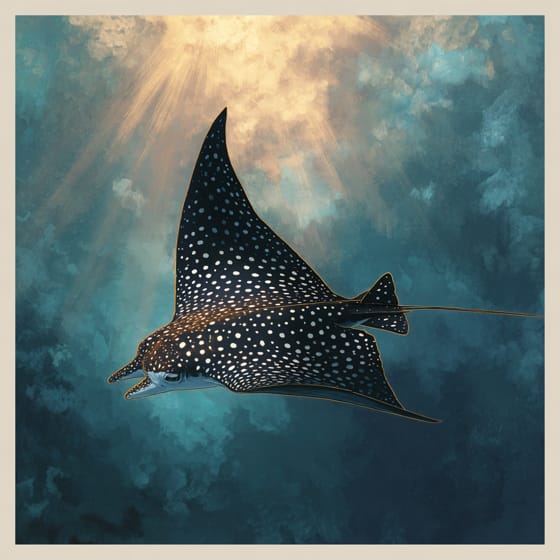
Spotted Eagle Rays have beautiful spotted patterns on their backs! They glide gracefully along the ocean floor.
Habitat: Shallow coastal waters
The Spotted Eagle Ray has a distinctive dark blue to black dorsal surface covered with numerous white spots, resembling stars in the night sky. It possesses a flattened, duck-like snout and a long, whip-like tail with several venomous barbs near its base, making it visually unique among rays.
Category
FishRarity
Common
Danger
2/5 · Low
Snaps
1
Baby eagle rays are born live, swimming immediately after birth!
Sometimes, hundreds of these rays swim together in amazing schools!
Their long tail can have up to five venomous barbs for defense!
They use their snout like a shovel to dig for food in the seabed!
Spotted Eagle Rays can dig into the sand with their snout that helps them uncover hidden prey like clams and crabs.
Spotted Eagle Rays can breach, jumping high out of the water, possibly to escape predators or remove parasites.
Spotted Eagle Rays have special electroreceptors that help them detect electrical fields from prey buried in the sand.
Spotted Eagle Rays have powerful, plate-like teeth that help them easily crush the hard shells of mollusks.
They munch on tasty shellfish, crabs, and small fish hidden on the seabed with their powerful jaws!
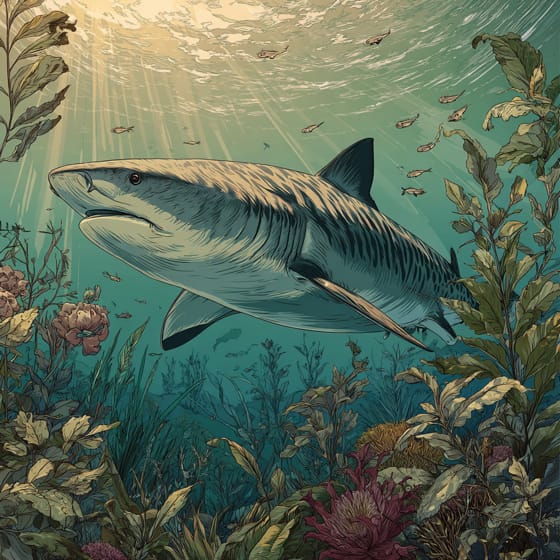
Galeocerdo cuvier
A primary predator of rays.
Sphyrna mokarran
Hunts them in shallow coastal areas.
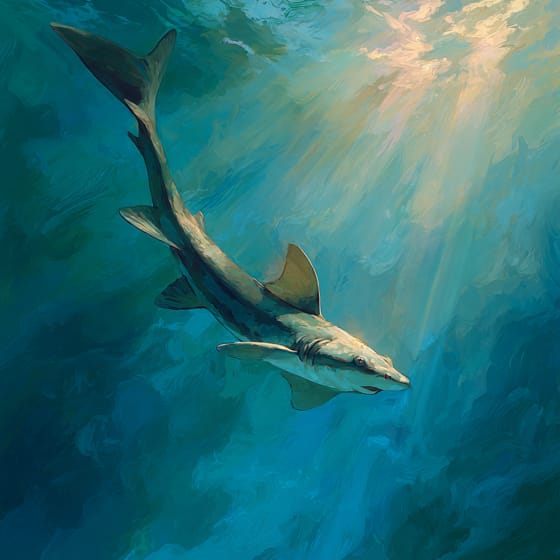
Echeneis naucrates
Attaches for transport and food scraps.
Mercenaria mercenaria
A favorite food, dug from the seabed.
Wildlife encompasses all undomesticated animal and plant life existing in their natural habitats.
Gliding animals move through the air by launching themselves and maintaining flight with specialized body structures, without flapping wings.
Piscivorous organisms are animals that primarily subsist on a diet of fish.
Thermoregulating organisms maintain a stable internal body temperature despite fluctuations in the external environment.

Coastal habitats are dynamic environments located along the interface between land and sea, influenced by tides, waves, and saltwater.

Diurnal animals are primarily active during daylight hours, typically resting or sleeping at night.

This trait identifies organisms that exhibit exceptional swiftness in movement for hunting, escape, or travel.

Aquatic habitats encompass environments where organisms live predominantly in water, including oceans, rivers, lakes, and wetlands.
Danger
2/5 · Low
Watch quietly from a distance and never try to feed or chase wild animals.
The easiest way to identify Spotted Eagle Ray is to use the Snappit nature identifier app.
150-300 cm
100-230 kg
15-23 years
They munch on tasty shellfish, crabs, and small fish hidden on the seabed with their powerful jaws!
48 km/h
Shallow coastal waters
Foraging
Zoom in to split clusters and explore where this object has been snapped.

Florida, US
You might spot Tiger, Jaguar, and Florida Panther.
View guide →

Washington, US
You might spot Octopus, Sea Otter, and Harbor Seal.
View guide →

Florida, US
You might spot Great White Shark, Spotted Eagle Ray, and Sea Turtle.
View guide →

Hawaii, US
You might spot Sea Turtle, Great White Shark, and Spotted Eagle Ray.
View guide →
Florida, US
You might spot Clownfish, Blue Tang, and Sea Turtle.
View guide →
Hawaii, US
You might spot Sea Turtle, Blacktip Reef Shark, and Spotted Eagle Ray.
View guide →
Take the discovery with you
Snap it with Snappit to identify it, learn what makes it special, and add the discovery to your collection.