





Eurasian Otter
Lutra lutra
Eurasian otters are skilled swimmers that live in rivers and coastal waters. They hunt fish and other small animals.
Habitat: Rivers, lakes, and coastal areas.
The Eurasian Otter has a sleek, streamlined body covered in dark brown fur, with a lighter cream or greyish patch on its throat and chest. Its long, thick, muscular tail tapers to a point, and it has small, rounded ears and prominent whiskers.
Category
MammalsRarity
Common
Danger
3/5 · Moderate
Snaps
Be the first to snap!
Eurasian Otters can hold their breath and dive for up to 8 minutes!
Otters build cozy dens called 'holts' often hidden in riverbanks!
Sometimes, otters play by sliding down muddy banks just for fun!
They communicate using a variety of whistles, chirps, and even growls!
Eurasian Otter can close its nostrils and ears to hunt fish effectively underwater, helping them stay focused.
Eurasian Otter has super-sensitive whiskers that help them detect prey movement in murky water, even in darkness.
Eurasian Otter has dense, oily fur that traps air, keeping them warm and dry even in icy cold waters.
Eurasian Otter can swim with surprising speed and agility, thanks to its streamlined body and webbed feet.
A clever hunter, this otter primarily eats fish and other small aquatic animals it catches in the water.
Age differences: Young otters learn to hunt by watching their mother; their diet becomes more varied.
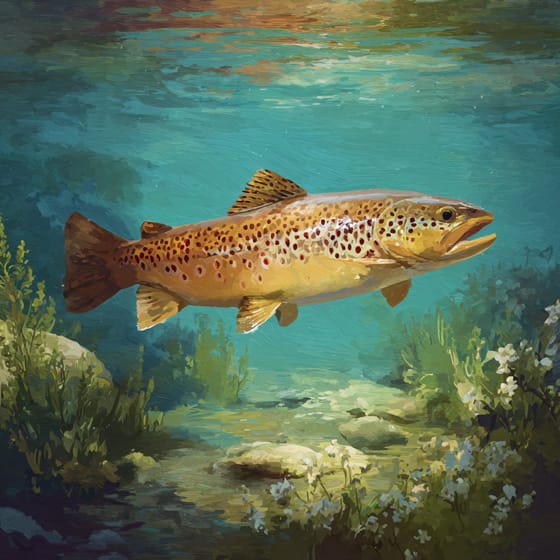
Salmo trutta
A primary fish prey in freshwater habitats.
Rana temporaria
Catches frogs, especially in marshy areas.

Phragmites australis
Dense reed beds offer hiding spots and cover.
Homo sapiens
Conservation efforts are vital for otter survival.
Furry describes animals possessing a dense covering of soft hair or fur.
Characterized by having toes connected by a membrane, typically aiding in swimming.
Possessing prominent sensory hairs or vibrissae, often around the snout.
Solitary animals live alone for most of their lives, only interacting with others for mating or parental care.

Piscivorous organisms are animals that primarily subsist on a diet of fish.

Thermoregulating organisms maintain a stable internal body temperature despite fluctuations in the external environment.

This trait describes organisms that manipulate external objects to achieve a specific goal.

Freshwater habitats include non-saline aquatic environments such as rivers, lakes, ponds, and wetlands, vital for numerous species.

Describes a species whose presence and role have a disproportionately large effect on its environment.

This trait identifies organisms that exhibit exceptional swiftness in movement for hunting, escape, or travel.
Danger
3/5 · Moderate
Otters can bite — observe from a distance.
The easiest way to identify Eurasian Otter is to use the Snappit nature identifier app.
90-130 cm
5-12 kg
10-15 years
12 km/h
A clever hunter, this otter primarily eats fish and other small aquatic animals it catches in the water.
Rivers, lakes, and coastal areas.
Pursuit
Zoom in to split clusters and explore where this object has been snapped.
Recent snaps will appear here as new observations are added.
Take the discovery with you
Snap it with Snappit to identify it, learn what makes it special, and add the discovery to your collection.





.jpg&width=800)



.JPG&width=800)



.jpg&width=800)
