




Angelfish
Pomacanthus imperator
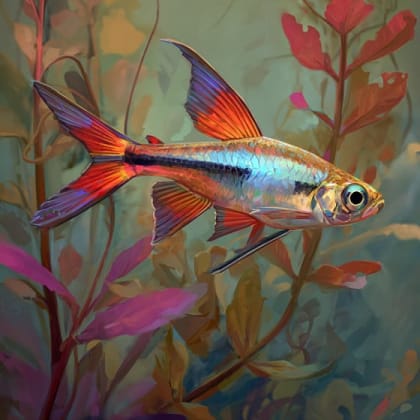
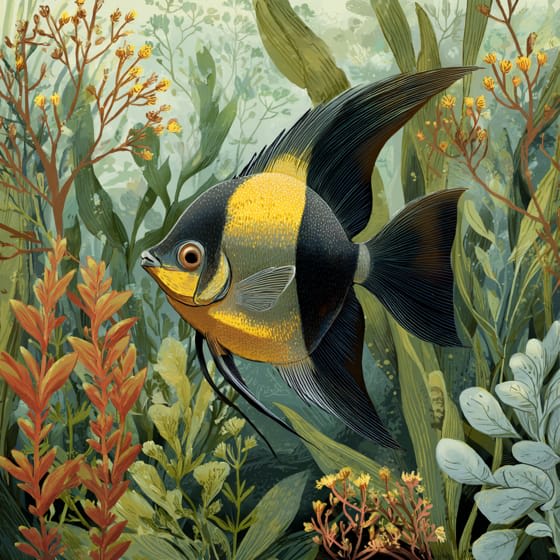
Angelfish are colorful fish that swim gracefully in the water. They have beautiful fins and enjoy living in groups.
Habitat: Angelfish are found in warm freshwater rivers and lakes, often hiding among plants.
The Angelfish has a striking body with six dark vertical bands and a bright yellow tail. Its body is often a pale white or blue, contrasting with the vibrant yellow and blue fins. This distinct pattern makes it visually stand out in coral reef environments.
Category
FishRarity
Common
Danger
2/5 · Low
Snaps
Be the first to snap!
Baby Angelfish often have completely different colors and patterns than their parents!
Many Angelfish can change their gender during life!
Some angelfish can live for over 20 years in the warm ocean waters!
They defend their special patch of coral reef very bravely!
Angelfish has a flattened body shape that helps them slip through tight coral spaces to hide from predators.
Angelfish has a sharp spine near its gill cover that helps them defend against predators when threatened.
Angelfish can scrape algae because they have specialized teeth that help them clean rocks and corals.
Angelfish graze on algae and nibble on tiny ocean critters found on reefs.
Age differences: Juveniles may eat more algae and detritus than adults.
Triaenodon obesus
Large sharks can prey on adult angelfish.
Epinephelus lanceolatus
Massive groupers are known predators of reef fish.
Siphonochalina siphonella
They feed on various sponge species found on reefs.
Dictyota dichotoma
Angelfish help control algal growth on coral reefs.
Acropora millepora
Angelfish hide among coral branches from predators.
Social animals live in organized groups, cooperating for survival benefits such as foraging, defense, and raising offspring.
This trait identifies organisms whose diet includes both plant and animal matter.
Colorful describes organisms or objects displaying a wide range of bright and distinct colors.
This trait signifies organisms belonging to a very old evolutionary group with ancestors dating back millions of years.

This trait characterizes organisms with an exceptionally long lifespan compared to others of their kind.

Freshwater habitats include non-saline aquatic environments such as rivers, lakes, ponds, and wetlands, vital for numerous species.

Describes a species whose presence and role have a disproportionately large effect on its environment.

Aquatic habitats encompass environments where organisms live predominantly in water, including oceans, rivers, lakes, and wetlands.
Danger
2/5 · Low
Watch quietly from a distance and never try to feed or chase wild animals.
15-46 cm
0.1-0.8 kg
10-20 years
Angelfish graze on algae and nibble on tiny ocean critters found on reefs.
8 km/h
Angelfish are found in warm freshwater rivers and lakes, often hiding among plants.
Foraging
50 m
Zoom in to split clusters and explore where this object has been snapped.
Recent snaps will appear here as new observations are added.