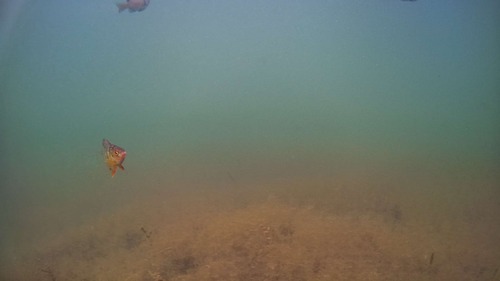
Yellow Perch
Perca flavescens
The Yellow Perch is a small fish with bright yellow stripes. They are very friendly and often swim in schools!
Habitat: Lakes and rivers
The Yellow Perch has a distinctive golden-yellow body with 6-8 prominent dark vertical bars on its sides. Its fins are often bright orange to reddish, especially the lower ones, making it visually striking among freshwater fish.
Category
FishRarity
Common
Danger
2/5 · Low
Snaps
10
The biggest Yellow Perch on record weighed over 1.9 kilograms!
Their eyes are specially made to see even in murky, dim lake waters!
These fish can form 'shivering' schools to confuse hungry predators!
Yellow Perch eggs hatch tangled together in long, jelly-like ribbons!
Yellow Perch has dark vertical bars that help them blend into weeds and shadows, making it hard for predators to spot them.
Yellow Perch has a strong, spiny dorsal fin that helps them protect themselves from bigger fish trying to eat them.
Yellow Perch can swim in large groups, helping them confuse predators and find food more efficiently as a team.
A hungry fish that eats almost anything it can catch, from tiny bugs to smaller fish!
Age differences: Young perch start with tiny zooplankton and insects, while adults add bigger insects, crustaceans, and small fish.
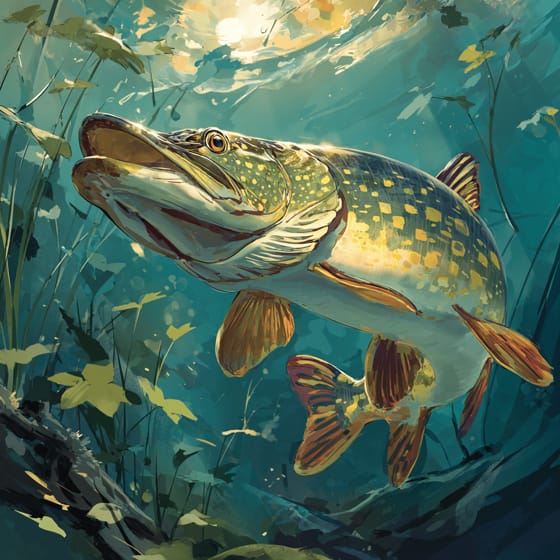
Esox lucius
A major predator in many shared freshwater habitats.
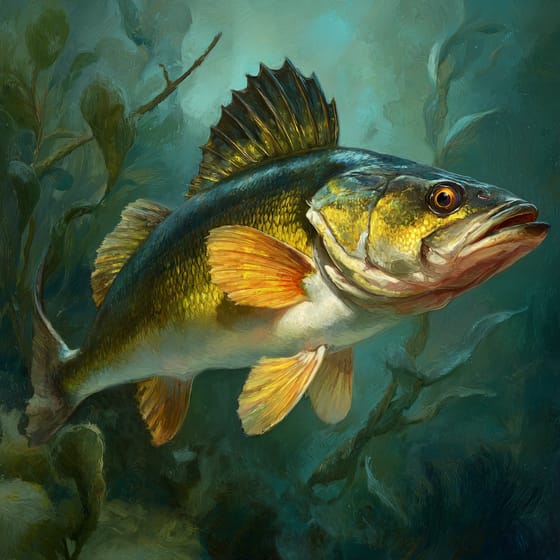
Sander vitreus
Larger fish that often hunt perch in lakes and rivers.
Daphnia pulex
An important food source, especially for young perch.

Notemigonus crysoleucas
Perch prey on this smaller minnow species.
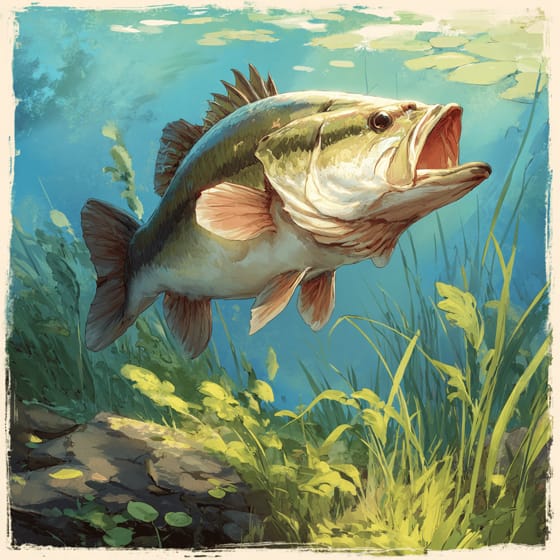
Micropterus salmoides
Feeds on perch, especially in weedy, shallow areas.
Wildlife encompasses all undomesticated animal and plant life existing in their natural habitats.
Social animals live in organized groups, cooperating for survival benefits such as foraging, defense, and raising offspring.
Colorful describes organisms or objects displaying a wide range of bright and distinct colors.
Piscivorous organisms are animals that primarily subsist on a diet of fish.

Freshwater habitats include non-saline aquatic environments such as rivers, lakes, ponds, and wetlands, vital for numerous species.

Aquatic habitats encompass environments where organisms live predominantly in water, including oceans, rivers, lakes, and wetlands.
Danger
2/5 · Low
Watch quietly from a distance and never try to feed or chase wild animals.
The easiest way to identify Yellow Perch is to use the Snappit nature identifier app.
15-30 cm
0.1-0.5 kg
5-10 years
A hungry fish that eats almost anything it can catch, from tiny bugs to smaller fish!
15 km/h
Lakes and rivers
Ambush
Zoom in to split clusters and explore where this object has been snapped.
May 18, 2026
Ascutney Mill DamPhoto attribution
no rights reserved
License: CC0 1.0 ↗
Image may be shown cropped inside the card frame.

New Hampshire, US
You might spot White-Tailed Deer, Christmas Fern, and Eastern Hemlock.
View guide →

Wisconsin, US
You might spot Sundial Lupine, Aurora Damsel, and Lancet Clubtail.
View guide →

Michigan, US
You might spot Duck, White-Tailed Deer, and Garter Snake.
View guide →

New Jersey, US
You might spot Striped Wintergreen and Partridgeberry.
View guide →

Michigan, US
You might spot Swamp Rose Mallow, Amur Honeysuckle, and Great Blue Heron.
View guide →

Massachusetts, US
You might spot Common Eastern Bumble Bee, House Sparrow, and Rock Pigeon.
View guide →
Take the discovery with you
Snap it with Snappit to identify it, learn what makes it special, and add the discovery to your collection.