
Barreleye
Opisthoproctus grimaldii
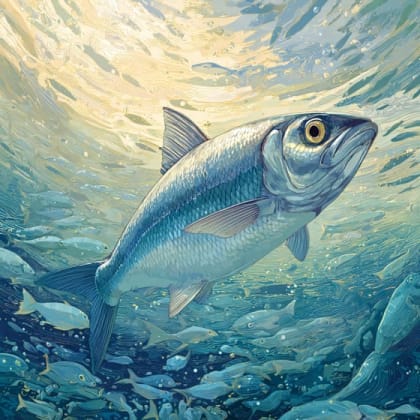
The Barreleye fish has a transparent head and tubular eyes that can rotate to look upwards. It lives in the deep sea, where it uses its unique eyes to spot prey above.
Habitat: Deep Sea
The Barreleye has a distinctive transparent, fluid-filled dome on its head, revealing its large, tubular, upward-pointing green eyes. Its body is generally slender and silvery-brown, with small, paddle-like fins. This unique head structure makes it visually different from most fish.
Category
FishRarity
Rare
Danger
1/5 · Very low
Snaps
Be the first to snap!
Barreleyes often hang perfectly still in the water, waiting for dinner to drift right to them!
Scientists only first observed a live barreleye with its transparent head intact in 2004!
Their glowing green eyes act like sunglasses, helping them spot faint glowing prey!
They are also known as 'spook fish' because of their incredibly strange and ghostly appearance!
Barreleye has a transparent head that protects its delicate eyes, allowing it to see clearly in the deep ocean.
Barreleye can rotate its tubular eyes forward when hunting, helping it precisely target tiny prey from above.
Barreleye has specialized eye lenses that gather scarce light, helping it spot silhouettes of food in darkness.
Barreleyes are carnivores that patiently ambush tiny crustaceans and other small deep-sea animals.
Calanus finmarchicus
A tiny, common crustacean, a staple food for many deep-sea fish.
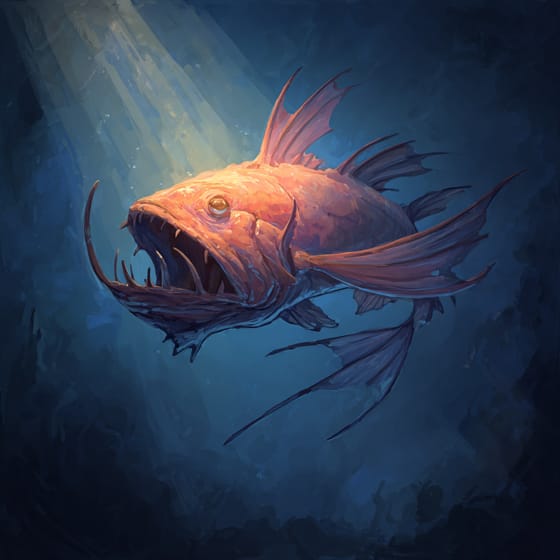
Anoplogaster cornuta
This deep-sea predator has fearsome teeth for catching smaller fish.
Chiasmodon niger
A formidable deep-sea fish known for swallowing prey larger than itself.
Wildlife encompasses all undomesticated animal and plant life existing in their natural habitats.
Piscivorous organisms are animals that primarily subsist on a diet of fish.
An ambush predator hunts by patiently waiting and concealing itself, then launching a sudden attack when unsuspecting prey comes within range.
Deep sea habitats are characterized by extreme pressure, darkness, and cold temperatures, supporting unique life forms below the sunlit zone.

Echolocation is a biological sonar used by animals to navigate, hunt, and communicate by emitting sound waves and interpreting the echoes.

Aquatic habitats encompass environments where organisms live predominantly in water, including oceans, rivers, lakes, and wetlands.

Nocturnal animals are primarily active during the nighttime hours, typically resting or sleeping during the day.
No aliases listed yet.
Danger
1/5 · Very low
Barreleye fish live in the deep sea and are not encountered by people. They are not dangerous to humans.
10-25 cm
0.05-0.2 kg
5-10 years
Barreleyes are carnivores that patiently ambush tiny crustaceans and other small deep-sea animals.
0.5 km/h
Deep Sea
Ambush
1000 m
Zoom in to split clusters and explore where this object has been snapped.
Recent snaps will appear here as new observations are added.