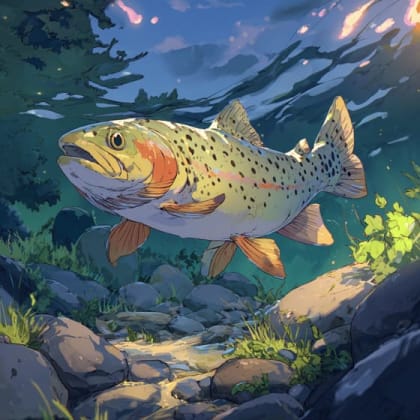

Cleaner Wrasse
Labroides dimidiatus
Cleaner wrasses are small fish that help other fish by cleaning parasites off their bodies. They have bright colors and move quickly around coral reefs.
Habitat: Coral reefs
The Cleaner Wrasse has an elongated body with a vibrant blue anterior, fading to a darker blue or black posterior. A distinct black stripe runs from its snout, through its eye, to its pointed tail, often bordered by a bright blue dorsal stripe. This striking pattern makes it easily identifiable among reef fish.
Category
FishRarity
Common
Danger
1/5 · Very low
Snaps
Be the first to snap!
Other fish will line up for their turn at a Cleaner Wrasse's 'cleaning station'!
Some Cleaner Wrasse are born female and can change into males later in life!
They can clean the inside of a huge shark's mouth without being eaten!
They're so important that if they disappear, other reef fish get sick!
Cleaner Wrasse can meticulously remove parasites and dead skin from other fish, helping maintain reef health.
Cleaner Wrasse has a special 'dance' to signal its cleaning intentions, building trust with larger, predatory fish.
Cleaner Wrasse can swim inside the mouths and gills of large predators without being eaten, thanks to its helpful cleaning role.
Tiny parasites and dead skin are a Cleaner Wrasse's favorite healthy meal!
Gymnothorax javanicus
Removes parasites from its mouth and gills.
Cheilinus undulatus
Cleans external parasites and dead scales off its body.
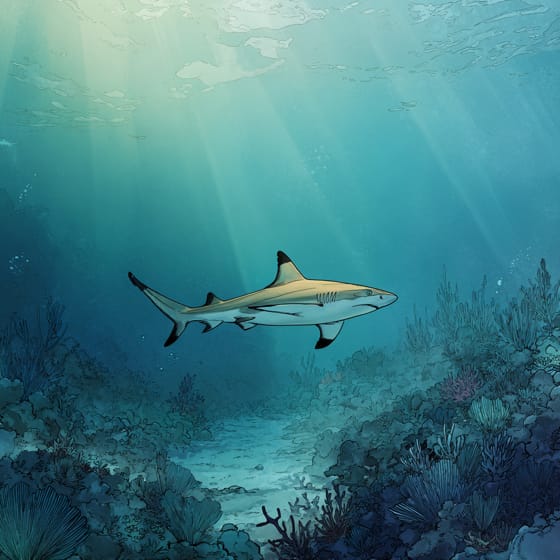
Carcharhinus melanopterus
Even cleans the skin and gills of reef sharks.
Social animals live in organized groups, cooperating for survival benefits such as foraging, defense, and raising offspring.
Colorful describes organisms or objects displaying a wide range of bright and distinct colors.
Piscivorous organisms are animals that primarily subsist on a diet of fish.
Describes a relationship between two different species where they live in close association, often benefiting one or both.

This trait describes organisms that manipulate external objects to achieve a specific goal.

Describes a species whose presence and role have a disproportionately large effect on its environment.

This trait identifies organisms that exhibit exceptional swiftness in movement for hunting, escape, or travel.

Aquatic habitats encompass environments where organisms live predominantly in water, including oceans, rivers, lakes, and wetlands.

Marine habitats encompass all saltwater environments of the Earth's oceans, supporting an immense diversity of aquatic life.
Danger
1/5 · Very low
Watch these fish from a safe distance to not disturb their important work.
The easiest way to identify Cleaner Wrasse is to use the Snappit nature identifier app.
5-12 cm
0.005-0.02 kg
2-4 years
Tiny parasites and dead skin are a Cleaner Wrasse's favorite healthy meal!
7 km/h
Coral reefs
Foraging
Zoom in to split clusters and explore where this object has been snapped.
Recent snaps will appear here as new observations are added.
Take the discovery with you
Snap it with Snappit to identify it, learn what makes it special, and add the discovery to your collection.