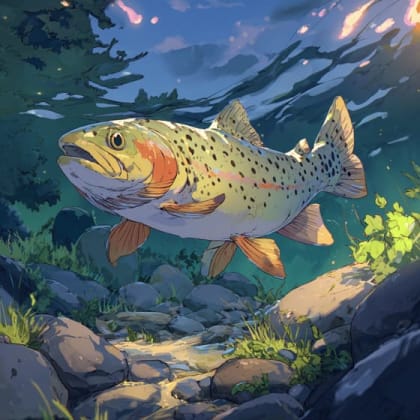
Red Mullet
Mullus surmuletus
Red Mullet is a colorful fish with a bright red color. They are known for their sweet, delicious taste!
Habitat: Shallow coastal waters
The Red Mullet has an elongated body covered in large, often reddish-pink scales, sometimes with subtle yellow stripes. It is easily recognized by its two prominent, whisker-like barbels beneath its chin, which are lighter in color.
Category
FishRarity
Common
Danger
2/5 · Low
Snaps
Be the first to snap!
Red Mullet can change its colors quickly, like a mood ring!
Their scientific name, Mullus, is ancient Latin for 'mullet,' referring to its reddish scales.
These fish are famous for making grunting sounds, especially when caught by fishers!
They 'taste' the seafloor with barbels, sensing tiny creatures hidden in the sand.
Red Mullet can rapidly change its skin color to blend in with its surroundings, helping it hide from predators.
Red Mullet has strong head muscles that help them dig into the sand and mud to find tasty buried snacks.
These bottom-dwellers use their special whiskers to find worms and small crustaceans on the seafloor.
Dicentrarchus labrax
A common predator in their coastal habitats.
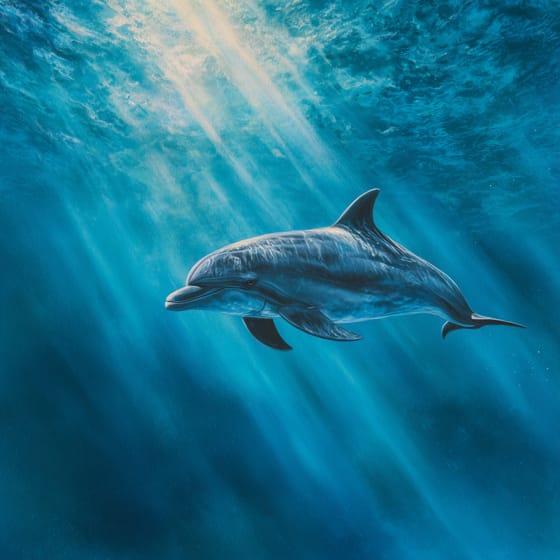
Tursiops truncatus
Part of the diet for these intelligent marine mammals.
Nereis diversicolor
A favorite meal, found hidden in the sand.
Crangon crangon
Searches for these small crustaceans buried in sediment.
Wildlife encompasses all undomesticated animal and plant life existing in their natural habitats.
Colorful describes organisms or objects displaying a wide range of bright and distinct colors.
Piscivorous organisms are animals that primarily subsist on a diet of fish.
Coastal habitats are dynamic environments located along the interface between land and sea, influenced by tides, waves, and saltwater.

Aquatic habitats encompass environments where organisms live predominantly in water, including oceans, rivers, lakes, and wetlands.

Nocturnal animals are primarily active during the nighttime hours, typically resting or sleeping during the day.
Danger
2/5 · Low
Watch quietly from a distance and never try to feed or chase wild animals.
The easiest way to identify Red Mullet is to use the Snappit nature identifier app.
15-40 cm
0.1-1 kg
5-10 years
These bottom-dwellers use their special whiskers to find worms and small crustaceans on the seafloor.
20 km/h
Shallow coastal waters
Foraging
Zoom in to split clusters and explore where this object has been snapped.
Recent snaps will appear here as new observations are added.
Take the discovery with you
Snap it with Snappit to identify it, learn what makes it special, and add the discovery to your collection.