




Pileated Woodpecker
Dryocopus pileatus
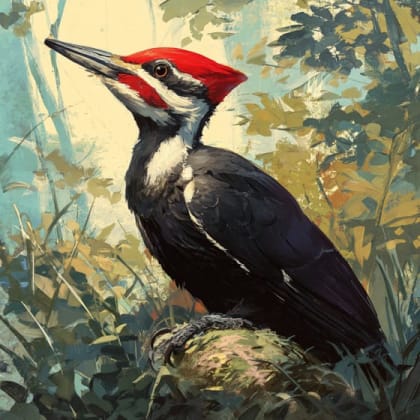
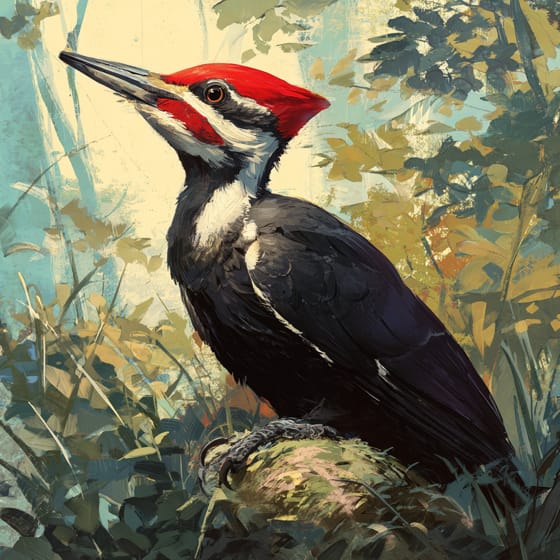
The Pileated Woodpecker is a large, striking bird with a bright red crest and black body. They love to drum on trees to find tasty insects and make their homes in old trees.
Habitat: Forests and woodlands
The Pileated Woodpecker is a large, striking bird with a black body and a prominent red crest. Both sexes have white stripes on the face and neck, but males also sport a red "mustache" stripe, making them visually distinct.
Category
BirdsRarity
Common
Danger
1/5 · Very low
Snaps
90
Their drumming can be heard up to a mile away!
Their old nest cavities are homes for many other animals!
Their tongue can wrap all the way around their skull!
They follow ant trails to find hidden nests deep inside trees!
Pileated Woodpecker can hammer trees loudly because of its strong neck and beak, helping it find food and communicate.
Pileated Woodpecker has a powerful, chisel-like beak that helps it dig large, rectangular holes into wood to find insects.
Pileated Woodpecker can extend a long, barbed, sticky tongue because of its unique skull structure, helping it extract insects.
Pileated Woodpecker has two toes pointing forward and two backward, helping it grip tree trunks firmly while climbing.
They mainly eat insects found deep inside trees, like carpenter ants and beetle larvae.
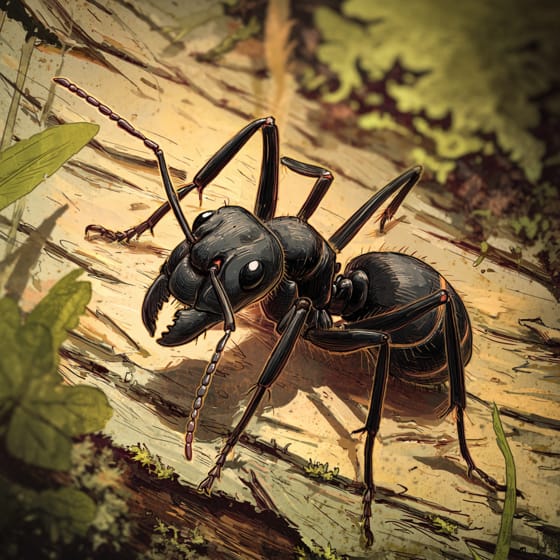
Camponotus pennsylvanicus
A primary food source, found deep in trees.
Glaucomys volans
Uses abandoned woodpecker cavities for nests.
Megascops asio
Often nests in old Pileated Woodpecker holes.
Carya ovata
Excavates cavities in live or dead trees.
Feathered describes animals, primarily birds, possessing a covering of feathers.
Social animals live in organized groups, cooperating for survival benefits such as foraging, defense, and raising offspring.
Arboreal animals live primarily in trees, utilizing them for shelter, food, and protection from predators.
This trait identifies organisms whose diet primarily consists of insects and other small invertebrates.

Forest habitats are terrestrial environments dominated by dense tree cover, supporting a high diversity of plant and animal life.

This trait characterizes organisms with an exceptionally long lifespan compared to others of their kind.

Diurnal animals are primarily active during daylight hours, typically resting or sleeping at night.

Describes a species whose presence and role have a disproportionately large effect on its environment.
Danger
1/5 · Very low
Pileated Woodpeckers are not dangerous, but it's best to watch them from a distance and not disturb their homes.
40-49 cm
66-76 cm
0.25-0.35 kg
10-15 years
50 km/h
They mainly eat insects found deep inside trees, like carpenter ants and beetle larvae.
Forests and woodlands
Foraging
Zoom in to split clusters and explore where this object has been snapped.

Michigan, US
You might spot African Lion, Komodo Dragon, and Brown Bear.
View guide →
Ohio, US
You might spot African Lion, Komodo Dragon, and Tiger.
View guide →
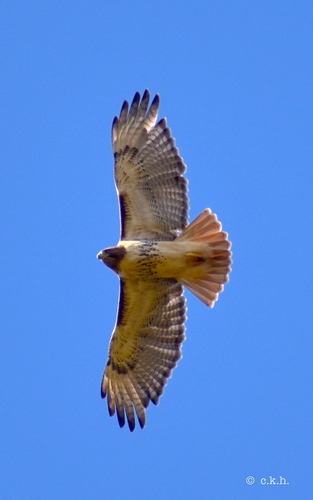
New Hampshire, US
You might spot Red-Tailed Hawk, Northern Cardinal, and Chipping Sparrow.
View guide →

Missouri, US
You might spot Sheep, Giraffes, and Tiger.
View guide →
Pennsylvania, US
You might spot African Lion, Giraffes, and Tiger.
View guide →

Virginia, US
You might spot Monarch, Eastern Box Turtle, and Asian Lady Beetle.
View guide →