

Penguin
Spheniscidae
Penguins are amazing birds that swim in the ocean and waddle on land. They have a special color pattern that helps them hide from predators in the water.
Habitat: Coastal areas
The Penguin is a flightless bird distinguished by its iconic tuxedo-like appearance, featuring glossy black feathers on its back and stark white on its belly. It has short, stiff flippers instead of wings, a stocky body, and stands upright, making it uniquely adapted for aquatic life.
Category
BirdsRarity
Common
Danger
2/5 · Low
Snaps
Be the first to snap!
Emperor Penguins can dive deeper than any other bird, reaching over 500 meters underwater!
Penguins 'toboggan' on their bellies across ice and snow to move quickly and save energy!
Penguins often eat small stones, which may help them digest food and dive deeper!
Some penguins use pebbles to build their nests, and even give them as gifts!
Penguins have torpedo-shaped bodies and powerful flippers that help them dart through water with incredible speed and agility.
Penguins have dense, overlapping feathers and a thick layer of fat, keeping them warm in freezing polar waters.
Penguins have a special gland above their eyes that filters salt from the seawater they drink, helping them stay hydrated.
Penguins gather in massive huddles to share body warmth and shield themselves from harsh Antarctic winds.
Penguins primarily eat seafood like fish and krill caught by expertly swimming in the ocean.
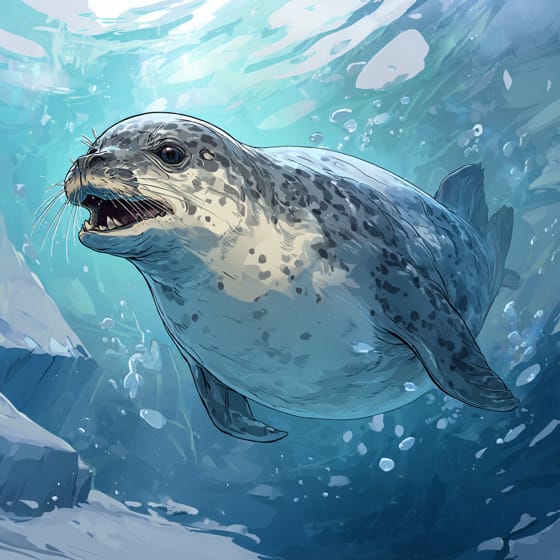
Hydrurga leptonyx
A major predator of penguins in Antarctic waters.
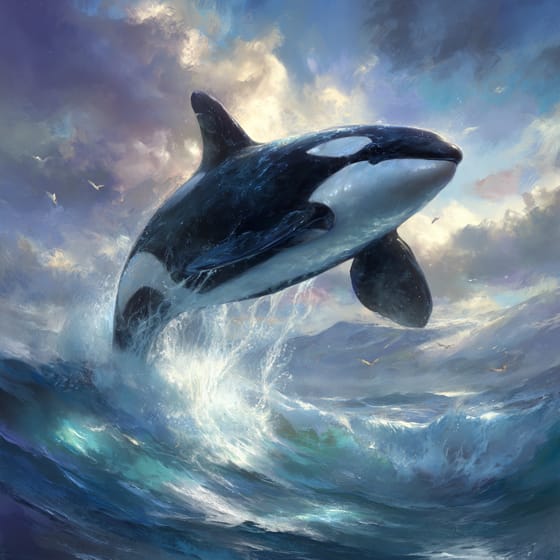
Orcinus orca
Hunts larger penguin species in open ocean.
Euphausia superba
A primary food source for many penguin species.
Catharacta skua
Preys on penguin eggs and young chicks near colonies.
Wildlife encompasses all undomesticated animal and plant life existing in their natural habitats.
Feathered describes animals, primarily birds, possessing a covering of feathers.
Characterized by having toes connected by a membrane, typically aiding in swimming.
Social animals live in organized groups, cooperating for survival benefits such as foraging, defense, and raising offspring.

Piscivorous organisms are animals that primarily subsist on a diet of fish.
Thermoregulating organisms maintain a stable internal body temperature despite fluctuations in the external environment.

This trait signifies organisms belonging to a very old evolutionary group with ancestors dating back millions of years.

Coastal habitats are dynamic environments located along the interface between land and sea, influenced by tides, waves, and saltwater.
No aliases listed yet.
Danger
2/5 · Low
Do not approach wild penguins, as they may bite if they feel threatened.
30-120 cm
10-30 cm
1-45 kg
6-20 years
36 km/h
Penguins primarily eat seafood like fish and krill caught by expertly swimming in the ocean.
Coastal areas
Pursuit
Zoom in to split clusters and explore where this object has been snapped.
Recent snaps will appear here as new observations are added.

Spain, ES
You might spot Giant Panda, Red Panda, and Asian Elephant.
View guide →

Spain, ES
You might spot African Penguin, Sea Turtle, and Penguin.
View guide →

Spain, ES
You might spot African Lion, Giraffes, and Asian Elephant.
View guide →