Desert Rose
Adenium
The Desert Rose is a stunning plant that has thick, fleshy stems and beautiful pink flowers. It looks like a little tree with a bright crown of flowers!
Habitat: Deserts and dry regions
The Desert Rose is a striking succulent shrub with a unique, swollen base called a caudex, which stores water. It boasts vibrant, trumpet-shaped flowers, typically in shades of pink, red, or white, often with contrasting edges. Its thick, glossy green leaves usually cluster at the stem tips.
Category
PlantsRarity
Rare
Danger
1/5 · Very low
Snaps
Be the first to snap!
Despite its name, it's not a rose at all, but related to the oleander flower!
Its thick, swollen trunk helps it store water, just like a camel stores water in its humps!
Some varieties are grown as miniature 'trees' in bonsai, even blooming small flowers!
The plant's potent sap has historically been used to make poison arrows for hunting!
Desert Rose has a thick, bulbous trunk (caudex) that helps it store water, allowing it to survive long dry periods.
Desert Rose can produce highly toxic sap, which helps it defend against hungry herbivores that try to eat its leaves or stems.
Desert Rose has large, showy flowers with bright colors that help it attract specific insects for successful pollination.
Apis mellifera
collects nectar and pollen
Aphis gossypii
feeds on sap from leaves
Agrius convolvuli
visits flowers at dusk
Cluster flowers are inflorescences where individual flowers are arranged closely together on a common stem.
A shrub is a woody plant smaller than a tree, typically with multiple stems branching from or near the ground.
Evergreen plants retain their foliage throughout the year, never shedding all their leaves at once.
Fragrant flowers emit a pleasant aroma, often to attract pollinators or for defense.

Pertaining to plants that have stems covered with sharp, pointed projections for defense.

Drought-tolerant plants can survive and flourish in conditions with limited water availability.

Succulent plants have thickened, fleshy parts, usually leaves or stems, adapted to store water in arid climates.

Desert habitats are arid regions characterized by extremely low precipitation and often extreme temperatures, supporting specialized flora and fauna.
Danger
1/5 · Very low
Explore with care and ask an adult if you’re unsure what to do.
50-300 cm
50-200 cm
2-7 cm
Spring to Fall, often year-round indoors
No
High
Perennial
Insect
Zoom in to split clusters and explore where this object has been snapped.
Recent snaps will appear here as new observations are added.
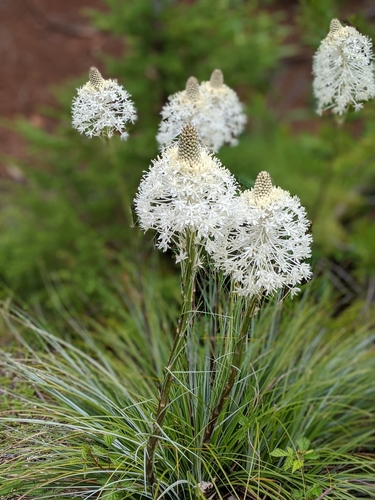
British Columbia, CA
You might spot Common Beargrass and Subalpine Larch.
View guide →
British Columbia, CA
You might spot Green Comma, Mourning Cloak, and Hoary Comma.
View guide →