Fire-bellied Toad
Bombina orientalis
The Fire-bellied Toad is a small, colorful frog that loves to hop around near water. Its bright belly warns predators to stay away!
Habitat: Wetlands and ponds
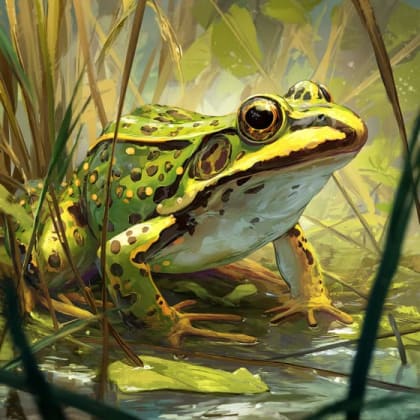
The Fire-bellied Toad has a striking bright green top with dark spots and a rough, warty skin. Its most unique feature is its vibrant red-orange and black mottled underside, which flashes as a warning.
Category
AmphibiansRarity
Common
Danger
2/5 · Low
Snaps
Be the first to snap!
Males have a soft, bell-like call, not a typical croak!
Their sticky tongue can snatch insects faster than a blink!
These toads can breathe through their skin underwater!
They 'play dead' by flipping over to show their warning colors!
Fire-bellied Toads can flip over to flash their bright red belly because it warns predators that they are toxic.
Fire-bellied Toads have glands in their skin that release a mild toxin, which helps protect them from being eaten.
Fire-bellied Toads can stay submerged for long periods, which helps them hide from danger.
They mostly eat small insects and worms, hunting them both on land and in the water.
Age differences: Tadpoles eat algae and detritus; adults primarily eat insects and small invertebrates.
Thamnophis sirtalis
A common snake predator in some ranges.
Ardea alba
Wading birds often prey on amphibians.
Formica rufa
Toads ambush ants as part of their diet.
Lumbricus terrestris
Toads forage for earthworms in damp soil.
Wildlife encompasses all undomesticated animal and plant life existing in their natural habitats.
Colorful describes organisms or objects displaying a wide range of bright and distinct colors.
This trait identifies organisms whose diet primarily consists of insects and other small invertebrates.
This trait characterizes organisms with an exceptionally long lifespan compared to others of their kind.

This habitat trait identifies species found in wetlands, which are areas of land saturated with water, either permanently or seasonally, including marshes, swamps, and bogs.

Nocturnal animals are primarily active during the nighttime hours, typically resting or sleeping during the day.
Danger
2/5 · Low
Look but don’t touch. Keep a safe distance and wash hands after exploring.
4-6 cm
0.005-0.015 kg
10-15 years
0.5 km/h
They mostly eat small insects and worms, hunting them both on land and in the water.
Wetlands and ponds
Foraging
50-200
Zoom in to split clusters and explore where this object has been snapped.
Recent snaps will appear here as new observations are added.