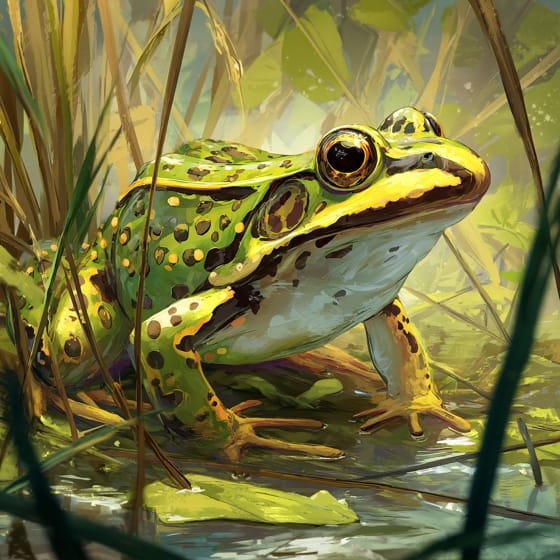





Leopard Frog
Lithobates pipiens
The Leopard Frog has beautiful spots that make it look like a little leopard! They love to hop around in warm weather.
Habitat: Grasslands, wetlands, and ponds
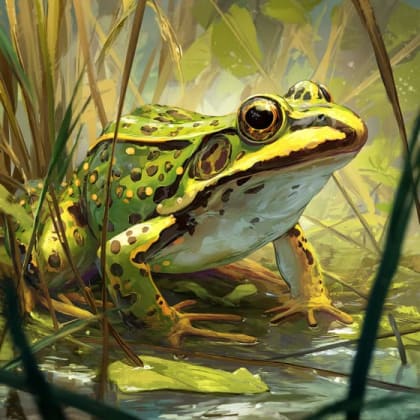
The Leopard Frog is typically green or brownish-green, covered in large, irregular dark spots bordered by light halos. It has prominent light-colored folds running down its back, making it stand out from solid-colored frogs.
Category
AmphibiansRarity
Common
Danger
2/5 · Low
Snaps
54
Leopard Frogs can survive being frozen solid, then thaw out and hop away!
Sometimes, they 'sing' their croaking songs completely underwater to attract mates.
Their super-sticky tongue shoots out faster than a blink to snatch unsuspecting prey!
These frogs can eat surprising meals, even other small frogs or tiny birds!
Leopard Frogs can jump incredibly far, up to 20 times their body length, to escape predators or catch prey quickly.
Leopard Frogs have unique dark spots with light halos that help them blend into mottled pond environments, hiding from watchful eyes.
Leopard Frogs can absorb oxygen directly through their moist skin, allowing them to stay underwater for longer periods or breathe on land.
They are hungry hunters, feasting on small insects, spiders, and anything else they can fit in their mouth!
Age differences: Tadpoles are primarily vegetarians, eating algae, while adult frogs are carnivores.
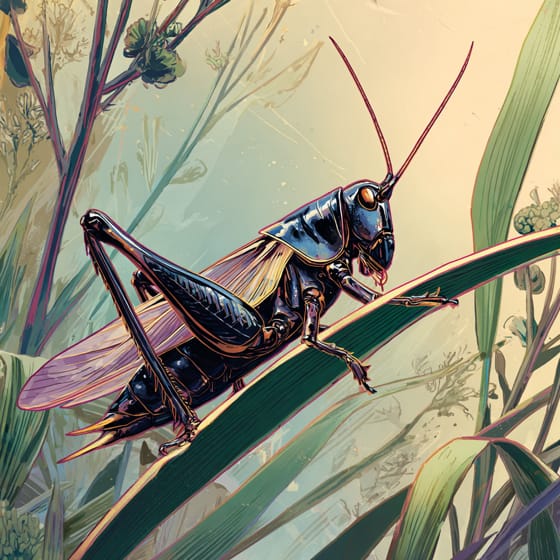
Gryllus assimilis
a common insect prey for the frog
Thamnophis sirtalis
a frequent predator, catching frogs near water
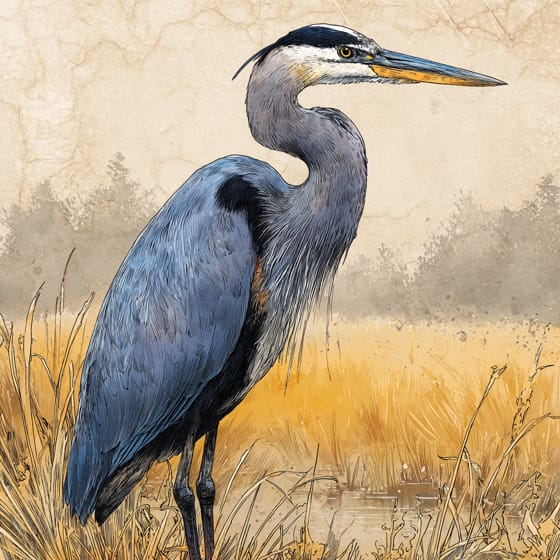
Ardea herodias
a large bird that preys on frogs in their wetland habitats
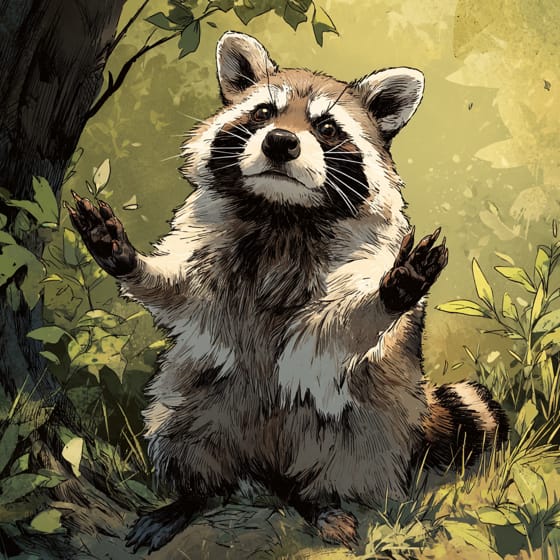
Procyon lotor
a nocturnal mammal that hunts frogs along pond edges
Wildlife encompasses all undomesticated animal and plant life existing in their natural habitats.
Characterized by having toes connected by a membrane, typically aiding in swimming.
This trait identifies organisms whose diet primarily consists of insects and other small invertebrates.
This habitat trait identifies species found in wetlands, which are areas of land saturated with water, either permanently or seasonally, including marshes, swamps, and bogs.

Freshwater habitats include non-saline aquatic environments such as rivers, lakes, ponds, and wetlands, vital for numerous species.

Nocturnal animals are primarily active during the nighttime hours, typically resting or sleeping during the day.
Danger
2/5 · Low
Look but don’t touch. Keep a safe distance and wash hands after exploring.
The easiest way to identify Leopard Frog is to use the Snappit nature identifier app.
5-11 cm
0.01-0.06 kg
2-4 years
36 km/h
They are hungry hunters, feasting on small insects, spiders, and anything else they can fit in their mouth!
Grasslands, wetlands, and ponds
Ambush
Zoom in to split clusters and explore where this object has been snapped.

New York, US
You might spot Sundial Lupine, Spotted Horsemint, and New Jersey Tea.
View guide →

Massachusetts, US
You might spot Maidenhair Spleenwort and Red Trillium.
View guide →
New York, US
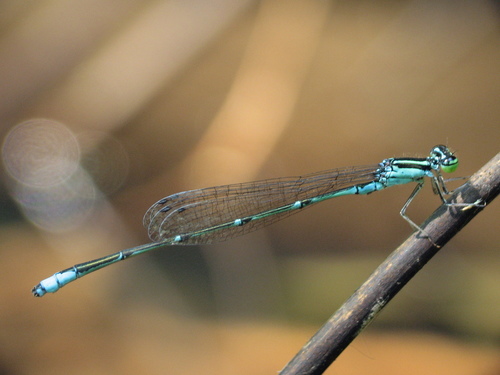
You might spot Stream Bluet, Variable Dancer, and Eastern Pondhawk.
View guide →

Ohio, US
You might spot Blue-Fronted Dancer, American Rubyspot, and Fowler's Toad.
View guide →

Massachusetts, US
You might spot Striped Wintergreen, Painted Turtle, and Canada Goose.
View guide →
Ohio, US
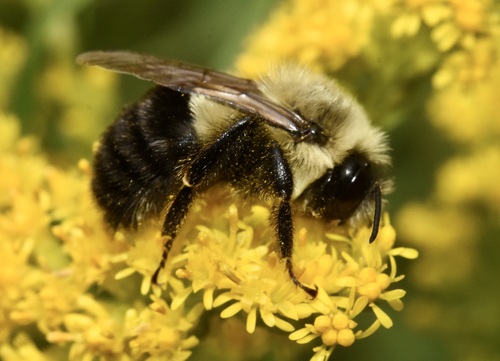
You might spot Common Eastern Bumble Bee, Sensitive Fern, and Mayapple.
View guide →
Take the discovery with you
Snap it with Snappit to identify it, learn what makes it special, and add the discovery to your collection.









.JPG&width=800)



.jpg&width=800)

