
Leopard Tortoise
Stigmochelys pardalis
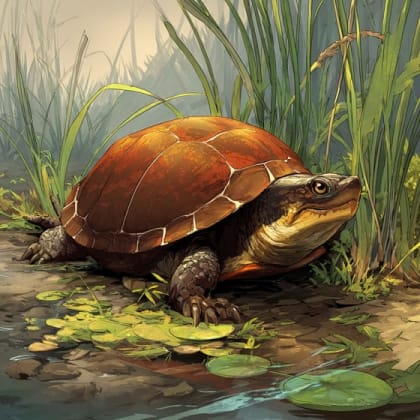
The Leopard Tortoise has a beautiful shell with leopard-like spots. They enjoy warm habitats and love to munch on grasses and flowers!
Habitat: Savannas and grasslands
The Leopard Tortoise is a large, domed reptile with a distinctive pattern of black spots and blotches on a yellow or tan background, resembling a leopard's coat. Its carapace is high and steep-sided, helping it blend into grassy and rocky environments.
Category
ReptilesRarity
Common
Danger
2/5 · Low
Snaps
Be the first to snap!
A baby Leopard Tortoise is smaller than a golf ball when it hatches!
Each tortoise's shell pattern is unique, like human fingerprints!
They make a hissing sound when scared, like a tiny dragon!
They use their strong forelegs to dig shallow burrows for shelter!
Leopard Tortoise has a high, domed shell that helps them retreat completely inside for protection from predators like lions and hyenas.
Leopard Tortoise can store water inside its bladder and reabsorb it, helping them survive long periods in dry, arid habitats.
Leopard Tortoise has a dark, high-domed shell that helps it regulate body temperature by absorbing sun and creating shade.
Leopard Tortoise has long, strong legs that help them navigate varied terrain like rocky hills and dense vegetation.
They are vegetarians, munching on a variety of grasses, succulents, and wildflowers found in their habitats.
Canis mesomelas
Jackals prey on eggs and young, vulnerable tortoises.
Varanus albigularis
Monitors steal eggs and small hatchlings from nests.
Citrullus lanatus
Disperses seeds after eating its fruits, aiding plant spread.
Amblyomma marmoreum
Ticks attach to skin, feeding on blood and potentially spreading disease.
Wildlife encompasses all undomesticated animal and plant life existing in their natural habitats.
Solitary animals live alone for most of their lives, only interacting with others for mating or parental care.
This trait characterizes organisms whose diet consists entirely or primarily of plant material.
This habitat trait denotes species native to savannas, which are grasslands with scattered trees, typically found in tropical or subtropical regions with distinct wet and dry seasons.

This trait characterizes organisms with an exceptionally long lifespan compared to others of their kind.

Armored describes animals protected by a hard, external covering or shell for defense.

Giant describes organisms or objects of significantly larger size than average for their species or type.
Danger
2/5 · Low
Look but don’t touch. Keep a safe distance and wash hands after exploring.
30-70 cm
15-50 kg
60-100 years
0.5 km/h
They are vegetarians, munching on a variety of grasses, succulents, and wildflowers found in their habitats.
Savannas and grasslands
Foraging
6-20
Zoom in to split clusters and explore where this object has been snapped.
Recent snaps will appear here as new observations are added.

Texas, US
You might spot African Lion, Equus Africanus Asinus, and Tiger.
View guide →
Florida, US
You might spot African Lion, Cheetahs, and Mainland Clouded Leopard.
View guide →
England, UK
You might spot African Lion, Red Panda, and Red-Tailed Green Ratsnake.
View guide →