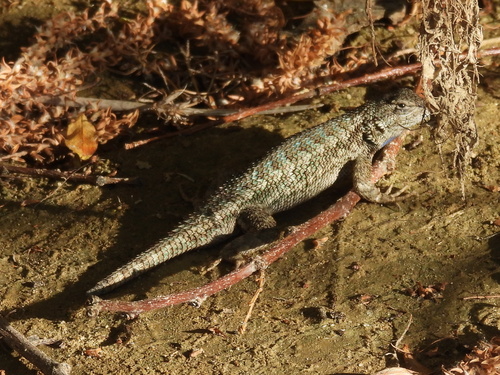
Western Fence Lizard
Sceloporus occidentalis
The Western Fence Lizard is a small, friendly lizard that loves to bask in the sun. With its beautiful blue belly, it can often be seen resting on rocks or fences in warm areas.
Habitat: Grasslands
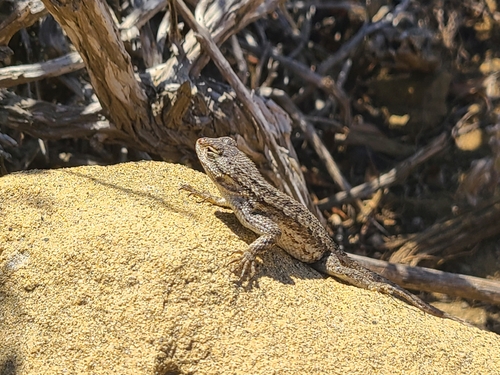
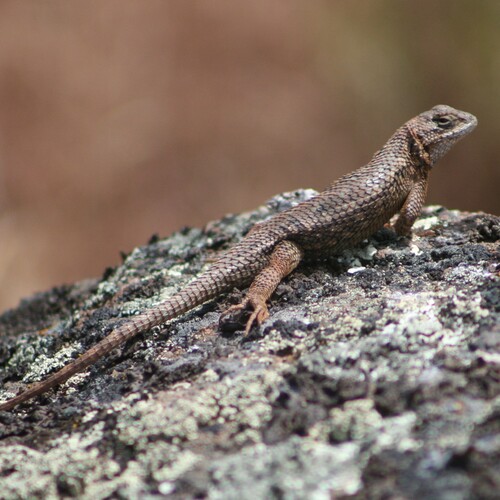
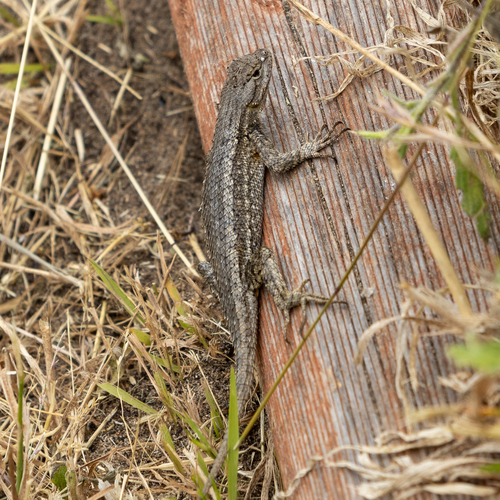
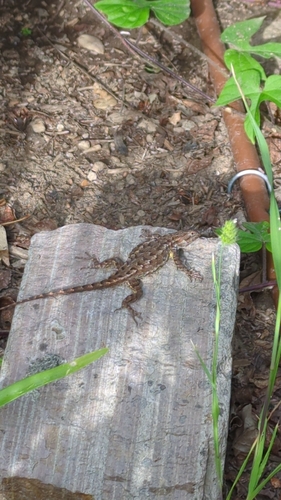
The Western Fence Lizard has keeled (ridged) scales that give it a spiny appearance and can range from grey to brown or black. Males display bright blue patches on their throat and belly, distinguishing them from females and other similar lizards.
Category
ReptilesRarity
Common
Danger
1/5 · Very low
Snaps
254
Males flash bright blue belly patches to attract mates and warn rivals. Wow!
They can regrow a lost tail, but it often looks a bit different! Wow!
They use their excellent eyesight to spot tiny insects from far away! Wow!
Western Fence Lizards eat thousands of pest insects, helping gardens thrive! Wow!
The Western Fence Lizard has a special protein in its blood that kills the bacteria causing Lyme disease in ticks, making them less harmful.
Western Fence Lizards can detach their tail if grabbed by a predator, letting them escape while the tail wiggles to distract.
Western Fence Lizards can slightly lighten or darken their skin to absorb more or less sunlight, helping them control their body temperature.
Tiny hunters, they feast on insects and spiders found in their habitat.
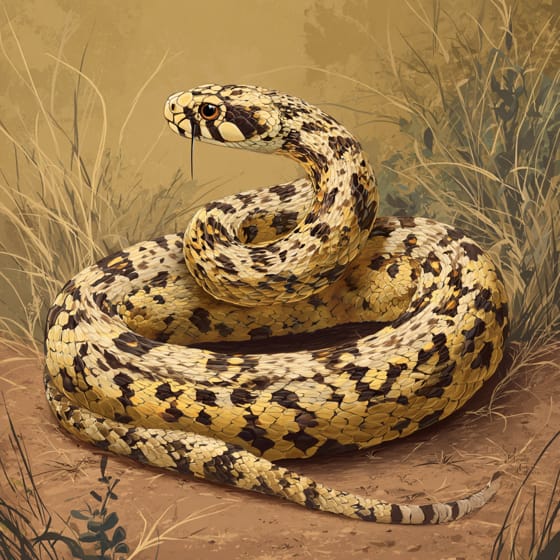
Pituophis catenifer
Often hunted by these common snakes.
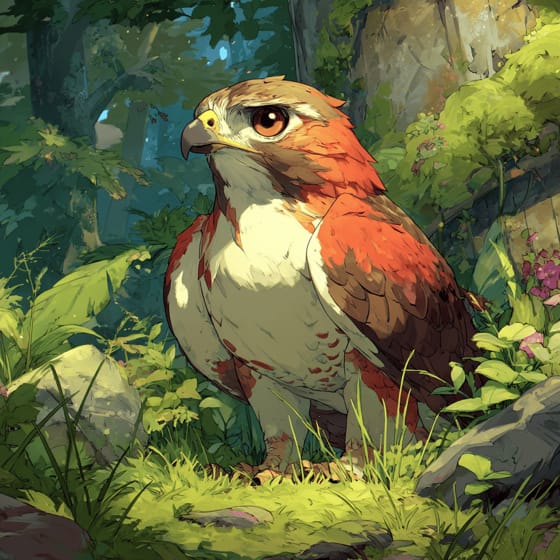
Buteo jamaicensis
A frequent meal for these birds of prey.

Formica fusca
Actively preys on various ant species.
Gryllus bimaculatus
Feasts on crickets and other ground insects.
Social animals live in organized groups, cooperating for survival benefits such as foraging, defense, and raising offspring.
Camouflaged describes organisms that possess coloring or patterns that allow them to blend into their environment.
Colorful describes organisms or objects displaying a wide range of bright and distinct colors.
Grassland habitats are terrestrial biomes dominated by grasses and herbaceous plants, supporting a variety of grazing animals.

This trait identifies organisms whose diet primarily consists of insects and other small invertebrates.

Diurnal animals are primarily active during daylight hours, typically resting or sleeping at night.

This trait identifies organisms that exhibit exceptional swiftness in movement for hunting, escape, or travel.
Danger
1/5 · Very low
If you see a lizard, watch it from a distance and don't try to catch it.
The easiest way to identify Western Fence Lizard is to use the Snappit nature identifier app.
5.7-21 cm
0.006-0.018 kg
2-7 years
10 km/h
Tiny hunters, they feast on insects and spiders found in their habitat.
Grasslands
Ambush
Zoom in to split clusters and explore where this object has been snapped.
Jun 18, 2026
Cabrillo National MonumentPhoto attribution
(c) Chris Brown, some rights reserved (CC BY)
License: CC BY 4.0 ↗
Image may be shown cropped inside the card frame.
Jun 7, 2026
Painted HillsPhoto attribution
(c) John Clonce, some rights reserved (CC BY)
License: CC BY 4.0 ↗
Image may be shown cropped inside the card frame.
Jun 6, 2026
Venice Canal Historic DistrictPhoto attribution
(c) Roberto Daniel Avila, some rights reserved (CC BY)
License: CC BY 4.0 ↗
Image may be shown cropped inside the card frame.
Jun 3, 2026
Sonoma PlazaPhoto attribution
(c) Daveozric, some rights reserved (CC BY)
License: CC BY 4.0 ↗
Image may be shown cropped inside the card frame.
Jun 1, 2026
Julia Davis ParkPhoto attribution
(c) Sam Kieschnick, some rights reserved (CC BY)
License: CC BY 4.0 ↗
Image may be shown cropped inside the card frame.

California, US
You might spot Sequoia, California Newt, and Pacific Dogwood.
View guide →

California, US
You might spot Acorn Woodpecker and Western Fence Lizard.
View guide →

California, US
You might spot Redwood Sorrel, Redwood, and Button's Banana Slug.
View guide →

California, US
You might spot Monarch, Canada Goose, and Western Gull.
View guide →

California, US
You might spot Warrior's Plume and Purple Owl's-Clover.
View guide →

California, US
You might spot Peridot Sweat Bee and Western Fence Lizard.
View guide →
Take the discovery with you
Snap it with Snappit to identify it, learn what makes it special, and add the discovery to your collection.