




African Clawed Frogs
Xenopus
African Clawed Frogs are fun and friendly frogs that love to swim! They have special claws on their feet that help them dig and catch food in the water.
Habitat: Wetlands
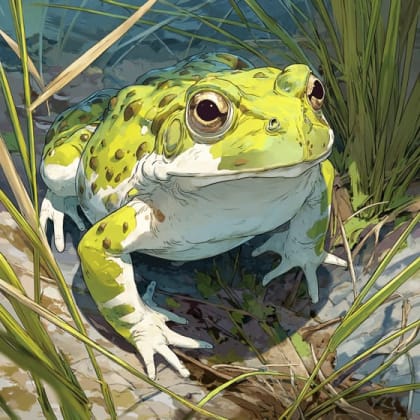
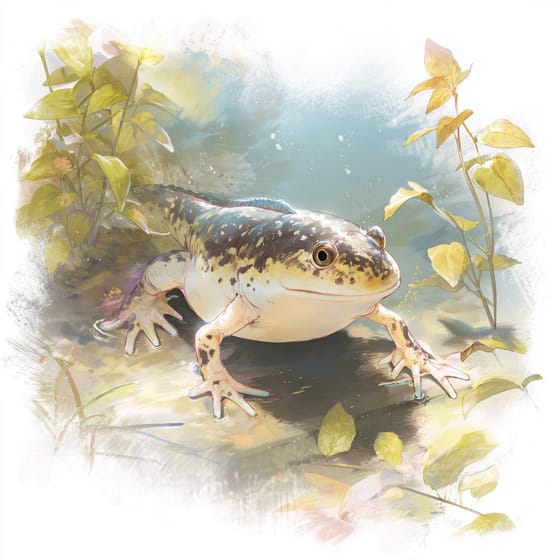
The African Clawed Frog has a flattened, olive-green to brownish body with a pale underside. It has small eyes on top of its head, no eyelids, and fully webbed hind feet with three sharp black claws on its inner toes.
Category
AmphibiansRarity
Common
Danger
1/5 · Very low
Snaps
Be the first to snap!
African Clawed Frogs don't have a tongue and use their tiny hands to shove food into their mouths!
These frogs were once used for early pregnancy tests because they react to hormones!
They can survive droughts by burying themselves in mud and forming a protective cocoon!
They can swim backward and forward with equal ease, making them excellent underwater maneuverers!
African Clawed Frogs can detect vibrations in water using a special lateral line system, helping them find prey in murky ponds.
African Clawed Frogs have sharp black claws on their back feet that help them dig into mud and tear apart food.
African Clawed Frogs have no eyelids, so their eyes are always open, protected by a layer of mucus underwater.
These hungry frogs eat almost anything they can fit into their mouths, mostly meat!
Age differences: Young tadpoles are filter-feeders, straining tiny particles from the water.
Daphnia pulex
Consumes tiny water fleas and other aquatic invertebrates.
Oreochromis niloticus
Sometimes preys on small fish and tadpoles, including tilapia.
Clarias gariepinus
Large African catfish are known predators of these frogs.
Ardea cinerea
Herons are common bird predators in their watery habitats.
Characterized by having toes connected by a membrane, typically aiding in swimming.
Social animals live in organized groups, cooperating for survival benefits such as foraging, defense, and raising offspring.
This trait characterizes organisms with an exceptionally long lifespan compared to others of their kind.
This habitat trait identifies species found in wetlands, which are areas of land saturated with water, either permanently or seasonally, including marshes, swamps, and bogs.

This trait identifies organisms whose diet consists entirely or primarily of animal tissue.

Diurnal animals are primarily active during daylight hours, typically resting or sleeping at night.

Aquatic habitats encompass environments where organisms live predominantly in water, including oceans, rivers, lakes, and wetlands.
Danger
1/5 · Very low
Always wash your hands after touching frogs, and never catch them without adult supervision.
5-13 cm
0.02-0.2 kg
10-20 years
7 km/h
These hungry frogs eat almost anything they can fit into their mouths, mostly meat!
Wetlands
Ambush
500-2000
Zoom in to split clusters and explore where this object has been snapped.
Recent snaps will appear here as new observations are added.