




Damson Tree
Prunus insititia
Damson Trees are special because they produce small, tasty plums! They have pretty flowers in the spring.
Habitat: Gardens and orchards
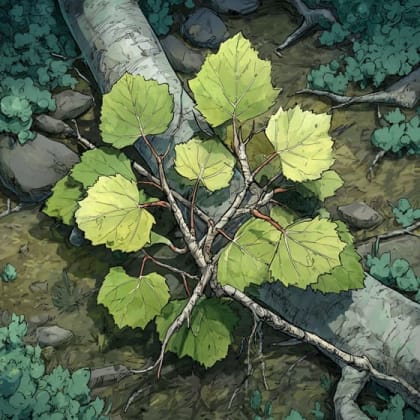
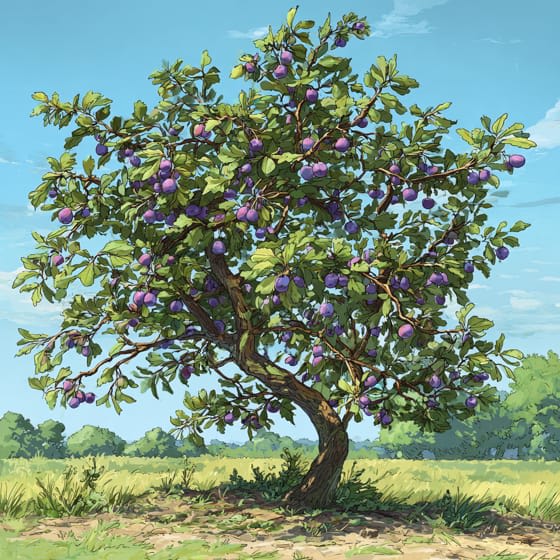
The Damson Tree is a small, deciduous tree known for its abundance of dark purplish-blue, oval-shaped fruits. It has small, finely toothed, dull green leaves and often grows with a somewhat thorny, bushy habit, distinct from larger plum varieties.
Category
TreesRarity
Common
Danger
1/5 · Very low
Snaps
Be the first to snap!
A single Damson tree can produce hundreds of pounds of fruit in a good year!
Damson plums were once used to dye fabrics a rich purple color!
Damson wood is very dense and fine-grained, sometimes used for small crafts!
These trees are ancient, brought to Britain by the Romans thousands of years ago!
Damson Tree can produce tart, deep purple fruits that attract birds and mammals, helping to widely spread its seeds and colonize new areas.
Damson Tree has a remarkable resilience to cold and various soil types, allowing it to thrive in diverse and challenging climates.
Damson Tree can self-pollinate, meaning a single tree can produce fruit and seeds without needing another tree nearby for reproduction.
Apis mellifera
Vital for flowering, collecting nectar and pollen.
Turdus merula
Eats ripe fruits, dispersing seeds far and wide.
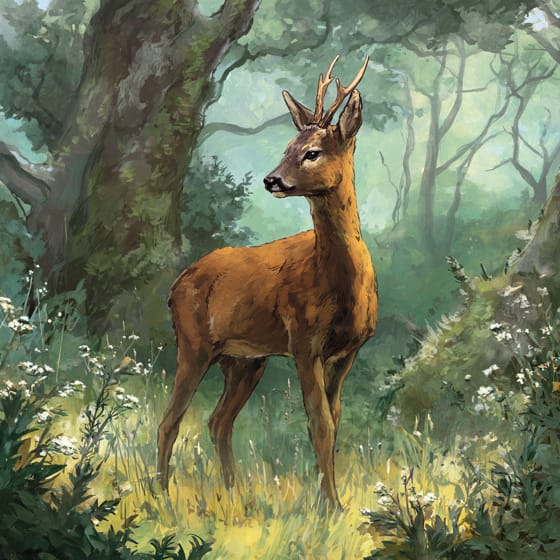
Capreolus capreolus
Browses on young leaves and shoots, especially in winter.
Adalia bipunctata
Ladybirds shelter on the leaves, preying on aphids.
Deciduous plants periodically shed all their leaves, typically during autumn or dry seasons.
Spring blooming plants produce their flowers during the spring season, often signifying the end of winter and the start of new growth.
Fragrant flowers emit a pleasant aroma, often to attract pollinators or for defense.
Fruit-bearing plants produce fruits, which are the mature ovaries of flowering plants containing seeds.
A fruit tree is a perennial tree that produces fruit, which is edible to humans or animals.

Edible plants are those parts of a plant that are considered safe for human consumption.

This habitat trait indicates species that can coexist with humans in urban and suburban environments, utilizing man-made structures and green spaces.
Danger
1/5 · Very low
Do not pick or eat anything you find. Some plants and mushrooms can be harmful.
3-6 m
3-5 m
Yes
15-30 cm
20-50 years
Gardens and orchards
Drupe
Medium
Zoom in to split clusters and explore where this object has been snapped.
Recent snaps will appear here as new observations are added.