Gulper Eel
Saccopharynx ampullaceus
Meet the Gulper Eel, a fascinating deep-sea creature with a large mouth that can swallow prey much bigger than itself. It lives in the darkest parts of the ocean, using bioluminescence to attract food.
Habitat: Deep Sea
The Gulper Eel has an enormous, loosely hinged mouth and a long, slender body that tapers to a whip-like tail. Its small, beady eyes sit high on its head, and its skin is typically dark, often black or brownish-black, blending into the deep-sea gloom.
Category
FishRarity
Rare
Danger
1/5 · Very low
Snaps
Be the first to snap!
Gulper Eels have tiny, undeveloped eyes that barely see in the deep ocean darkness.
Its enormous mouth takes up about one-quarter of its entire body length!
They can expand their stretchy stomachs to hold prey bigger than their own heads!
This elusive fish lives thousands of meters deep, where humans rarely explore.
Gulper Eels can open their enormous jaws incredibly wide to swallow prey much larger than themselves, helping them eat scarce deep-sea meals.
Gulper Eels have a glowing organ on their tail tip that attracts unsuspecting prey in the pitch-black deep sea, helping them hunt.
Gulper Eels can survive crushing deep-sea pressures because their bodies are adapted to extreme depths, protecting their delicate organs.
A deep-sea hunter that gulps down fish and crustaceans it finds in the dark depths.
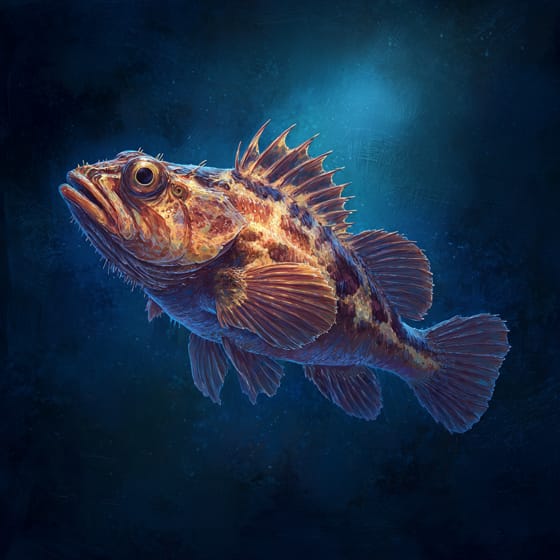
Cyclothone microdon
Preys on these common deep-sea fish.
Nematoscelis microps
Consumes these small, abundant crustaceans.
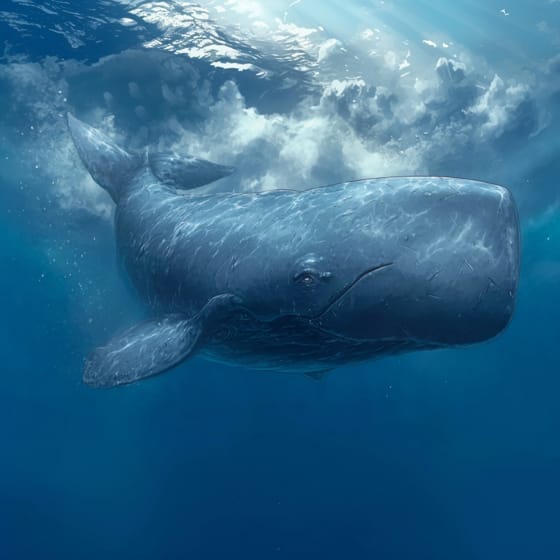
Physeter macrocephalus
Occasionally preyed upon by giant deep-diving whales.
Solitary animals live alone for most of their lives, only interacting with others for mating or parental care.
Piscivorous organisms are animals that primarily subsist on a diet of fish.
An ambush predator hunts by patiently waiting and concealing itself, then launching a sudden attack when unsuspecting prey comes within range.
This trait signifies organisms belonging to a very old evolutionary group with ancestors dating back millions of years.

Deep sea habitats are characterized by extreme pressure, darkness, and cold temperatures, supporting unique life forms below the sunlit zone.

Regenerative organisms possess the ability to regrow lost or damaged body parts, tissues, or organs.

Aquatic habitats encompass environments where organisms live predominantly in water, including oceans, rivers, lakes, and wetlands.

Pertaining to organisms that emit light through bioluminescence or fluorescence.

Nocturnal animals are primarily active during the nighttime hours, typically resting or sleeping during the day.
No aliases listed yet.
Danger
1/5 · Very low
The Gulper Eel lives in the deep sea, far away from where people swim. It is not dangerous to humans.
60-100 cm
0.5-1.5 kg
A deep-sea hunter that gulps down fish and crustaceans it finds in the dark depths.
Deep Sea
Ambush
3000 m
Saltwater
Zoom in to split clusters and explore where this object has been snapped.
Recent snaps will appear here as new observations are added.