Muhly Grass
Muhlenbergia pungens Thurb.
Muhly Grass is a tall grass that has fluffy, pinkish flowers. It looks beautiful when it sways in the wind!
Habitat: Meadows and open fields
The Muhly Grass has stiff, rolled, needle-like leaves that are typically grayish-green. Its flower stalks emerge with a narrow, open panicle, displaying subtle purplish or reddish-brown hues, unlike the more vibrant pink plumes of other muhly varieties. This resilient grass often forms dense, upright clumps.
Category
PlantsRarity
Common
Danger
1/5 · Very low
Snaps
Be the first to snap!
Its scientific name honors Gotthilf Heinrich Ernst Muhlenberg, an amazing botanist who cataloged thousands of plants!
Many small desert creatures use its dense clumps as perfect hiding spots from hungry predators!
This tough grass can thrive in extreme temperatures, from scorching desert heat to freezing winter cold!
You can often find Muhly Grass growing in nutrient-poor soils, like sandy deserts and rocky slopes!
Muhly Grass has deep roots that help it find water far underground, enabling it to survive long dry spells.
Its tough, rolled leaves help Muhly Grass reduce water loss, keeping it hydrated in hot, dry environments.
Muhly Grass grows strong underground rhizomes that hold soil together, stopping erosion in sandy areas.
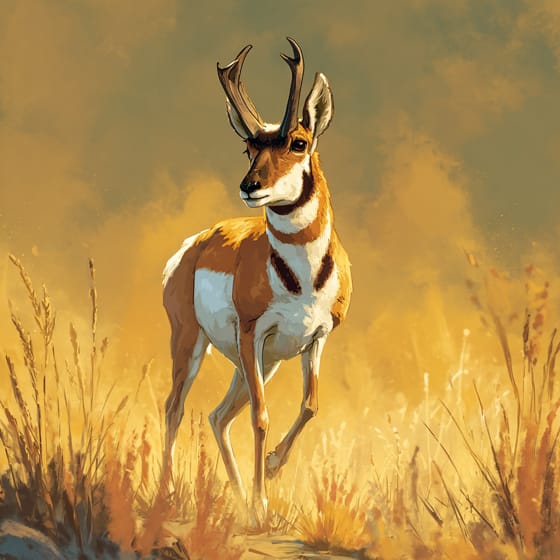
Antilocapra americana
Grazes on the tough leaves.
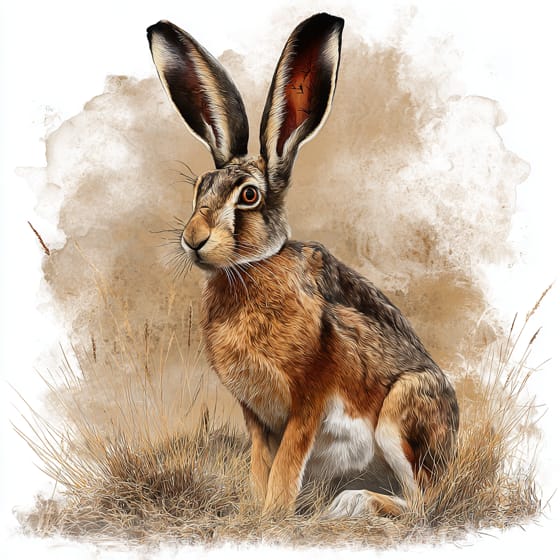
Lepus californicus
Uses dense clumps for cover.
Bouteloua gracilis
Often grows alongside this prairie grass.
Deciduous plants periodically shed all their leaves, typically during autumn or dry seasons.
Flowering plants are any plants that produce flowers as part of their reproductive cycle.
Grass-like plants are herbaceous plants that visually resemble true grasses, typically having long, narrow leaves.
Shade tolerant plants are adapted to grow and thrive in areas with low light levels, requiring less direct sunlight.

Spring blooming plants produce their flowers during the spring season, often signifying the end of winter and the start of new growth.

Fall color refers to the seasonal change in foliage pigmentation, primarily in deciduous plants, displaying vibrant hues.

Grassland habitats are terrestrial biomes dominated by grasses and herbaceous plants, supporting a variety of grazing animals.
Danger
1/5 · Very low
Explore with care and ask an adult if you’re unsure what to do.
30-90 cm
30-60 cm
Late_summer_fall
No
None
Perennial
Wind
Meadows and open fields
Zoom in to split clusters and explore where this object has been snapped.
Recent snaps will appear here as new observations are added.