oxeye daisy
Leucanthemum vulgare
The oxeye daisy is a cheerful flower with white petals and a bright yellow center. It grows in fields and gardens, bringing smiles to everyone who sees it!
Habitat: Grasslands
The oxeye daisy has classic white petals radiating around a bright yellow, button-like center. Its slender stems bear a single flower, standing tall above its lobed, dark green basal leaves. It often forms cheerful clusters.
Category
PlantsRarity
Common
Danger
1/5 · Very low
Snaps
7
Its scientific name, Leucanthemum, means 'white flower' in Greek.
Making 'daisy chains' from its stems is a fun, ancient tradition for kids!
Often seen as a symbol of innocence and new beginnings in folklore.
The yellow center is actually hundreds of tiny individual flowers, called florets!
Oxeye daisy can produce thousands of tiny seeds, helping it rapidly colonize open fields and spread its cheerful blooms far and wide.
Oxeye daisy has creeping rhizomes that help it spread underground, forming dense patches to claim its territory.
Oxeye daisy has a prominent yellow disk and white ray florets, acting as a clear landing strip to attract many insect pollinators.
Apis mellifera
gathers nectar and pollen from its flowers
Bombus terrestris
collects nectar and pollen from its blooms
Ovis aries
grazes on its leaves and shoots in pastures
Lygus lineolaris
feeds on flower heads and developing seeds
Flowering plants are any plants that produce flowers as part of their reproductive cycle.
Summer blooming plants produce their flowers during the summer season, often providing vibrant color when many other plants have finished.
Fragrant flowers emit a pleasant aroma, often to attract pollinators or for defense.
Edible plants are those parts of a plant that are considered safe for human consumption.

Grassland habitats are terrestrial biomes dominated by grasses and herbaceous plants, supporting a variety of grazing animals.

Describes plants that are particularly attractive and beneficial to a wide range of pollinating organisms.
Danger
1/5 · Very low
Always check with an adult before picking flowers.
30-90 cm
30-60 cm
2-6 cm
Late spring to late summer
Yes
None
Perennial
Insect
Zoom in to split clusters and explore where this object has been snapped.

Pennsylvania, US
You might spot Orange Hawkweed and Hickory Tussock Moth.
View guide →
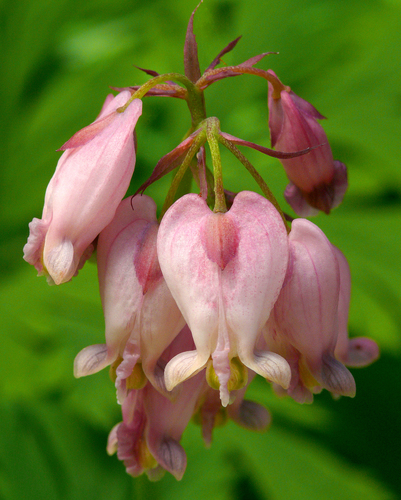
British Columbia, CA
You might spot Pacific Bleeding Heart, Tansy, and Western Sword Fern.
View guide →
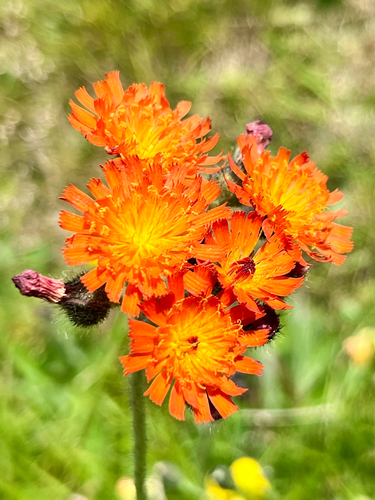
British Columbia, CA
You might spot Orange Hawkweed, Shinyleaf Meadowsweet, and Columbia Lily.
View guide →

British Columbia, CA
You might spot Western Columbine and Mountain Lady's-Slipper.
View guide →