Red Winged Blackbird

## Cherry Springs State Park: A Celestial Sanctuary in the Pennsylvania Wilds
## Cherry Springs State Park: A Celestial Sanctuary in the Pennsylvania Wilds
Nestled within the vast Susquehannock State Forest in north-central Pennsylvania, Cherry Springs State Park is an extraordinary destination renowned for having some of the darkest night skies on the East Coast. As Pennsylvania's first Dark Sky Park and the second International Dark Sky Park globally, it offers an unparalleled opportunity to witness the cosmos in all its glory. With a Bortle Scale rating of 2, the park's minimal light pollution allows for breathtaking views of the Milky Way, distant galaxies, planets, and even meteor showers, often visible to the naked eye. It's a place where the stars truly cast shadows, inviting visitors to reconnect with the wonder of the universe.
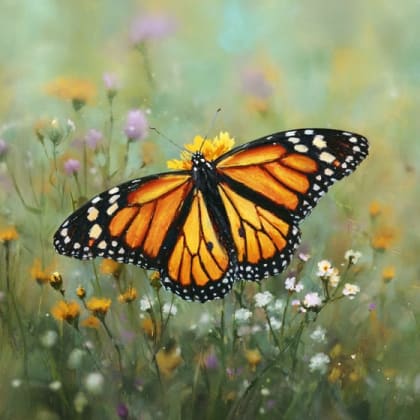
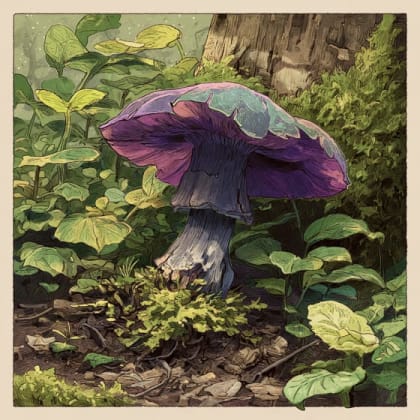
Beyond its celestial allure, Cherry Springs State Park and its surrounding 262,000-acre Susquehannock State Forest provide a rich natural environment ripe for daytime exploration. The landscape, once dominated by large stands of black cherry trees for which the park is named, now boasts second-growth woodlands with a mix of hardwoods like sugar maple. This diverse habitat supports a variety of wildlife, including white-tailed deer and black bears, as well as an array of bird species like the Red-winged Blackbird, Barn Swallow, Eastern Bluebird, and Chipping Sparrow. Visitors might also encounter fascinating insects such as the Hickory Tussock Moth, Polyphemus Moth, and Monarch butterflies, or discover interesting fungi like Shaggy Mane and Fly Agaric.
A visit to Cherry Springs is an immersive experience that transcends typical park outings. It's a chance to witness a natural resource — the dark night sky — that is increasingly rare in our modern world. Whether you're a seasoned astronomer with a high-powered telescope or a curious newcomer seeking to see the Milky Way for the first time, the park offers a profound connection to nature and the universe. The tranquility and sheer visual spectacle make it a memorable retreat, providing a perspective that leaves a lasting impression long after the stars have faded with the dawn. Be ready to snap and learn! Get the Snappit app to identify any nature species you find here.
Cherry Springs State Park's origins trace back to 1922 when the Pennsylvania Department of Forestry designated it as one of three scenic areas within state forests to preserve natural beauty. The park, originally 82 acres, is named after the large stands of black cherry trees that once flourished in the area. The Civilian Conservation Corps (CCC) played a significant role in the park's development during the Great Depression, constructing much of its infrastructure, including a picnic pavilion that is now listed on the National Register of Historic Places. In 2000, recognizing the exceptional quality of its night skies, the Pennsylvania Department of Conservation and Natural Resources (DCNR) designated Cherry Springs as its first Dark Sky Park. This commitment to preserving its pristine night sky was further cemented in 2008 when the International Dark-Sky Association officially named it the second "International Dark Sky Park" in the world, and the first in the eastern United States. The park expanded its stargazing area in 2006 with the acquisition of the adjoining Cherry Springs Airport, built in 1935, further enhancing its astronomical offerings.
Stargazing: Observe the Milky Way, planets, nebulae, galaxies, and meteor showers.
Hiking: Explore trails within the park and the surrounding Susquehannock State Forest, including sections of the 85-mile Susquehannock Trail. Keep an eye out for diverse flora like orange hawkweed, bird's-foot trefoil, pearly everlasting, common milkweed, Bull Thistle, great mullein, oxeye daisy, colt's-foot, wild parsnip, and sugar maple trees.
Wildlife Viewing: Look for white-tailed deer, black bears, North American Porcupine, Red-bellied Snake, American Toad, and various bird species like Red-winged Blackbird, Barn Swallow, Eastern Bluebird, Snow Bunting, and Chipping Sparrow.
Photography: Capture stunning astrophotography or natural landscapes during the day.
Attend Programs: Participate in public stargazing programs, night sky tours, or educational sessions on topics ranging from Greek mythology to owls.
Spring/Summer: Warmer temperatures and lush greenery. The Cherry Springs Star Party is typically held in late spring/early summer. Be prepared for potential dew.
Fall: Excellent stargazing conditions due to lower humidity, vibrant fall foliage, and the Black Forest Star Party in autumn.
Winter: Coldest temperatures but often the clearest and darkest skies, with extended nighttime hours. Snowmobile trails are available in the surrounding forest.
Cherry Springs State Park indicates that some facilities and activities are Americans with Disabilities Act (ADA) accessible. Visitors needing accommodations are encouraged to contact the park directly. The Night Sky Public Viewing Area has parking and a walkway to an amphitheater with benches.
The primary highlight is the **Night Sky Public Viewing Area** for casual stargazers and the **Overnight Astronomy Observation Field** for serious astronomers with equipment. The park also hosts regular stargazing and educational programs led by park educators or guest speakers. The annual **Woodsmen Show** in early August features lumberjack contests and draws large crowds.
Each card links to a full Explore page with photos, traits, and fun facts.
Start with the big picture, then zoom in to explore individual wildlife observations around this place.
Bring red-filtered lights
This is crucial for preserving your night vision and the experience of others. If you don't have one, consider covering your flashlight with red cellophane.
Dress in layers
Even on summer nights, temperatures at Cherry Springs, which is located on a mountain at 2,300 feet elevation, can drop significantly after sunset. Be prepared for brisk and damp conditions.
Arrive before dark
Especially if you plan to use the Overnight Astronomy Observation Field, arrive well before dusk to set up your equipment and allow your eyes to adjust. If arriving after dark, you will need to park in the visitor parking lot across Route 44 and walk in.
Check the moon phase and weather
Plan your visit around a new moon for the darkest skies. Always check the weather forecast for clear skies and cloud cover predictions.
Store food properly
Bears, raccoons, and porcupines are common in the area. Store all food in your vehicle to prevent attracting wildlife.
Download maps offline
Cell service is unreliable and often non-existent in and around the park due to its remote location. Download park maps and any other necessary information before your arrival.
Sep 20, 2025
Sep 20, 2025
Aug 3, 2024
Jul 18, 2024
Sep 16, 2023

Maryland, US
You might spot White-Tailed Deer and Eastern Gray Squirrel.
View guide →
.jpg)
District of Columbia, US
You might spot Eastern Gray Squirrel, Duck, and House Sparrow.
View guide →

Illinois, US
You might spot American Robin, Canada Goose, and House Sparrow.
View guide →

Virginia, US
You might spot Spotted Lanternfly and Northern Cardinal.
View guide →
Take the discovery with you
Identify the wildlife you spot, learn as you go, and keep a collection of the adventure.