Sea Urchin
Breynia sp. (in: sea urchins)
Sea urchins are spiky creatures that live in the ocean. They come in different colors like purple, red, and green. Sea urchins move very slowly and use their spines for protection.
Habitat: Marine
The Sea Urchin has a round or flattened body covered in long, sharp spines that can be black, brown, green, or purple. It looks like a spiky, living pincushion, distinct from soft-bodied sea anemones.
Category
InvertebrateRarity
Common
Danger
3/5 · Moderate
Snaps
Be the first to snap!
If a spine breaks off, a sea urchin can grow a brand new one!
Sea urchins can wear hats of shells or pebbles for camouflage and sun protection!
Some sea urchins live over 200 years, making them ancient ocean dwellers!
They chew food using five hard teeth, called Aristotle's lantern!
Sea Urchin has many sharp spines that helps them poke away predators, like a living shield.
Sea Urchin can move slowly and stick to rocks, even upside down, because of hundreds of tiny tube feet.
Sea Urchin can chew tough algae and other food because of their five-toothed 'Aristotle's Lantern' mouth.
Sea urchins mostly munch on algae but will also eat tiny critters and decaying plants.
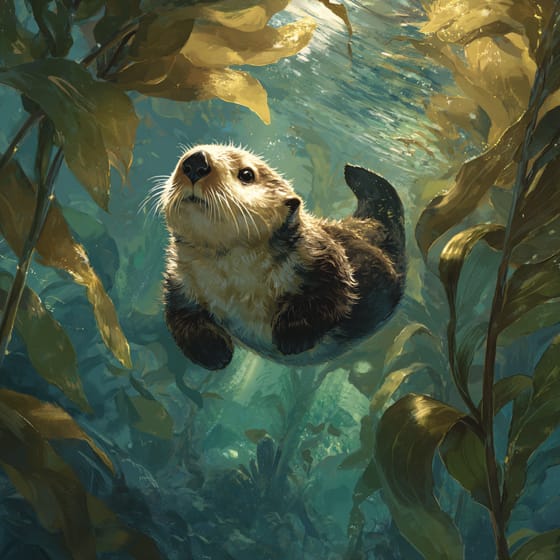
Enhydra lutris
Sea otters are a major predator of sea urchins.
Macrocystis pyrifera
Sea urchins graze on kelp, sometimes forming 'urchin barrens'.
Pycnopodia helianthoides
This large sea star preys on sea urchins.
Semicossyphus pulcher
This fish crushes and eats sea urchins with its strong teeth.
Wildlife encompasses all undomesticated animal and plant life existing in their natural habitats.
Solitary animals live alone for most of their lives, only interacting with others for mating or parental care.
Filter feeders obtain nutrients by straining suspended food particles and small organisms from water.
This trait characterizes organisms whose diet consists entirely or primarily of plant material.

Possessing sharp, pointed projections or spines on the body or surface.

Describes a species whose presence and role have a disproportionately large effect on its environment.

Marine habitats encompass all saltwater environments of the Earth's oceans, supporting an immense diversity of aquatic life.
Danger
3/5 · Moderate
Avoid touching sea urchins in the wild as their spines can hurt you.
10 cm
200 years
Sea urchins mostly munch on algae but will also eat tiny critters and decaying plants.
Marine
Grazing
950
Zoom in to split clusters and explore where this object has been snapped.
Recent snaps will appear here as new observations are added.