





Sea Otter
Enhydra lutris
Sea otters are playful animals that live in the ocean. They have thick fur to keep them warm and use tools to crack open shells for food!
Habitat: Coastal areas
The Sea Otter has dense, dark brown fur, often appearing reddish or lighter on the head and neck. It is a stocky mammal with a short, flat tail and distinctive large, webbed hind feet. Its overall appearance is tailored for life in the water, with a streamlined body and whiskered face.
Category
MammalsRarity
Common
Danger
1/5 · Very low
Snaps
2
Sea otter moms teach pups to dive by blowing air into their fur so they float!
Their fur is so dense that each hair follicle can hold up to 100 hairs!
They have a special "pocket" under their arm to store their favorite rock tools!
When resting, sea otters wrap themselves in kelp to avoid drifting away!
Sea Otters can use rocks to crack open shellfish because this helps them access tasty food like clams and mussels.
Sea Otters have incredibly dense fur that traps air, keeping them super warm in the cold ocean waters without blubber.
Sea Otters often float on their backs while eating, using their chest as a table to enjoy their hard-earned meals.
They feast on shellfish and invertebrates from the ocean floor to stay healthy and strong.
Age differences: Pups nurse for several months, gradually learning to forage from their mothers before becoming independent.
Strongylocentrotus purpuratus
Keeps urchin populations in check.
Haliotis rufescens
A favorite prey item in their diet.
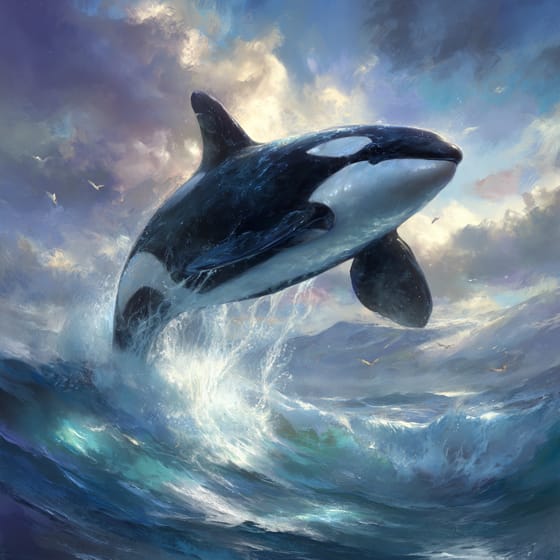
Orcinus orca
One of their main natural predators.
Macrocystis pyrifera
Protects kelp forests by eating herbivores.
Furry describes animals possessing a dense covering of soft hair or fur.
Possessing prominent sensory hairs or vibrissae, often around the snout.
Social animals live in organized groups, cooperating for survival benefits such as foraging, defense, and raising offspring.
This trait describes organisms that manipulate external objects to achieve a specific goal.

Coastal habitats are dynamic environments located along the interface between land and sea, influenced by tides, waves, and saltwater.

This trait identifies organisms whose diet consists entirely or primarily of animal tissue.

Diurnal animals are primarily active during daylight hours, typically resting or sleeping at night.

Describes a species whose presence and role have a disproportionately large effect on its environment.

Marine habitats encompass all saltwater environments of the Earth's oceans, supporting an immense diversity of aquatic life.

Endangered status indicates a species is at a very high risk of extinction in the wild in the near future.
Danger
1/5 · Very low
Always watch sea otters from a distance and never try to touch them in the wild.
The easiest way to identify Sea Otter is to use the Snappit nature identifier app.
100-150 cm
14-45 kg
10-23 years
9 km/h
They feast on shellfish and invertebrates from the ocean floor to stay healthy and strong.
Coastal areas
Foraging
Zoom in to split clusters and explore where this object has been snapped.

Jun 7, 2026
Michigan, US
You might spot King Penguin, Macaroni Penguin, and Polar Bear.
View guide →
Minnesota, US
You might spot Tiger, African Penguin, and Grizzly Bear.
View guide →
Oregon, US
You might spot Asian Elephant, Polar Bear, and Sea Otter.
View guide →

California, US
You might spot Orca, Bottlenose Dolphin, and Beluga Whale.
View guide →

Illinois, US
You might spot Beluga Whale, Pacific White-Sided Dolphin, and Sea Otter.
View guide →

Washington, US
You might spot African Lion, Giraffes, and Gorilla.
View guide →
Take the discovery with you
Snap it with Snappit to identify it, learn what makes it special, and add the discovery to your collection.





.jpg&width=800)


.JPG&width=800)



.jpg&width=800)
